
Mallorca water temperature in February: cold, clear, almond blossom
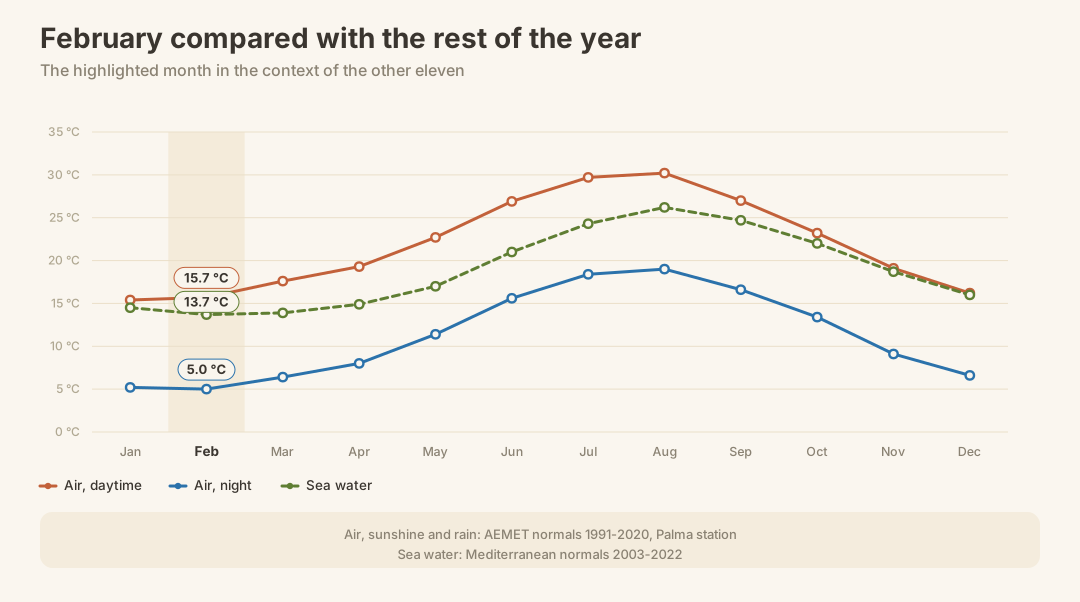
Palma normals as an island-wide approximation: In February, the average daytime high is 15.7 °C and the sea is 13.7 °C, with 5 rain days and 6.1 hours of sunshine per day.
Anyone thinking of the Mediterranean in February rarely thinks of swimming – and rightly so: this is the month in which the water around Mallorca reaches its annual low, while on land the almond trees are already in blossom and the sun is noticeably gaining strength. This gap between air and sea makes February one of the most revealing months for understanding the sluggishness of the Mediterranean.
Water temperature in February
The short answer: no, in February swimming in the true sense of the word is hardly something for the faint-hearted. The sea around Mallorca averages 13.7 °C this month – its annual low point, and clearly below the threshold at which most people find water pleasant. Anyone who has jumped into the sea on a warm summer's day will know the sensation of water that feels barely cooler than the air; in February it is the other way round: even on a sunny day that already feels mild and spring-like, the water stays noticeably cooler than the weather on land would suggest. For most people, water in this range counts as cool to cold – fine for a brief, deliberate dip, but not for extended swimming without protection.
Measured by water temperature, February is thus the coldest month of the year on Mallorca – colder even than January, even though the air is already noticeably gaining strength by this point. It is precisely this shift that makes February so distinctive: while the first warm days on land reach 15.7 °C and the sun shines for an average of 6.1 h, the sea still needs weeks to respond to this warming. It is as if the water were lagging a whole season behind the calendar.
This gap becomes especially striking when you consider that February also marks the peak of the almond blossom: in the fields around Sa Pobla, Santa Maria or the foothills of the Tramuntana, the trees stand in full white-pink bloom, while the sea just a few kilometres away is still in its winter slumber. Anyone visiting the island in February thus experiences two seasons at once: an almost spring-like start on land, and a winter that still holds firm in the water.
Why the sea lags behind the air
The reason for this delay lies in a simple physical fact: water has a much higher heat capacity than air. Storing or releasing the same amount of energy in water takes many times more than it would for air. While the air temperature over Mallorca can change completely within a few days – a cold snap, a few days of sunshine, and everything is different – the Mediterranean reacts only sluggishly to change. It stores the summer's warmth for months and releases it again only with considerable delay; conversely, in spring it takes a long time before the returning strength of the sun even reaches the water.
This inertia can be clearly seen in the annual peaks of both systems. The air over Mallorca reaches its highest values as early as high summer: July is among the hottest months for air, with highs around 29.7 °C. The sea, by contrast, takes longer to absorb this warmth – its own maximum comes only in August, when it averages 26.2 °C. This shift of roughly a month is not an exception but the rule: the water lags behind the sun throughout the year, in summer just as in winter.
However, this delay is most evident not in summer but in spring. Precisely in the months when the air warms fastest, the sea remains firmly anchored in winter. While the air temperature in April already climbs to 19.3 °C and feels noticeably spring-like, the water temperature at the same time stands at only 14.9 °C – barely higher than in winter itself. The gap between the two values reaches its widest point of the entire year during these weeks. Anyone enjoying T-shirt weather on land in April or May will still find wintry temperatures in the sea – a contrast that only closes again as early summer progresses and the two systems slowly converge.
For February, this means that it marks the moment at which this inertia has not even begun to dissolve. The water has reached the low point of its own annual cycle, while the air already shows the first signs of spring. Only in the coming weeks does this gap begin to close slowly, even though – as the look at April and May shows – it first widens further before narrowing again.
Where the water is warmest in February
Even though Mallorca is a manageably small island, water temperature varies noticeably from one stretch of coast to another – especially in winter, when every degree counts. Shallow, sheltered bays warm up faster during the day and also cool down faster again at night, but tend to retain more warmth over several sunny days than deep, open water. This applies particularly to the south and east of the island: bays such as those around Es Trenc, Colònia de Sant Jordi or the Bay of Alcúdia are shallow, widely enclosed by land and receive plenty of sun – conditions under which the water warms up somewhat more quickly compared with deeper stretches of coast.
The north-west of the island is different: the coastline facing the Serra de Tramuntana, around Sóller or Banyalbufar for instance, drops steeply and deeply into the sea in many places. Here, a far greater volume of water has to be warmed or cooled, and the coast is also more exposed to wind and currents from the open sea. As a result, the water here tends to stay cooler in winter than in the shallow bays of the south and east.
One caveat is important, however: no dedicated, reliable measurement series exist for individual bays and beaches – the differences between stretches of coast can therefore only be described in general terms, not backed up with concrete figures for particular places. The areas named here serve as examples of a general pattern: shallow and sheltered from the wind usually means somewhat warmer, deep and open usually somewhat cooler. Anyone wanting to go into the water at all in February will therefore find comparatively the mildest conditions at the sheltered bays of the east and south rather than on the exposed north-west coast.
February's sea against the rest of the year
Looking at the water temperature's course over the whole year, February sits at one extreme: it is the coldest month of the year, while the sea reaches its warmest level in August at 26.2 °C. Between these two poles lies the entire range that the Mediterranean around Mallorca passes through over the course of the year – from the wintry low point to summer bathing warmth. Averaged over the whole year, the water measures 18.9 °C, a figure clearly above what February has to offer.
A particularly revealing comparison is with the calendar month that feels just as cool in the air as February, but lies on the other side of summer: December. Both months are roughly equidistant from the hottest air month of the year and therefore show a comparable air temperature – in February it stands at 10.4 °C, in December at 11.4 °C. When it comes to water temperature, however, the picture is quite different: in December the sea still measures 16.0 °C, noticeably more than in February with its 13.7 °C. The reason lies precisely in that inertia which characterises the Mediterranean: in December the water is still drawing on the warmth of summer that it has stored for months, while by February those reserves are long since used up and the wintry low point has been reached.
This asymmetry makes clear that the sea's seasons cannot simply be equated one-to-one with those on land. While December and February feel similarly cool on land, there is a marked difference between the two months in the water – evidence of just how long the Mediterranean takes to respond to the changing seasons, and how much this delay makes itself felt especially during the winter half of the year.
Swimming, snorkelling, diving: what is worthwhile now
At a water temperature of 13.7 °C, an ordinary swimsuit or pair of boardshorts is no longer a comfortable option for most people – the body loses heat far faster in cool water than in air of the same temperature, and without protection a longer stay in the sea quickly becomes uncomfortable, even risky. Anyone still wanting to swim in February can hardly avoid a wetsuit. For a short dip, a thinner suit is enough; anyone wanting to stay in the water longer or even do sport, such as open-water swimming, benefits from a thicker neoprene suit with good core protection.
Much the same applies to snorkellers: without neoprene, even a brief look beneath the surface quickly becomes a chilly affair. With a suitable suit, however, this can be compensated for well, and the reward is surprisingly good visibility: in winter, algae growth in the Mediterranean is far lower than in summer, the water column contains fewer suspended particles, and the cool water also noticeably slows plankton growth. The result is often clearer underwater visibility than in the warm summer months, when algal bloom and busy bathing tend to cloud the view.
For divers, February is therefore an interesting time despite the low temperature: with a sufficiently thick wetsuit or a drysuit, the cold can be offset well, while the clear visibility often shows formations and marine life more sharply than in high summer. Anyone who values warmth above all else should avoid February, or at least adjust their expectations; anyone seeking good visibility and calm underwater, and equipped accordingly, will find genuinely worthwhile conditions in February.
Frequently asked questions
Is February the coldest month for swimming in Mallorca?
Can you do watersports in Mallorca in February?
How cold does the sea really feel in Mallorca in February?
When does the sea temperature start rising again after February?
What's on in Mallorca in February
Events
- Weekly Market in CaimariSelva
- Weekly Market in CamposCampos
- THE BOOK OF MORMONPalma
- Monstruas Impro en Escena 101Palma
- Carnival: “Sa Rua Alcúdia 2026”Alcúdia
- Diego Arjona Me Veo en WallapopPalma
Worth doing now
- Stick to a bracing coastal walk rather than a swim at the year's coldest point for the sea.
- Watch experienced wetsuit-clad divers and paddleboarders brave the winter water.