
Water temperature Mallorca in July: bathing at 24°C
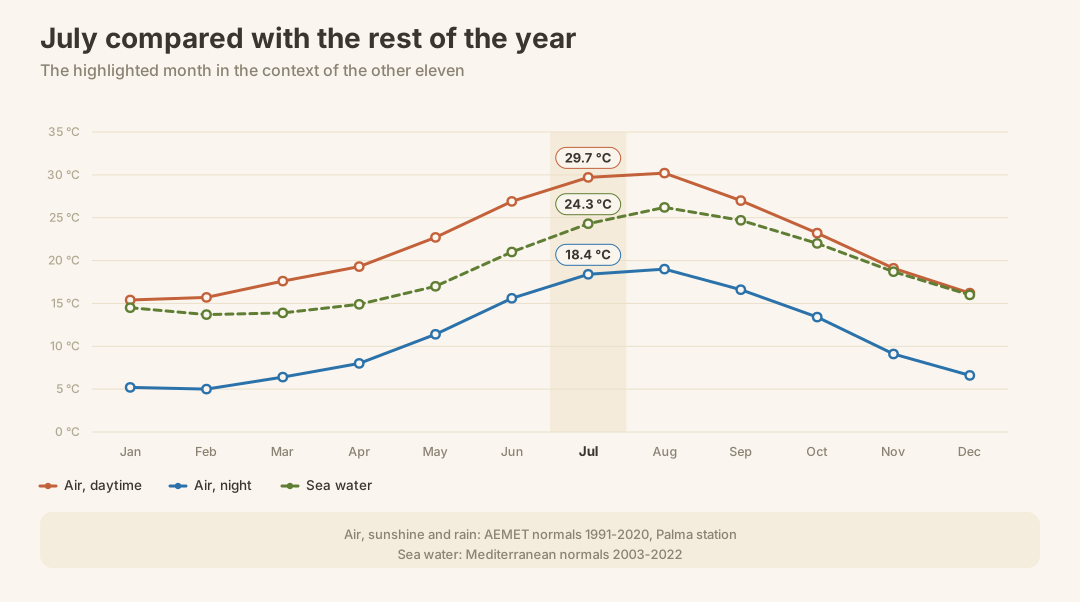
Palma normals as an island-wide approximation: In July, the average daytime high is 29.7 °C and the sea is 24.3 °C, with 1 rain day and 11.1 hours of sunshine per day.
In July, most visitors to Mallorca have only one question about the sea: is it warm enough yet for long days of swimming? The short answer is yes, and clearly so. This article explains how warm the water really is at the height of summer, why it always lags a step behind the air, where the warmest spots around the island are found, and what that means in practice for swimming, snorkelling and diving.
Water temperature in July
Yes, in July you can jump into the Mediterranean without a moment's hesitation. The water temperature stands at 24.3 °C, firmly within the range that most people find immediately pleasant, not cool and certainly not a challenge. Anyone who still held their breath for a second before getting in during early summer no longer needs to do so in July. By this point the sea has already gone through much of its seasonal warming and, especially in the afternoon hours, feels almost like a heated pool.
July itself is the driest month of the year. On average only 7 mm falls, spread across a mere 1 rainy day – so on most days the sky remains completely cloudless. At the same time, the heat on land reaches its peak: air temperature climbs to 29.7 °C during the day, and the blazing sun shines for an average of 11.1 h per day. For outdoor activities, this is a real strain, especially around midday: anyone out and about in the early afternoon hours without shade or water nearby quickly notices how hard the body has to work against the heat.
This is precisely why the sea becomes the day's most important source of relief in July. It doesn't just cool the body down, it also offers an escape from the oppressive midday heat that is barely bearable on land. The island is also busier this month than in almost any other – beaches, coves and promenades fill up, and anyone seeking peace and quiet will find it more readily in the early morning hours or late afternoon, when both the heat and the crowds ease off somewhat. For anyone looking for a reliable answer to the question "is it warm enough to swim yet": alongside late summer, July is one of the most dependable months of the year, when the water is practically always inviting, regardless of what the weather has been like in the preceding days.
Why the sea lags behind the air
Comparing water temperature with air temperature quickly reveals a shift that runs through the whole year: the sea is never quite in step with the air, but trails it by weeks or even months. The reason lies in a physical property that cannot simply be argued away: water has a far higher heat capacity than air. Warming a given quantity of water by one degree requires many times the energy needed to warm the same quantity of air by the same amount. The result: while the air over a landmass heats up or cools down noticeably within just a few sunny days, the sea only responds to the same energy input after weeks, sometimes only after months.
This sluggishness is most evident when you look at which month air and water each reach their peak. Air temperature usually reaches its maximum at the height of summer, with daytime highs of around 30.2 °C. The sea, by contrast, takes longer to absorb the same amount of energy and only reaches its warmest point later in the year, when the water temperature rises to 24.7 °C. Between the hottest air day and the warmest sea day there are typically several weeks – direct evidence of the differing speeds at which air and water react to the same solar radiation.
The difference becomes even clearer in spring. That's when the gap between air and water temperature is widest, because the air warms up quickly after winter while the sea still carries the stored cold of the colder season. In April, for instance, the air already climbs to pleasant values, while the water, at 14.9 °C, still lags noticeably behind – a difference many spring visitors underestimate when they only look at the air temperature and are then surprised by a cool swim. In late summer and early autumn, this relationship reverses: on some days the air already cools noticeably, while the sea is still releasing the warmth it stored over summer, often staying pleasant for longer than the calendar would suggest. This delay is no coincidence but a direct consequence of the thermal inertia of large bodies of water, and it explains why the warmest air month and the warmest sea month in Mallorca are not, in fact, the same month.
Where the water is warmest in July
The water temperature measured for Mallorca as a whole is an average – around the island there are noticeable differences, closely linked to the shape of the coastline and the depth of the water. Shallow, sheltered bays warm up considerably faster under the same sun than deep, open stretches of coast, because a smaller volume of water absorbs the same amount of energy more quickly and mixes less with colder deep water.
In the south and east of the island, around Es Trenc, the Bay of Alcúdia, or the shallow stretches near Playa de Muro and Cala Mondragó, exactly these conditions apply: the bays are comparatively shallow, often open to the south or east, and therefore exposed to the sun for particularly long periods. Here, the water in July often feels a touch warmer than the island-wide figures would suggest. In the northwest, by contrast, along the steep coastline of the Tramuntana near Sóller, Deià, or the Bay of Sa Calobra, the sea quickly drops away to great depth. Here cooler deep water mixes in more readily, and the coast is also often exposed to the open sea and stronger currents, which slows overall warming.
One honest caveat is important here: there are no dedicated, verified measurement series for individual bays and beaches that could seriously be expressed in figures. The differences mentioned are well-documented, generally known patterns of coastal morphology, not precise readings for a specific beach. So anyone looking for particularly warm water is generally well advised to head for the shallow, sheltered bays in the south and east, while the deeper, open stretches of coast in the northwest remain the cooler alternative even at the height of summer – ideal for anyone after a more refreshing swim rather than a swimming-pool-temperature experience.
July's sea compared with the rest of the year
Looking at the water temperature's course over the whole year, July is easy to place: it already sits close to the upper end of the scale, but hasn't quite reached its actual peak yet. The warmest month of the year reaches 24.7 °C, while July, at 24.3 °C, falls only slightly short of that. In everyday terms the difference is barely noticeable, both figures feel equally pleasant to most people. The gap to the coldest month, however, is considerable: at the year's low point, the water temperature drops to 13.7 °C, a value at which even seasoned winter swimmers usually opt for a brief dip rather than a proper swim.
The comparison becomes especially revealing when you set July against its symmetrical counterpart on the other side of the year. Purely by the numbers, that is, based solely on the distance from the warmest month, July and September ought to have similarly warm water, since both months lie roughly the same distance from the temperature peak, just on opposite sides of it. In practice, however, a difference emerges: September reaches 24.7 °C, while July, at 24.3 °C, noticeably falls behind. This asymmetry is precisely the fingerprint of the thermal inertia already mentioned in the comparison with the air. The sea takes time to build up warmth, and just as much time to release it again – in early summer it still lags behind the sun's radiation, while in late summer and early autumn it draws on the energy stored over months and so stays warm for longer than the calendar alone would suggest.
For trip planning this means: anyone explicitly seeking the warmest water of the year is slightly better served in late summer than in July. Anyone content with a sea that is already well above the comfort threshold, however, will already find ideal conditions in July, with no need to wait for the temperature peak.
Swimming, snorkelling, diving: what's worthwhile now
With a water temperature of 24.3 °C, no additional protection whatsoever is needed for most water sports in July. A simple swimsuit or pair of trunks is entirely sufficient, whether for a quick refreshing dip, an extended swim, or several hours at a stretch in the water. Even people who usually feel the cold quickly in water generally manage without a wetsuit in July, since the water temperature is now well above the threshold at which most people find cold uncomfortable.
For snorkellers, July is one of the most straightforward months of the year: the warmth of the water allows for long stretches at the surface without the body cooling down in between, making extended exploration of rocky coastlines and underwater landscapes comfortably possible. Underwater visibility depends more on the weather, the swell, and proximity to busy beaches than on temperature itself, but the stable, generally low-wind weather of high summer usually ensures calm conditions with little stirred-up sediment, especially in the early morning hours before wind and bathers increase.
For divers too, a thin shorty or a light wetsuit is entirely sufficient for most dives at shallow to medium depth, since the water temperature at the surface and in the upper layers stays pleasant throughout. Only at greater depth does the water cool noticeably, as the sun's warmth barely reaches that far, so for longer or deeper dives a thicker wetsuit is worthwhile to avoid getting cold even after extended time underwater. Anyone staying near the surface and close to the beach, however, can happily do without heavy equipment and make the most of July as one of the most comfortable months for water activities around the island.
Frequently asked questions
How warm is the sea in Mallorca in July?
Is July ideal for watersports like snorkelling in Mallorca?
Is the water comfortable for kids in Mallorca in July?
Does the sea get even warmer than July later in the year?
What's on in Mallorca in July
Worth doing now
- Spend long afternoons in the water — this is peak swimming and snorkelling weather.
- Combine a beach club day with an evening dip while the sea stays warm well into the night.