
Mallorca water temperature in May: first bathing days by the sea
Palma normals as an island-wide approximation: In May, the average daytime high is 22.7 °C and the sea is 17 °C, with 4 rain days and 9.4 hours of sunshine per day.
Anyone arriving in Mallorca in May finds island days like almost no other month can offer: plenty of sunshine, little rain, pleasant warmth on land – and a sea that hasn't quite caught up with this pace yet. The water temperature in May is 17.0 °C, noticeably cooler than the air at the same time. Whether that's enough for a swim depends very much on how sensitive you are to fresh water, and how you want to use the month – for a brief, refreshing dip or for extended swimming. This article sets out exactly that, looking at the physics behind it, the regional differences around the island, and the comparison with the rest of the year.
Water temperature in May
The short answer first: swimming is possible in May, but it's not a month for extended swimming sessions without a brief warm-up afterwards. The Mediterranean around Mallorca reaches 17.0 °C in May. Most people only find seawater truly pleasant once it approaches or exceeds the twenty-degree mark; below that it's usually described as cool to refreshing, and well below it as too cold for a longer stay without a wetsuit. May usually stays below this comfort threshold, which makes the water well suited to short, invigorating dips, but less so to leisurely paddling for hours on end.
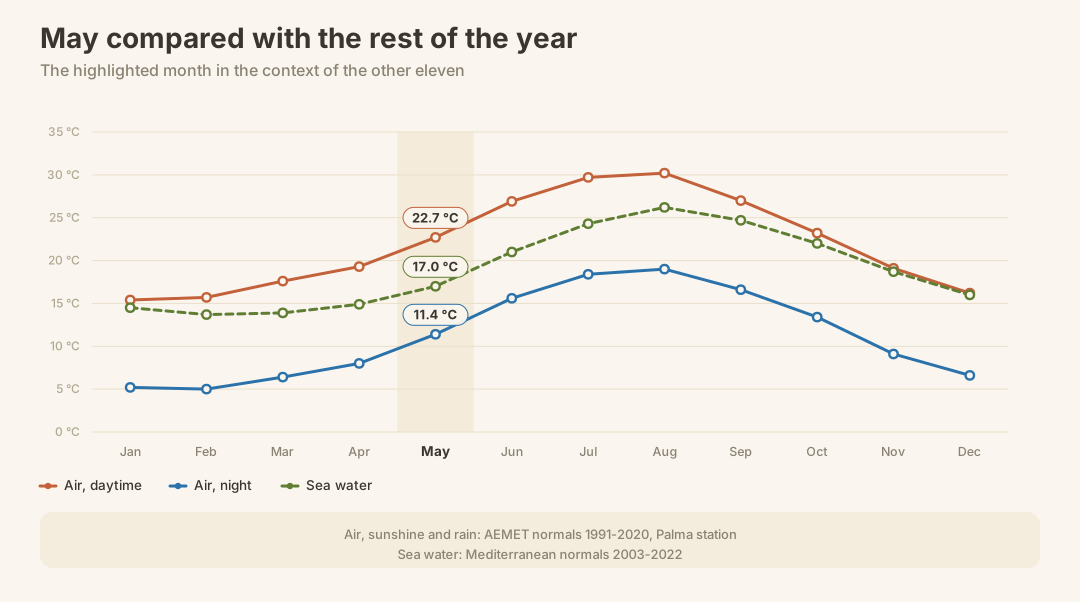
On land, meanwhile, May is far from being a tentative harbinger of summer – it already feels almost like summer itself. The air temperature climbs to 22.7 °C during the day, only cooling to 11.4 °C at night, and the sun shines for an average of 9.4 h per day. Rain falls on just 4 rainy days, and with 14.2 h the days are already remarkably long – ideal for long afternoons at the beach, hikes or bike rides that people tend to avoid later in the year because of the heat. This combination of mild air, plentiful light and little rainfall creates a picture that's easy to underestimate: anyone who feels summer has arrived on land often unconsciously expects a summery sea too – and is surprised, on that first step into the water, at just how much cooler it still is.
This is precisely what makes May one of the most underrated travel months in Mallorca. The beaches aren't yet crowded, the light is both clear and soft, and temperatures on land practically invite long days outdoors, without the midday heat of high summer becoming a burden. Only the swimming itself demands a little more willingness to embrace cool water than the air temperature alone would suggest. For anyone who prefers a swim that's short and intense rather than long and lukewarm, this is no drawback at all, but simply the character of this particular month – a month that still shows land and sea clearly running on different clocks.
Why the sea lags behind the air
The reason for this lag lies not in the weather itself, but in a physical property of water. Water has a much higher heat capacity than air – it takes far more energy to warm it by one degree, but it also releases that stored energy only slowly. Air reacts almost instantly to sunshine, and a warm, sunny day is immediately reflected on the thermometer. The sea, by contrast, stores heat over weeks and months and reacts correspondingly sluggishly, both when warming in spring and when cooling in autumn and winter. This inertia isn't a phenomenon unique to Mallorca but a fundamental property of large bodies of water in general – though in Mallorca it can be read particularly clearly from the annual cycle, because land and sea lie so close together here.
This delay shows up clearly when comparing the peaks of the year. The air over Mallorca reaches its warmest point as early as the height of summer, with highs of 29.7 °C in July. The sea, however, takes noticeably longer to catch up: it reaches its warmest point only in late summer, with 26.2 °C in August. Between the warmest air month and the warmest water month, then, there is a clear shift of a full month – an effect that results precisely from the thermal inertia that large bodies of water have compared with the fast-reacting atmosphere. The air shoots ahead in July, while the sea only catches up in August, by which time the air has already passed its peak.
This offset becomes especially clear in spring of all times, and May provides the most vivid example of the entire year. While the air, at 22.7 °C, has already reached summery values, the water, at 17.0 °C, is still lagging well behind – the gap between the two figures is never as large at any other time of year as it is in precisely these weeks. The reason is that in spring the air already benefits from the increasing sunshine and lengthening days, while the sea still carries the after-effects of winter and only gradually thaws out. In autumn the picture reverses: the air already cools noticeably, while the sea retains the warmth it stored over summer for longer. Once you understand this mechanism, a surprisingly cool swim on a warm May day no longer comes as a surprise – it's simply the logical consequence of how differently water and air respond to the same sun, with a time lag that runs through the entire annual cycle.
Where the water is warmest in May
The water temperature quoted for the whole of Mallorca is an average across the island's entire coastline – locally, the differences can be noticeable, even though we have no separate measurement series for individual bays, so these differences can only be described qualitatively rather than in specific degree figures for particular beaches. As a general rule, however, a simple physical principle applies: shallow, sheltered bays warm up faster than deep, open water, because the sun's energy concentrates in a thin layer of water with less exchange with colder, deeper layers. The shallower and calmer a stretch of coast, the more readily the water there keeps pace with rising air temperatures.
In the south and east of the island, this very shallowness favours a more pleasant swimming experience in May. The broad, shallow waters around Es Trenc, for instance, the sheltered bay of Alcúdia, or the long stretch of Playa de Palma, give the water more opportunity to warm up in the sun over the course of the day before cooling slightly again at night. Smaller bays sheltered by headlands on the east coast, such as those found around Cala Millor or Portocolom, likewise benefit from calmer, shallower water with less exchange with the open sea. Such stretches of coast therefore tend to feel less fresh in May than the island average would suggest.
The northwest of the island, by contrast, faces the opposite effect. The steeply sloping coast between Port de Sóller and the foothills of the Serra de Tramuntana drops quickly into greater depths, and the water there mixes more strongly with cooler, deeper layers, which slows overall warming. The northeast around Cap de Formentor is likewise more exposed to the open sea and stays correspondingly cooler. Anyone particularly sensitive to cool water in May will therefore find the more reliable options in the shallow, sheltered bays of the south and east, while the dramatic steep coastlines of the northwest reveal their appeal more in the scenery than in comfortable swimming.
May's sea against the rest of the year
Looking at the sea's full annual cycle, May sits clearly closer to the cool end of the scale than the warm one. At 17.0 °C, it is still far from the year's peak, which the sea only reaches in August with 26.2 °C – there are still three full months in between, during which the water continues to warm steadily. Conversely, though, May already lies noticeably above the coldest point of the year, typically reached in late winter: the warming since that low point is already well under way by May, even if nowhere near complete. May thus marks a point on the way up, but one that clearly sits in the lower half of the year's range.
The comparison becomes especially revealing when May is set against the month that lies on the other side of summer at a similar distance from the warming peak. That is November, at 18.7 °C. Purely by position in the calendar – equally far from the warmest month, August, one before and one after – you might expect similar values, if the sea behaved symmetrically like a simple pendulum around its peak. In fact, this is where the sea's inertia shows itself particularly clearly: because the water holds the warmth stored over summer for weeks and releases it only slowly, November turns out noticeably warmer than May, even though both months are numerically the same distance from August. The sea simply cools down much more slowly than it warmed up in spring, and this asymmetry between the two halves of the year is one of the clearest pieces of evidence for how much the water's annual cycle differs from that of the air, which by comparison responds far more symmetrically to spring and autumn.
For placing May in context, this means overall: it marks the transition from the cool to the warm half of the year, but sits clearly on the cooler side of that transition. Anyone looking for a swim that matches the summery feeling on land will find it more readily in the months after high summer than in May itself – a fact that follows directly from the different response speeds of water and air to the changing seasons, and one that, once understood, can also serve as a useful rule of thumb when planning trips in other months.
Swimming, snorkelling, diving: what's worthwhile now
With a water temperature of 17.0 °C, May falls into that range where an ordinary swimsuit is entirely sufficient for short, active swims, but a longer stay in the water already leads to noticeable chilling. Anyone wanting to swim, snorkel, or float quietly for more than a few minutes benefits from a thin wetsuit, or at least a shorty version covering the torso and thighs – not because the water is dangerously cold, but because the body's heat loss increases markedly over time at these temperatures, particularly for children, older people, and anyone who tends to feel the cold more quickly than others.
For snorkellers, May is nonetheless one of the most attractive months of the year, precisely because the water hasn't yet reached high-summer levels. Cooler water is generally clearer, since rising temperatures in summer allow more suspended particles, algae and microorganisms to persist in the water, noticeably clouding visibility. Visibility in May is therefore often better than what you experience later in high summer – an effect that leads to impressively clear underwater views, especially in the shallower, clear bays of the south and east of the island, while the water temperature there remains pleasantly cool rather than unpleasantly cold. Anyone wanting to snorkel in May will thus find a rare combination of good visibility and still-manageable numbers of visitors on the beaches.
For divers, who are equipped with wetsuits or drysuits anyway, water temperature plays a rather minor role in deciding whether a dive is worthwhile – what counts above all is the good visibility that May typically offers, before summer's bathing and boating tourism, along with the warmer but murkier water later in the year, change conditions. Overall, this month rewards those who prefer short, clear swims and good visibility to a long-warmed but often murkier summer sea, and who are willing to forgo a warmer sea for a few minutes in the water in exchange for the calm and clarity around them.
Frequently asked questions
Can you swim in Mallorca in May?
Is May good for watersports in Mallorca?
How does May's sea temperature compare to June?
Do you still need a wetsuit in Mallorca in May?
What's on in Mallorca in May
Worth doing now
- Take the first proper swim of the season while the beach clubs open for the year.
- Try paddleboarding or sailing in conditions that are already pleasant for watersports.