
Mallorca in winter: mild weather, almond blossom and calm
Anyone planning a trip to Mallorca for the cold season will not find a bleak winter, but a quieter, often sunny version of the island. Between December and February, air temperature, water temperature and rainfall shift gradually, the days grow shorter, and along the coast it remains remarkably mild throughout – while the Serra de Tramuntana takes on a harsher, more distinctive winter character of its own. This overview describes how the three winter months differ, what is possible on the island during this time, and where winter on Mallorca can be experienced most vividly.
Winter on Mallorca: the weather at a glance
Winter does not begin abruptly on Mallorca; rather, it arrives as a gentle fading of autumn. In December, the island still shows remarkably mild days: the air warms to 16.2 °C, while at night it cools to 6.6 °C. At this point, the sea still holds the warmth of summer and sits at 16.0 °C – too cool for swimming, but a sign that winter here is different from what one finds north of the Alps. From month to month, the values then drop noticeably: in January, the coolest month of the year, highs reach only 15.4 °C, while the water cools to 14.5 °C. Only in February does a slight recovery appear with 15.7 °C, even though the sea, at 13.7 °C, has usually not quite left its annual minimum behind.
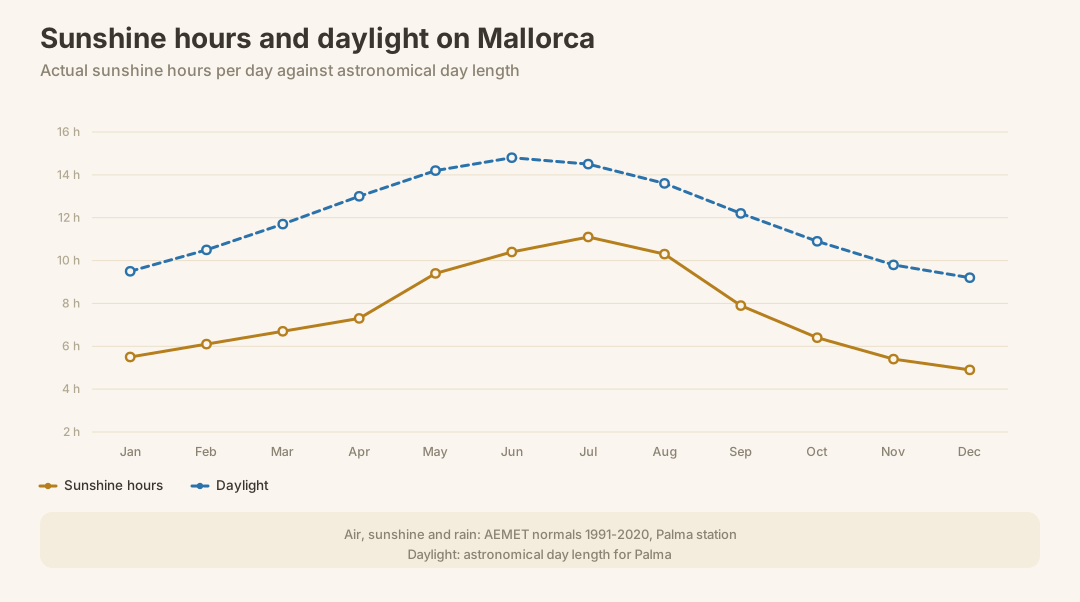
Rain accompanies this arc as a constant but never dominant companion. December brings rainfall on 6 rainy days, January looks very similar with 6 rainy days, and in February there are 5 rainy days. Spread across individual, often brief showers, there remains plenty of room for sunshine between the fronts – even in deep winter, it still shines for 5.5 h a day.
What changes more than the temperature is the light. Days are shortest in December, with 9.2 h, and by February the bright part of the day stretches back out to 10.5 h. Anyone out and about early feels the contrast between coast and interior most clearly: along the coast it stays mild, the sea acting as a buffer against frost, while in the Serra de Tramuntana the nights grow considerably colder. In the higher reaches around Puig Major, frost is no rarity, and after strong cold-air outbreaks, snow can even settle there – a sight one would hardly expect down in the valley or on Playa de Palma. Towards the end of January, the almond blossom also begins: in sheltered spots of Es Pla and around Selva, the first white-pink blooms open, an unmistakable sign that winter has already passed its lowest point, even if the nights remain cool.
Month by month through winter
December on Mallorca is less a winter month than a gentle farewell to autumn. By day the thermometer climbs to 16.2 °C, at night it drops to 6.6 °C – cool enough for a jacket in the evening, but far from Central European cold. With 53 mm of rainfall spread across 6 rainy days, the month remains comparatively dry, and the sun shows itself for an average of 4.9 h a day. The sea cools noticeably, but still sits at 16.0 °C – those hardy enough will still find the occasional swimmer in sheltered bays. Humidity stands at 76 %, and at 9.2 h the days are the shortest of the entire year.
January is considered the coolest month of the year, though the difference from December remains small. Highs reach 15.4 °C, and on clear nights it can drop to 5.2 °C. Rainfall adds up to 43 mm, spread over 6 rainy days – often in the form of short, heavy showers, between which the sun breaks through for 5.5 h. The sea reaches its annual low at 14.5 °C. Towards the end of the month, the almond blossom already begins in sheltered inland spots, a first visible sign that the season is starting to turn, even though the days remain short at 9.5 h.
In February, the growing length of the day becomes noticeable for the first time: at 10.5 h, the day gains palpable substance compared with January. Temperatures rise slightly, with highs of 15.7 °C being no rarity, while at night it cools to 5.0 °C. Rain falls on 5 rainy days, totalling 32 mm, while the sun shines for an average of 6.1 h – mostly on clear, crisp days well suited to walking. The sea remains cool at 13.7 °C, yet the almond trees now stand in full bloom in many places, and the air already feels noticeably more spring-like than just four weeks before.

What winter on Mallorca makes possible
Swimming in winter is more something for the persistent than for everyday life: with water temperatures between 13.7 °C and 16.0 °C, the sea remains far too cool for a relaxed summer day at the beach. Anyone who still wants to go in will find the occasional intrepid swimmer, but the coast's real strength now lies elsewhere: in long, empty walks along the promenade, while the real relaxation waits indoors, in a hotel or café.
Hiking, on the other hand, has its finest season in winter. Temperatures sit exactly in the range that makes multi-hour tours pleasant, without the risk of breaking a sweat under the blazing sun of the warmer months. The Serra de Tramuntana now often appears in clear air with far-reaching views, though one should not underestimate the cold at altitude – in exposed spots it is noticeably cooler than on the coast, and after cold-air outbreaks, snow can make the highest paths impassable. Anyone planning a hike should check the current conditions in the mountains beforehand.
Cycling, too, is among the activities many travellers deliberately choose winter for. Mild temperatures, little traffic and quiet roads make the island a popular destination for training camps, and the hours of sunshine are usually enough for extended rides in the morning or early afternoon. Rain showers should be factored in, but they usually pass through quickly.
For culture, winter is almost tailor-made: museums, Palma Cathedral, the Palau March or the weekly markets inland can all be experienced without queues or heat, and a rainy day in Advent or January is perfectly suited to a stroll through town. The season also has its own culinary character: hearty stews, the traditional pig-slaughter season with its sausage specialities and, once the almond trees blossom, pastries and sweets based on almonds shape the menus – dishes hardly anyone would order in summer, but which now feel exactly right.
Where you are best off in winter
The Serra de Tramuntana shows its most striking, but also its most changeable, face in winter. Clouds hang here more often and lower than along the coast, rain showers in the mountains are often heavier, and at the highest elevations snow is no rarity after cold-air outbreaks. Anyone planning hikes should factor in this contrast with the coast and prepare for noticeably cooler, more variable conditions – which is precisely what makes the area so appealing to many in winter.
Es Pla, the wide plain in the interior, tends to appear quiet and sometimes misty in winter: on clear mornings, cold air can settle near the ground here, while the fog often only lifts as the morning goes on. This region is also the very centre of the almond blossom, which towards the end of January bathes the landscape in delicate white and pink, making the area one of the most atmospheric destinations of the season.
Along the south and east coasts, winter makes itself felt most mildly. The proximity to the sea softens the nightly cooling, and the region is generally considered somewhat sunnier and drier than the interior, making it a pleasant retreat for walks, cycling trips or quiet days away from the mountains. For individual towns within these regions, however, we do not have separate measurement series – the differences mentioned describe general, large-scale tendencies, not values for particular bays or villages. Anyone planning a specific destination is best advised to combine this overview with a look at the current local weather forecast.
Frequently asked questions
How cold does it get in Mallorca in winter?
Is winter a rainy season in Mallorca?
Can you swim in the sea in Mallorca in winter?
What is there to do in Mallorca in winter?
Is winter a good time for a quiet Mallorca break?
What's on in Mallorca in December
Events
- Weekly Market in Santa MargalidaSanta Margalida
- Sunday FITZPalma
- Saturday FITZPalma
- Theatre: Chronicles of Midsummer - Sala La FornalManacor
- Beauty Tends Toward SphericityPalma
- Monstruas Impro en Escena 101Palma
Worth doing now
- Explore Palma's old town, museums and markets at an unhurried, off-season pace.
- Head inland towards the end of winter to catch the first almond blossom.