
Mallorca Summer Weather: Sun, Sea and Heat from June to August
Mallorca summer weather means, above all, one thing: reliability. Between June and August a stable area of high pressure dominates, rain becomes the exception, and temperatures climb from pleasantly warm to noticeably hot. Anyone visiting the island during this period need not plan around weather surprises, but rather around the question of how best to fit heat and blazing sunshine into the daily routine. This article shows how summer develops across its three months, what each individual month brings, which activities make sense now – and in which parts of the island the heat feels different than by the sea.
Summer in Mallorca: the weather at a glance
Summer in Mallorca can be read as a single arc that begins in June and reaches its peak in August. At the start comes a month that is already noticeably warmer than spring, yet still has room to rise further: in June the air reaches 26.9 °C in the afternoon, cools to 15.6 °C at night, and the sea, still warming only gradually, sits at 21.0 °C. The island is busy at this time, but not yet overcrowded, and the sun already shines through long stretches of the day.
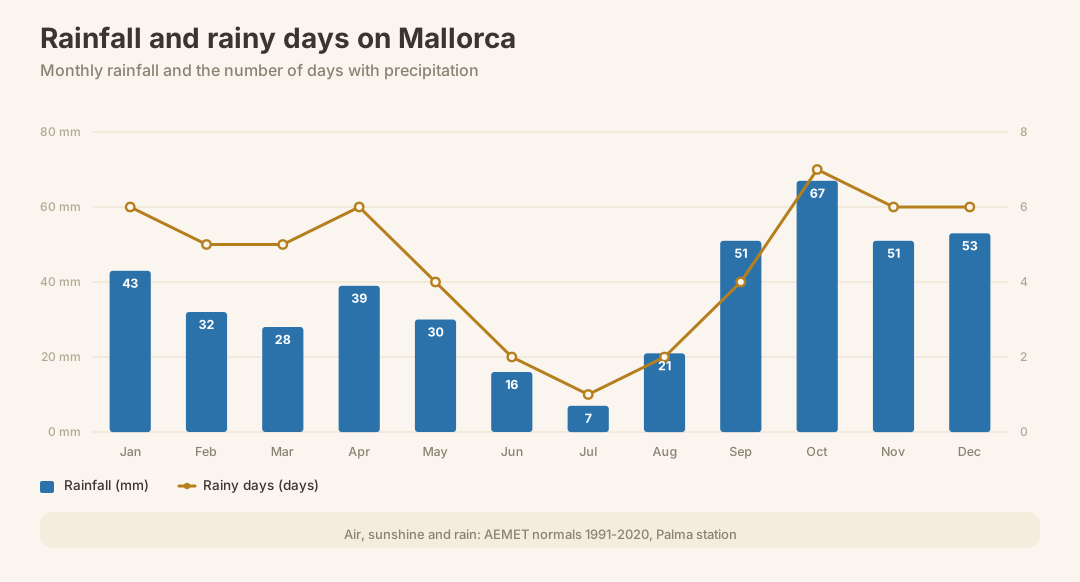
From here, values climb noticeably. July takes on the role of the hottest and, above all, driest month of the entire year: with 7 mm of precipitation and only 1 rainy day, there is barely any opportunity for rain, while daily sunshine hours extend to 11.1 h. The air climbs to 29.7 °C, and anyone out and about at midday quickly feels that the heat becomes a genuine strain during the early afternoon hours – shade, water and an unhurried pace become a necessity during this time, not an option.
August continues this trajectory and surpasses it on several counts. Daytime highs reach 30.2 °C, nights barely cool down and remain at 19.0 °C, resulting in sultry, oppressive evenings. The sea has by now reached its annual peak at 26.2 °C – a swim in these weeks feels almost like a refreshment in lukewarm water rather than a plunge into something cool. Even though August brings slightly more rain on average than July, the number of rainy days remains vanishingly small at 2 rainy days; occasional heat thunderstorms towards the end of the month are the only interruption to an otherwise flawlessly dry weather pattern.
Comparing the three months against the annual average makes the exceptional character of summer clear: the annual mean temperature stands at 16.6 °C, while the summer months alone drive the temperature curve far beyond that. Humidity, too, changes character over the season – it still feels somewhat heavier at the end of June and gives way to the drier, dusty warmth of August, when vegetation inland visibly suffers from the lack of moisture. What remains is a summer defined less by shifts in weather than by a single, steadily intensifying mood: more sun, more heat, less rain, warmer water – and an island that grows fuller week by week.
Month by month through summer
June: Early summer arrives in Mallorca already with summery reliability. During the day the thermometer climbs to 26.9 °C, at night it drops to 15.6 °C – values that still allow time outdoors without major restrictions. The sea has warmed to 21.0 °C, which already invites swimming, even if it is still noticeably fresher compared to high summer. Rain falls on 2 rainy days, mostly in the form of brief, localised showers that barely disrupt daily life. With 10.4 h hours of sunshine per day and humidity of 64 %, June is the month in which heat and comfort still balance each other out – an entry into summer that leaves energy for what is still to come.
July: No other month of the year is as dry as this one. With just 7 mm of precipitation, spread across only 1 rainy day, a weather pattern dominates that follows the same course day after day: clear skies early on, sharp sunshine from mid-morning, and afternoon highs of 29.7 °C. Nights remain mild at 18.4 °C, so cooling off is sought above all by the sea, which by now reaches 24.3 °C. Sunshine duration stands at 11.1 h per day, more than in any other summer month, making July the month of the longest, brightest days – but also the one in which the midday heat should most consistently be avoided.
August: High summer reaches its peak. Daytime highs stand at 30.2 °C, lows barely fall below 19.0 °C – making nights noticeably more oppressive than in June or July. The sea reaches its annual peak at 26.2 °C, and swimming feels correspondingly warm. Humidity rises slightly compared to July, to 65 %, which intensifies the sense of heat, even though rainy days remain rare at 2 rainy days and rainfall settles at 21 mm. Occasionally, brief but intense heat thunderstorms announce themselves in the second half of the month, interrupting the summer's dryness without calling its basic pattern into question.

What summer in Mallorca makes possible
Summer in Mallorca is, above all, the season of water. With sea temperatures between 21.0 °C and 26.2 °C, swimming from June to August is as comfortable as at no other time of year, and the low number of rainy days means a beach day is rarely rained off – in both the literal and figurative sense. Water sports too, whether sailing, snorkelling or stand-up paddling, find their best conditions in these months, supported by long daylight periods of up to 14.5 h in July.
Things look different for activities that require movement outdoors. Hiking in the Tramuntana is not impossible in summer, but only sensible at certain times of day: anyone wanting to explore the mountain paths should set out in the early morning hours and avoid midday, when temperatures climb to values such as 29.7 °C or 30.2 °C. Ambitious, multi-hour tours are better postponed to spring or autumn, when the air is milder and the sun less merciless. The same applies to cycling: the early morning hours before the great rise in heat are ideal, while the hours around midday are scarcely suited to longer rides, particularly inland, where shade is scarce.
Cultural pursuits can be combined well in summer with a degree of flexibility. Palma's old town, the cathedral, museums and shaded courtyards are well suited to the hot midday hours, when beach and outdoor programmes reach their limits anyway. Many locals adjust their daily rhythm to the sun during this time regardless: active in the morning, quieter in the afternoon, lively again in the evening. It is precisely in these evening hours that summer shows its most pleasant side – long, warm nights that fill restaurant terraces well into the night and bathe weekly markets and village festivals in a soft light.
Anyone visiting the island in summer is thus best off planning at two speeds: swimming, water sports and evening programmes fit perfectly into this season, while strenuous hikes, long cycling tours or extensive sightseeing rounds in the blazing midday sun are better shifted to the early morning or postponed altogether to a cooler season.
Where you are best off in summer
Even though the measurements apply to the island as a whole and we have no dedicated series of readings for individual locations, the experience on the ground in summer can differ markedly. In the Serra de Tramuntana, altitude and the shade of the forests ensure noticeably milder conditions than in the rest of the island: the air here cools down markedly faster in the evening, and anyone wanting to be active in high summer finds the most bearable temperatures on the whole island in the mountain villages and on the higher hiking trails – provided midday hours are avoided.
Es Pla, the broad plain at the centre of Mallorca, shows its most intense side in summer. Without the cooling effect of the sea and with comparatively little tree cover, the air here heats up more strongly during the day, the dryness is more clearly felt than on the coast, and the landscape takes on a dusty, golden hue in the hottest weeks. For excursions inland, morning or late afternoon is recommended at this time of year, while midday hours here can be especially unpleasant.
On the south and east coasts, summer makes itself felt differently: the proximity to the sea and the regular sea breeze somewhat moderate the highest temperatures, though humidity rises, which makes the heat feel muggier, especially in the evening hours. Yet it is precisely these stretches of coast that benefit most from summer's warm sea temperatures, with long beaches, good tourist infrastructure and short distances between accommodation, beach and restaurant. Anyone who values a balanced summer will find cooling there during the day through wind and water, and a mild, pleasant climate in the evening – even if the air feels more humid than in the drier interior.
Frequently asked questions
How hot is summer in Mallorca?
Is the sea warm in summer in Mallorca?
Does it rain in Mallorca in summer?
Is Mallorca too crowded in summer?
How do you deal with the summer heat in Mallorca?
What's on in Mallorca in June
Events
- Weekly Market in PorreresPorreres
- Madama Butterfly, G. PucciniPalma
- "Ball a la fresca"Alcúdia
- Ball de bot performanceAlcúdia
- “Via Fora”Alcúdia
- Eclipse Day – Hidroparty. Water Experience.Alcúdia
Worth doing now
- Make the beach club scene the centre of your day, from lunch through to sunset drinks.
- Snorkel or swim daily while the sea is at its warmest of the whole year.