
Mallorca in spring: weather, hiking and Tramuntana culture
Spring is one of the seasons in which Mallorca reveals its true face: the island is green, in bloom and pleasantly warm, without the heat and crowds of high summer. Anyone planning a trip and wanting to know how Mallorca's spring weather develops across March, April and May will find the essentials here – from air temperature to sea temperature to rainfall, which noticeably eases off during this period but never disappears entirely.
Spring on Mallorca: the weather at a glance
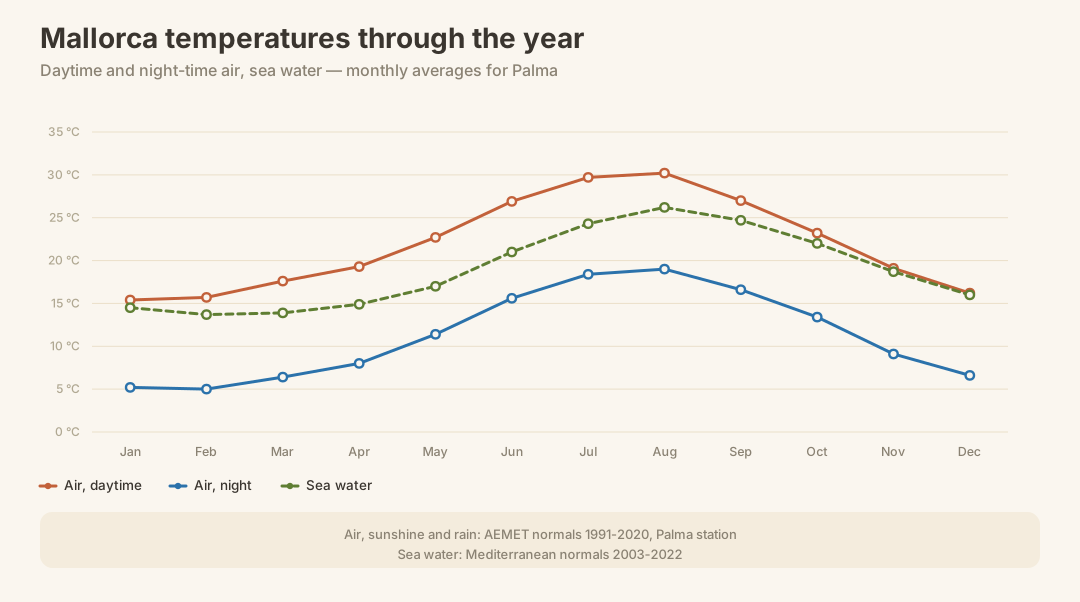
Mallorcan spring is not a uniform block but a development you can practically watch unfold. In March the island is still in transition: daytime highs climb to 17.6 °C, nights cool down to 6.4 °C, and the wind often still carries a hint of wintry freshness. By May the picture has changed considerably – daytime temperatures then reach 22.7 °C, while evenings remain pleasantly mild at 11.4 °C. Between these two points lies a steady but never abrupt warming that makes spring so dependable.
With rainfall, the curve runs in the opposite direction. March still brings noticeably changeable weather with 28 mm across 5 rainy days, while May is markedly drier and more settled, with 30 mm across just 4 rainy days. In between, April provides a balanced middle ground with 39 mm, and is also the month in which the island shows its lushest green before the summer dryness sets in. Hours of sunshine grow in parallel, from 6.7 h in March to 9.4 h in May, and with them come longer bright afternoons in which you can be outdoors without shivering for a jacket.
The sea follows this upswing only hesitantly. While the air already has spring quality in March, the water lingers at 13.9 °C – noticeably colder than the surrounding air. Even in May, when short-sleeved afternoons on land are long since possible, the sea only reaches 17.0 °C. This lag is why spring on Mallorca, while ideal for hiking, cycling and long walks along the coast, does not yet offer most people a genuine swim in the sea. The island visibly awakens – wildflowers bloom on the slopes, the almond trees have usually already finished flowering by this point, but other plants take over the colour, restaurant terraces fill up again, and the days grow long enough to stretch outings into the late afternoon. Anyone familiar with this arc from a still-undecided March to a warm, dry May can plan their trip precisely around the character they want – fresh and quiet at the start of the season, summery and lively towards its end.
Month by month through spring
March is the most restrained of the three spring months. Daytime highs hover around 17.6 °C, nights can cool to 6.4 °C, and with 5 rainy days and 28 mm it remains the wettest month of spring. Humidity sits at 71 %, the wind blows at an average of 14 km/h, and daylight already stretches to 11.7 h. The sea remains wintry cold at 13.9 °C. March suits anyone who wants to experience Mallorca calm, green and without much heat, but should pack weatherproof clothing.
April marks the true midpoint of spring and already appears considerably more settled. Temperatures rise to 19.3 °C, nights warm to 8.0 °C, while rainfall becomes noticeably rarer at 39 mm across 6 rainy days. The sun shines for an average of 7.3 h, humidity stands at 70 %, and the day lengthens to 13.0 h. The water follows the warming only slowly, reaching 14.9 °C – usually still too cool for a swim, but just right for beach walks and the first hours of sun by the shore. Many consider April the most balanced spring month, since it offers warmth and freshness in a pleasant ratio.
May, finally, brings spring towards its close and already hints at summer. Daytime highs reach 22.7 °C, nights stay mild at 11.4 °C, and rain becomes the exception, with 30 mm across just 4 rainy days. The sun shines for 9.4 h, humidity sits at 68 %, the wind blows at 13 km/h, and the day has grown to 14.2 h. The sea warms to 17.0 °C and becomes, for many, a genuine option again for the first time, even if it remains cooler than in high summer. May is thus the month that most clearly bridges spring and the onset of summer.
What spring on Mallorca makes possible
Hiking is the obvious pursuit in spring, and for good reason: temperatures sit well below those of summer, so even longer routes through the Tramuntana or along the coastal paths are possible without oppressive heat. March and April in particular, when the slopes are still lushly green and scattered with wildflowers, are considered by hikers the best time of year. Anyone who retreats to higher ground in summer because of the heat can, in spring, be out and about practically anywhere.
Cycling benefits for the same reasons. Mild daytime highs and comparatively low humidity make even demanding routes feasible without heat becoming the limiting factor – one reason why many cycling teams use the island for training camps precisely at this time of year. Only on the wetter days in March is it worth checking the forecast before planning a full day's ride.
Swimming, by contrast, comes with limitations in spring. The sea lags well behind the warming air and stays noticeably cool right into May. Anyone determined to swim will find the first days towards the end of May when a short dip is pleasant, but should not expect summery water temperatures. Sunbathing and beach walks, on the other hand, work considerably earlier, since hours of sunshine and air temperature rise faster than the water.
Cultural pursuits are ideal in spring, because towns such as Palma, Sóller or Alcúdia can be explored without the summer heat and without the dense crowds of visitors. Markets, churches, monasteries and the many small museums can be visited on foot and without haste. Spring also shows its strengths culinarily: restaurants reopen their terraces, seasonal produce such as young vegetables, peas or the first apricots enrich the menus, and dining outdoors – unlike in high summer – is possible even at midday without any trouble from the heat. Anyone planning long beach days with warm water, however, would do better to save that for summer.
Where you are best off in spring
We hold no separate measurement series for individual towns, but the island's major landscape regions differ noticeably in character during spring. The Tramuntana in the north-west shows its greenest side at this time: the mountain slopes are covered in wild herbs and blossoms, streams still carry water after the winter rains, and temperatures here are usually somewhat cooler than in the rest of the island, owing to the altitude. This is ideal for hiking, though an extra layer of clothing is worth packing for long evenings outdoors.
Es Pla, the island's central plain, is at its most agriculturally active in spring. Fields and orchards are in bloom, small country roads invite cycling tours through the villages, and the climate here is more balanced than in the mountains, without the stronger sea breeze of the coastal regions. Anyone seeking Mallorca's quiet, village-like side will find it here, especially in April and May.
The south coast and east coast benefit in spring from more hours of sunshine and noticeably less wind than the north, making them a pleasant destination for the first beach walks and for cycling tours along the coast. The water here, too, stays cool right into May, but the more sheltered bays tend to warm up somewhat faster than the open beaches in the north. Anyone in spring seeking warmth and calm by the sea will generally find the better conditions on this side of the island, while the north coast, with its more dramatic landscape, remains the first choice for active holidaymakers and hikers.
Frequently asked questions
What is spring like in Mallorca?
Is spring a good time to visit Mallorca?
Can you swim in the sea in Mallorca in spring?
Does it rain a lot in Mallorca in spring?
What can you see in the Mallorcan countryside in spring?
What's on in Mallorca in March
Events
- Day of the Balearic Islands
- Odisea - Film Symphony OrchestraPalma
- Easter Monday
- Mallorca Walking Event La Primavera
- Movicanto coursesDeià
- International Puppet Festival “Teresetes” of MallorcaAlcúdia
Worth doing now
- Hike or cycle the Tramuntana while the countryside is at its greenest and quietest.
- Take the first coastal swims of the year as the sea warms towards May.