
Cala Gat – Small Swimming Cove near Cala Ratjada
.jpg)
Places to stay in Cala Gat
AdTo load the accommodation map by our partner Stay22, we need your consent for marketing cookies. Your consent applies to all marketing content on mallorca.com.
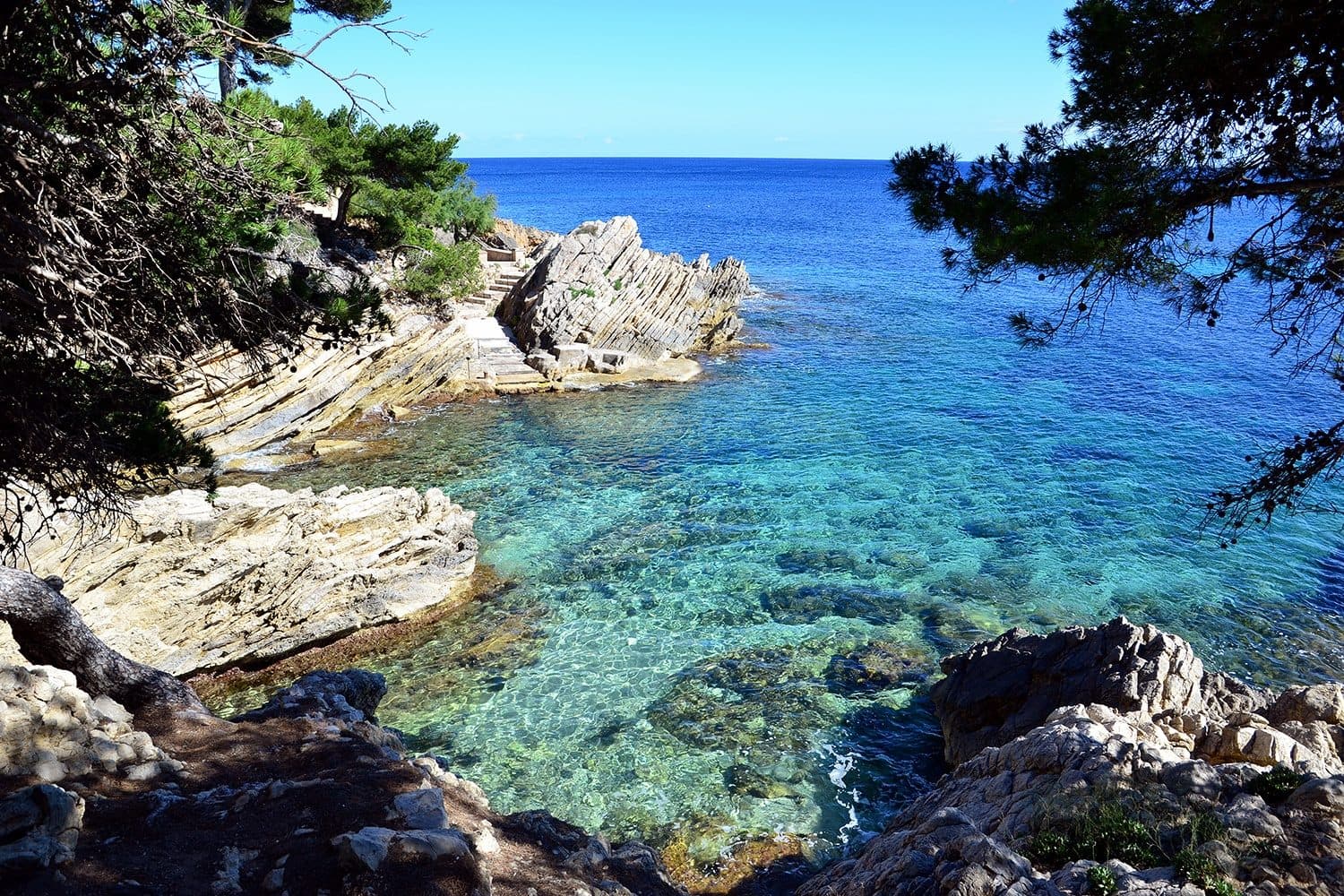
Cala Gat is a small swimming cove and quiet residential area on the eastern edge of Cala Ratjada in northeastern Mallorca. Its identity is shaped primarily by the narrow sandy beach, rocky shores, clear water and immediate proximity to the livelier resort of Cala Ratjada.
For visitors, Cala Gat is particularly worthwhile for swimming, snorkelling and walking along the coast. The cove is sheltered, compact and easy to combine with time at the harbour or a walk through Cala Ratjada. However, this accessibility comes at a price: in summer, the small beach is no longer a hidden gem and can become very busy early in the day.
Anyone staying longer or considering living in this part of the municipality of Capdepera should not view Cala Gat as a self-contained town. Functionally, the settlement forms part of everyday life in Cala Ratjada. Peace and the sea are right on the doorstep, while shopping, restaurants, the market and other services are generally found in the adjoining urban area. For regular trips to Palma, however, the location is considerably less convenient than it is for people whose daily lives are centred in the northeast.
Cala Gat is most appealing to those who prefer a small coastal setting to a large beach resort and accept that the atmosphere changes considerably throughout the year. In summer, beachgoers shape the rhythm of the day; outside the main season, walks, the rocky coastal landscape and residential life on the edge of town become more prominent.
Sights in Cala Gat
Platja de Cala Gat
The beach at Cala Gat is the focal point of the neighbourhood and the main reason many visitors come here. The sand lies in a compact cove framed by rocks. Pines and other Mediterranean vegetation form a green backdrop, while the water appears strikingly clear in calm weather. Unlike the region's large beaches, there is no expansive shoreline: beach, rocks and residential buildings all lie close together.
This small size defines the character more strongly than any facilities. Cala Gat is well suited to a quick morning swim or a few hours by the water, but less suitable for a spontaneous midsummer beach day with lots of luggage and the expectation of generous space between towels. The sheltered shape of the cove can provide calmer water. At the same time, the beach shelves comparatively quickly, so small children and inexperienced swimmers should be supervised closely.
The Boathouse at Cala Gat
A small boathouse stands at the edge of the cove and is one of Cala Gat's most distinctive features. It is neither a museum nor a staged attraction, but part of the cove's simple maritime scenery. Together with the rocks, sand and vegetation, it gives the beach a far more individual silhouette than many more developed swimming spots.
The building is also one reason for the cove's great popularity on social media. Those visiting Cala Gat for this view will usually find a quieter scene early in the morning. Later, the photo motif quickly becomes a busy beach backdrop, especially during holiday periods.
Coastal Promenade to Cala Ratjada
The path along the sea connects Cala Gat with Cala Ratjada. It makes it easy to move between the small cove and the more densely built-up coastal resort without needing a car for every stop. Along the way, views open across rocks and sea, while vegetation and buildings on the edge of town line the other side.
This path is crucial for understanding the setting: Cala Gat is not a secluded natural cove reached only after a long hike. It lies at the end of a developed stretch of coast. This makes it especially practical for a walk, a swim and a subsequent visit to the harbour. However, anyone seeking solitude should not mistake the cove's small size for seclusion.
Cala Ratjada Harbour
The harbour is not in Cala Gat itself, but it is the most natural urban destination for a coastal walk. It reveals the other side of this location: while Cala Gat is shaped by its beach, rocks and residential buildings, the harbour concentrates Cala Ratjada's boats, restaurants and public life. Linking the two places makes the outing more varied than a simple beach visit.
The harbour also retains a visible connection to fishing. At the same time, it is a tourist meeting place and provides a clear contrast to the small swimming cove. Life shifts more noticeably to this part of Cala Ratjada in the evening, while Cala Gat feels quieter once the beach activity has ended.
Far de Capdepera
The lighthouse at Cap de Capdepera is a fitting excursion for anyone wishing to explore the coastal landscape beyond Cala Gat. It stands on the eastern headland near Cala Ratjada and marks the transition from the developed holiday coast to a more exposed section with broad sea views.
Its appeal lies less in an extensive tour than in the location itself. The lighthouse provides a scenic counterpoint to the sheltered cove: Cala Gat feels small and enclosed, while the cape is open and faces the sea. Milder times of day are better suited to the route than the hot midday period in summer.
The Weekly Market
Cala Ratjada Market
The nearest regular weekly market takes place in the centre of Cala Ratjada, extending along Carrer d’Elionor Servera and the adjoining Plaça dels Pins. For residents of Cala Gat, it is therefore less an event in another town than part of the nearby area used for shopping and everyday life.
The selection combines fresh food with clothing, handicrafts and souvenirs. This means the market is not aimed exclusively at holidaymakers, although its location in a heavily visited coastal resort is clearly noticeable. Among the fruit, vegetables and other food products are goods intended more for holiday browsing than for the weekly grocery shop.
For visitors, the market is a worthwhile addition to the beach and harbour, provided the plan is not limited to a quiet day of swimming. Plaça dels Pins and the surrounding streets become noticeably busier while the market is operating. Anyone continuing to Cala Gat afterwards can make the change of location into a walk and experience the transition from the bustling centre to the smaller cove.
Restraint is advisable when arriving by car. Parking near the market can fill quickly, and searching for a space can soon take the ease out of a short outing. Those staying in Cala Ratjada or Cala Gat are usually more flexible on foot. The exact market day is displayed separately on this page; for planning purposes, it is also important to know that visits are concentrated in the morning and that an early start is more pleasant than arriving late.
Activities and Excursions
Swimming in Cala Gat
Cala Gat is particularly suitable for swimming when the sea is calm. The sheltered cove and clear water create good conditions for swimmers who prefer entering the water in a compact coastal setting rather than from a long, open beach. Because the sandy area is small, a visit should not come with expectations of a spacious day at the beach.
The cove works best as part of a varied day: swim early, walk along the coast afterwards and later stop for food in the centre or at the harbour. During the main season, timing has a greater impact on the experience than the length of the visit. Anyone arriving at the most popular swimming time should expect the sunbathing area to be crowded.
Snorkelling Along the Rocks
The clear water and rocky sides of the cove make Cala Gat a natural place for snorkelling. The transitions between rock and water are more interesting than the sandy centre. Bringing your own mask is advisable.
Despite its sheltered position, the cove remains part of the open Mediterranean. Waves, visibility and currents can change. The rocky edges are also no substitute for an easy entry point. For families, access from the sand is the simpler choice, while snorkellers should adapt their route to the current water conditions.
Walking Between the Cove and Harbour
The coastal path to Cala Ratjada is the easiest activity from Cala Gat and also the best way to understand its setting. It combines natural views with the more urban environment of the harbour. The walk requires no elaborate route planning and fits easily into a short visit, provided the summer heat is taken into account.
In the morning, the path is quieter and the cove is less crowded. Later in the day, the reverse sequence works well: walk from the beach towards the harbour and continue the evening there. Anyone who simply drives to the cove, takes a quick photograph and leaves misses precisely this transition between a small coastal corner and a lively holiday resort.
Cala Agulla, Son Moll and Cala Lliteres
Cala Gat is only one of several very different swimming spots around Cala Ratjada. Cala Agulla, Son Moll and Cala Lliteres are nearby. Together, these places demonstrate how varied this stretch of coast is within a compact area.
Comparing them is particularly worthwhile when Cala Gat is already full. Rather than waiting a long time for space on the small sandy area, another beach may fit the day's plans better. Cala Gat can then remain a destination for a quick swim or walk without necessarily being the only place visited that day.
Capdepera and Its Castle
The historic town of Capdepera provides a clear contrast to the coast. While Cala Gat and Cala Ratjada are defined by the sea, harbour and tourism, the focus there is on the old town centre and castle. The excursion is therefore more than an alternative for bad weather: it adds the municipality's historical perspective to a beach day.
Capdepera is particularly suitable on market day or during the medieval market. Outside major events, the change of setting is quieter and offers an opportunity to discover the northeast as more than a collection of swimming coves. For residents of Cala Gat, Capdepera is also part of the nearby everyday area, including as a point of access to regional bus connections.
Coves d’Artà
The Coves d’Artà are among the best-known excursion destinations on the northeastern coast of Mallorca. They offer a strong scenic contrast to the open sea: instead of beaches and horizons, the focus is on underground spaces and rock formations. A visit can easily be combined with other destinations along the coast.
On very hot or changeable days, the caves provide an alternative to spending several hours on the small beach. Since Cala Gat itself has only a few conventional sights, its value as a base is enhanced by destinations such as these in the wider region.
Beaches in Cala Gat
One beach with its own page belongs to Cala Gat.
Festivals and Events
Sant Antoni
In mid-January, Sant Antoni is celebrated in Cala Ratjada and the municipality of Capdepera with fires, music, processions and traditional devil figures. The main festival days fall on 16 and 17 January. For residents of Cala Gat, this festival is one of the occasions when social life outside the swimming season becomes clearly visible in the streets and squares.
Sant Antoni reveals a side of the region that summer visitors can easily miss. The focus is not on the beach or tourist entertainment, but on a winter tradition deeply rooted in Mallorca. Anyone staying in Cala Gat at this time will experience a quiet cove while neighbouring town centres celebrate together.
Medieval Market in Capdepera
In May, the medieval market transforms the area around Capdepera Castle. Stalls, craft demonstrations, music, performers and historical costumes incorporate the old fortifications and streets of the town centre into the event. From Cala Gat, this is the most important recurring festival that can be combined with a cultural and historical excursion.
During the market, Capdepera is considerably busier than on ordinary days. Anyone starting in Cala Gat should not treat the excursion as a quick stop, but allow enough time to walk through the town and market grounds. The distinctive setting clearly differentiates the event from the weekly market in Cala Ratjada.
Virgen del Carmen
On 16 July, Cala Ratjada honours the patron saint of fishermen and sailors. The celebration is centred on the harbour and may include a boat procession, music and other festivities. This date is particularly relevant to Cala Gat because of its proximity to the harbour: the neighbouring town's maritime identity becomes more prominent than during an ordinary day of tourist activity.
Walking there is often more practical on such a day than driving into the busy harbour area. Visitors should expect more than an ordinary restaurant evening, with additional crowds and a programme centred around the water.
Sant Roc and Sant Bartomeu
Further festival days follow in August, with Sant Roc on 16 August and Sant Bartomeu on 24 August in Cala Ratjada and Capdepera. Street festivals, concerts and local events take place at a time when the region is already heavily visited. The lively atmosphere extends into daily life in Cala Gat, even though the small cove itself is not the centre of the celebrations.
Anyone seeking peace should make a clearer distinction between the residential area, beach and town centre on event days. Those wishing to experience local social life, however, will find a good reason to leave Cala Gat in the evening and visit the squares of the neighbouring towns.
Tourist Festival
Towards the end of September, the municipality holds a tourist festival featuring music, dance, food and markets. Venues include Plaça dels Pins in Cala Ratjada and locations in Capdepera. The event marks a point when the intense summer season is gradually drawing to a close, although holiday activity remains clearly visible.
For guests in Cala Gat, the festival is a suitable evening programme after visiting the beach. Residents also experience it as an event that explicitly embraces Cala Ratjada's tourist character and combines it with Mallorcan dances, handicrafts and culinary contributions.
Upcoming dates
Travel and Getting Around
By Car from Palma Airport
From Palma Airport, the route runs along the Ma-15, followed by the Ma-4030 and Ma-4040 into the northeast. Cala Gat is 78 road kilometres away, and the journey takes around 68 minutes. The Ma-15 covers most of the connection across the island; only the final section becomes more local, following the road network of the municipality of Capdepera to Cala Ratjada.
In practical terms, Cala Gat can be reached from the airport without navigating difficult mountain roads, but it is far enough from Palma that an impromptu return trip is not convenient. During the high season, visitors should not arrive at the small cove expecting to find a free parking space immediately beside the beach. Anyone staying in Cala Ratjada is better off reaching Cala Gat on foot.
By Car from Palma
From the centre of Palma, the total distance via the Ma-15, Ma-4030 and Ma-4040 is 81 road kilometres. The journey takes around 75 minutes. This is easily manageable for a day trip, but Cala Gat alone offers little to fill an entire day. It makes more sense to combine it with Cala Ratjada harbour, Capdepera, another beach or a destination on the northeastern coast.
For regular commuting, the route is considerably more demanding than it is for occasional excursions. The measured journey time of 75 minutes in each direction already makes it clear that Cala Gat is not a typical residential location for someone working in Palma every day. Those with only occasional appointments in the capital, however, can make good use of the direct road connection.
By Bus
Bus stops are located in Capdepera; the current stops and routes are displayed separately on this page. For detailed planning, it is important to consider not only the journey into the municipality but also the final section to the cove.
A car-free holiday works particularly well when accommodation is in Cala Gat or neighbouring Cala Ratjada and most journeys to the beach, harbour and centre can be made on foot. For scattered excursion destinations, several coves in one day or frequent journeys to Palma, public transport is less flexible than having your own vehicle.
Walking Within Cala Ratjada
Walking is the most important form of local transport. Cala Gat lies on the edge of Cala Ratjada's continuous built-up area and is connected to the harbour and centre by the coastal path. This makes it possible to visit the beach without searching for another parking space for such a short change of location.
This advantage applies especially to light beach days and evening walks. Large shopping trips, luggage or excursions beyond Cala Ratjada change the equation. Those living here can reach many everyday destinations in the neighbouring resort, but remain more dependent on a bus or car for regional journeys.
Bus lines to Cala Gat at a glance
| Line | Route | Departures/day | First | Last |
|---|---|---|---|---|
| 411 | Cala Rajada - Manacor | 83 | 05:47 | 23:25 |
| 424 | Cala Rajada - Portocristo | 63 | 08:06 | 23:25 |
| 325 | Alcúdia - Cala Rajada | 52 | 09:18 | 21:49 |
| 411e | Cala Rajada - Palma | 32 | 08:42 | 23:48 |
| 422 | Cala Mesquida - Cala Rajada | 14 | 08:32 | 21:32 |
| 423 | Font de sa Cala - Cala Rajada | 14 | 08:41 | 21:41 |
From the official GTFS feeds (TIB/SFM), no real-time data. The figures cover all stops in the town; weekend and holiday services differ — check with the operator before travelling.
Getting there by bus
Capdepera centre 2 (14043) · 1.2 km as the crow flies
- 325Alcúdia - Cala Rajada · Daily
- 411Cala Rajada - Manacor · Daily
- 411eCala Rajada - Palma · Daily
- 424Cala Rajada - Portocristo · Daily
Capdepera oest (14003) · 1.3 km as the crow flies
- 325Alcúdia - Cala Rajada · Daily
- 411Cala Rajada - Manacor · Daily
- 411eCala Rajada - Palma · Daily
Capdepera centre 1 (14033) · 1.4 km as the crow flies
- 325Alcúdia - Cala Rajada · Daily
- 411Cala Rajada - Manacor · Daily
- 411eCala Rajada - Palma · Daily
- 424Cala Rajada - Portocristo · Daily
Capdepera est 1 (14028) · 2.2 km as the crow flies
- 325Alcúdia - Cala Rajada · Daily
- 411Cala Rajada - Manacor · Daily
- 411eCala Rajada - Palma · Daily
- 422Cala Mesquida - Cala Rajada · Daily
- 423Font de sa Cala - Cala Rajada · Daily
- 424Cala Rajada - Portocristo · Daily
Timetable data: official GTFS feeds (TIB/EMT), no real-time — check with the operator before travelling.
Living in Cala Gat
Daily Life on the Edge of Cala Ratjada
Cala Gat is a residential and holiday area, not an independent service centre. Daily life is therefore oriented towards Cala Ratjada and, for journeys farther afield, Capdepera. This is more important when assessing a flat or house than proximity to the beach: cafés, restaurants, the market and shops are concentrated in the larger neighbouring town, while Cala Gat itself is primarily defined by residential buildings, the coastal path and the swimming cove.
Those who enjoy getting around on foot may see the edge-of-town location as an advantage. The harbour and town centre can become part of a daily walking radius without Cala Gat itself having the same density and bustle. The location is less suitable for people who expect completely independent infrastructure immediately outside their door.
Summer and Winter
In summer, the small beach dominates the daily scene. Beachgoers arrive early, and later the limited sandy area is often densely occupied. Pedestrian traffic between Cala Ratjada, the coast and the cove increases, and this quiet edge-of-town location can temporarily feel much more touristy than a visit outside the season would suggest.
In winter and the shoulder season, pressure on the beach decreases considerably. Its qualities as a residential location then come to the fore: sea views, coastal walks and proximity to Cala Ratjada remain, while the cove no longer determines the entire rhythm of the day. At the same time, the resort is seasonal. Anyone wishing to live here year-round should not base their routines exclusively on summer restaurants and tourist services.
Living Without a Car
A car-free daily life is possible if work, shopping and leisure are centred mainly on Cala Ratjada. The walking connection is more important for this than the bus. The market and harbour can also be incorporated into everyday life. For people who frequently transport equipment, combine several regional appointments or wish to visit more remote beaches, a car remains considerably more practical.
The connection to Palma is not well suited to spontaneous daily commuting: 81 road kilometres and around 75 minutes in each direction are a substantial burden. Cala Gat is therefore better suited to employment in the northeast, working from home or lifestyles in which journeys to Palma are only occasional.
Character of the Residential Areas
Close to the beach, daily life is most strongly influenced by the seasonal flow of visitors. Proximity to the water means short walks for swimming and access to the coastal path, but also more activity during the most popular hours of the day. Farther into the residential area, the neighbourhood character becomes more prominent, although Cala Gat never feels like a self-contained village.
Anyone considering a move should therefore view the location both in midsummer and outside the swimming season. Only this comparison reveals whether the seasonal contrasts suit their daily life.
Practical Information for Your Visit
The Best Time of Day
Early morning is usually the most appealing time for Cala Gat. The beach is less crowded, the light falls pleasantly into the small cove and the coastal path is not yet dominated by the midday heat. Anyone mainly interested in swimming or photography will benefit more from an early start than from a long afternoon visit.
Outside the main season, later in the day can also be attractive because there is less pressure on the beach. However, the decision should not depend on the sun alone. In such a small cove, even a modest number of additional beachgoers noticeably changes its character.
Time Required
Half a day is sufficient for the beach, boathouse and a short section of the coastal path. It becomes a full-day excursion if Cala Ratjada harbour, Capdepera, another beach or the lighthouse is included. Cala Gat is known primarily for its small swimming cove, boathouse and coastal path.
For precisely this reason, the visit should not be extended artificially. Its strength lies in the concentrated coastal experience: arrive, swim, see the cove and then continue on foot or by car.
Parking and Luggage
Because of the cove's small size and popularity, arriving early by car is advisable. A beach day with extensive equipment is less convenient than at a large sandy beach because space for lying down is limited and the immediate coastal area is not designed for large numbers of visitors. Those staying in Cala Ratjada should favour walking.
On market mornings, the parking situation in the centre can become even more difficult. The market and Cala Gat are then better planned as a single continuous walk rather than searching for a new parking space at every stop.
Visiting with Children
The sheltered shape, sandy access and compact cove appeal to families. Nevertheless, the beach shelves comparatively quickly into the water. Small children should therefore be supervised closely; a small beach does not automatically mean shallow water or permanently calm conditions.
Families with pushchairs and plenty of equipment should bear in mind that Cala Gat is not an expansive family beach with large open spaces. Those who need room for a long beach day can plan Cala Gat as a swimming stop and spend most of the day at a more spacious beach.
What Cala Gat Is Not
Cala Gat is neither a remote natural cove nor a complete holiday resort with its own centre. Restaurants, nightlife, the market and a large share of local services are in Cala Ratjada. Nor should visitors expect an empty secret beach simply because the cove is small and framed by rocks.
Understanding these limitations leads to a more realistic experience of the place: a beautiful, easily accessible coastal corner on the edge of a lively holiday resort. Its quality lies in the proximity of nature and infrastructure, not in absolute solitude or an extensive sightseeing programme.
Eating, drinking and staying in Cala Gat
The best-rated businesses from our directory, ordered by Google rating — not by advertising.
Latest news from Capdepera
- 27 Mallorca towns lack Alcover and La Balanguera
- Marratxí gets green light for 60 public homes
- Mallorca storm kills woman amid 173 incidents
- Mallorca storm triggers 100 incidents as trees fall