
Cala Rajada, Mallorca – Travel Guide for Holidays and Daily Life

Places to stay in Cala Rajada
AdTo load the accommodation map by our partner Stay22, we need your consent for marketing cookies. Your consent applies to all marketing content on mallorca.com.
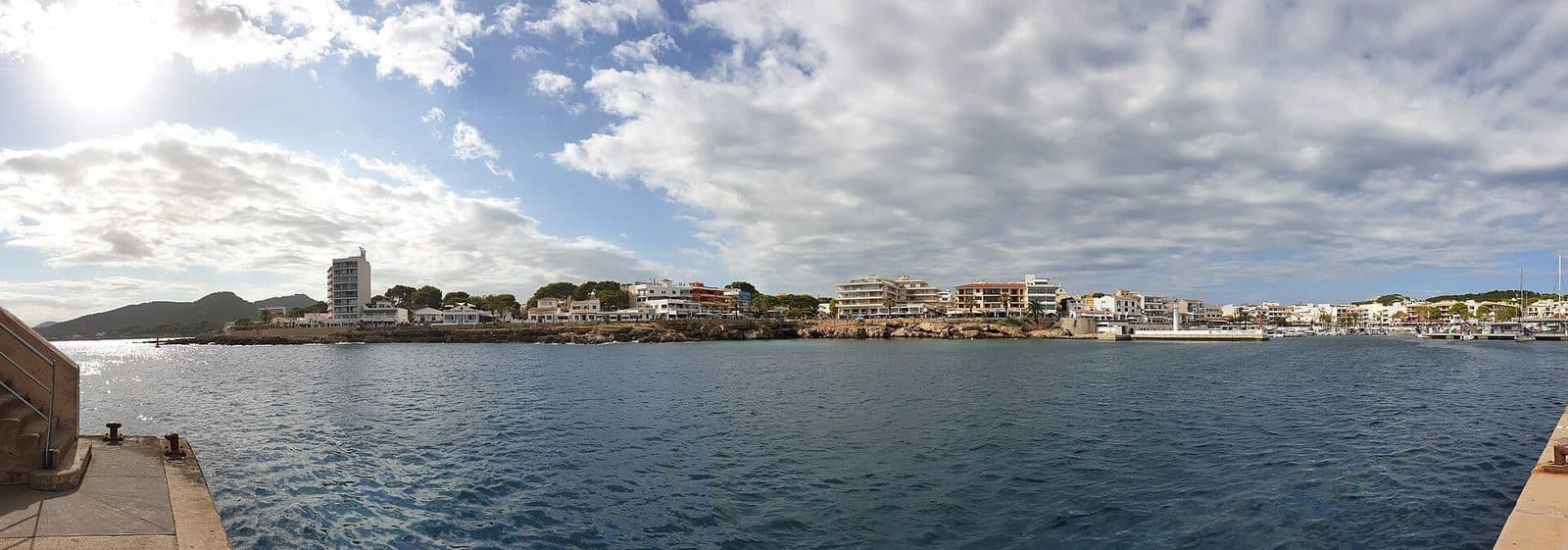
Cala Rajada lies on Mallorca’s far northeastern coast and belongs to the municipality of Capdepera. The town is also frequently spelt Cala Ratjada. It is at once a long-established harbour town, a major holiday resort and a starting point for some of the best-known coves in the Llevant. Fishing boats, excursion vessels and yachts are as much a part of the scene as hotels, apartments, restaurants, bars and a lively nightlife.
Cala Rajada is best understood not as a self-contained historic centre, but as a sequence of different coastal areas. The older centre lies around the harbour, with rocky stretches extending east towards the lighthouse, while sandy beaches and tourist-oriented residential and hotel districts adjoin elsewhere. This makes the town suitable both for a stroll around the harbour and for a longer stay involving beaches, water sports and excursions.
Cala Rajada is livelier and more international than many inland towns. This is reflected in the wide range of restaurants, accommodation, fashion shops, bars and clubs. Families will find several beaches within easy reach, while walkers and nature enthusiasts can explore coastal paths and the landscapes of the Llevant. Those seeking complete seclusion or a fully preserved stone village, however, will be better served by Capdepera or Artà.
Cala Rajada also has its own logic as a place to live: many everyday errands can be handled within the compact coastal town, and food shops and numerous services are part of the local offering. At the same time, its location on the island’s northeastern edge must be taken into account. Palma and the airport are readily accessible by road, but not close enough for a casual daily journey.
History of Cala Rajada
The origins of Cala Rajada are closely linked to the sea and nearby Capdepera. In the 17th century, a small fishing settlement developed on the coast, founded by residents of Capdepera. Local fishermen focused on catches including rays and lobsters. The place name also recalls this and can broadly be understood as Ray Bay.
Fishing and the Harbour
For a long time, the sheltered harbour formed the economic centre. Its importance is still visible today: fishing boats continue to share the basin with leisure craft and excursion vessels. The historic lobster houses east of the harbour are particularly distinctive. Live animals were kept in their seawater-fed tanks until they were sold. They represent a coastal economy that existed long before the rise of tourism. Fishing is therefore more than a decorative theme along the promenade: despite considerable tourist development, the harbour has remained a genuine place of work.
Hostal Ca’s Bombu
An early milestone in tourism was the opening of Hostal Ca’s Bombu in 1885. The establishment was run by the Esteva family for generations. Its history shows that visitors were already coming to Cala Rajada long before modern package tourism and that development did not begin only with the construction of large hotels.
The Growth of Tourism
A major construction boom began in the 1970s. Hotels, apartment complexes, restaurants and leisure facilities spread primarily towards the beaches, although the older centre around the harbour remained recognisable. This produced the present-day structure: a long-established maritime core surrounded by considerably newer holiday and residential districts.
This transformation also shapes the atmosphere. Cala Rajada is not a frozen fishing village living solely from its past. The town has developed into one of the liveliest holiday resorts in the northeast without completely losing its connection to the harbour. It is precisely this contrast that makes its history understandable in the townscape.
Things to See in Cala Rajada
The main impressions are not concentrated in a single monument. Cala Rajada reveals itself through the harbour, coastline, lighthouse and former residence of the March family. Many destinations can be combined on a walk, with clear changes between the densely built-up centre and the rocky headland.
Cala Rajada Harbour
The harbour is the spatial and atmospheric centre. Fishing boats, yachts and excursion vessels share the sheltered basin, while restaurants and cafés line the promenade. Anyone wanting to understand how the former fishing town and today’s holiday resort function side by side should begin their walk here.
What is interesting is less a single building than the overall scene: working boats lie alongside tourist facilities, the promenade opens up views of the water, and the densely built-up centre begins in the adjoining streets. In the evening, much of public life shifts to the harbour.
Historic Lobster Houses
East of the harbour, small historic structures recall the lobster fishery. The animals were kept there alive in seawater tanks until buyers were found. The houses are an understated but particularly characteristic reminder of the maritime economy and explain part of Cala Rajada’s culinary identity.
Far de Capdepera
The Capdepera lighthouse stands on the rocky headland above the coast. The real experience is the unrestricted view across the Mediterranean and the rugged northeastern coastline. In clear conditions, Menorca may be visible on the horizon.
The route to Far de Capdepera leads from the densely developed resort into a more open landscape shaped by wind and sea. The cooler hours are more pleasant for a visit than the midday heat. The viewpoint is particularly appealing late in the day, when the light falls at a lower angle across the coast.
Torre Cega and Villa March
Villa March was a summer residence of the March family. The estate combines architecture, art and landscaped gardens above the coast, revealing a different side of local history from the harbour and fishermen’s houses. The gardens of Torre Cega also serve as a venue for cultural events, including the summer serenades held in connection with the Festes del Carme. It is advisable to check current access arrangements before planning a visit.
Cala Gat
Cala Gat is a cove.
Son Moll
Son Moll lies on the built-up edge of Cala Rajada and is closely connected to the holiday resort. The beach is convenient for anyone wishing to combine swimming with restaurants, shops and short walking distances. Those looking for natural surroundings and more open scenery should head instead towards Cala Agulla.
Cala Agulla
Cala Agulla is one of the defining beaches in the surrounding area. Sand, clear water and wooded slopes create a much more scenic impression than the beaches within the town.
Sights in Cala Rajada
The Weekly Market
The weekly market takes place in the central streets of Cala Rajada and can be reached on foot from the harbour area. Depending on the precise layout, the stalls are distributed across the town centre and adjoining squares. Because the market is held in the middle of the lively centre, it is less a self-contained farmers’ market than a coastal mercadillo for locals, residents and holidaymakers.
Food and Mallorcan Products
The food selection includes fruit and vegetables as well as typical products such as Sobrasada, cheese and olives. This makes the market equally interesting for shopping during a longer stay and for gaining an initial overview of regional products. The selection may be more extensive in summer, but the market itself is held throughout the year.
Clothing, Ceramics and Basketware
A large proportion of the stalls focuses on clothing, shoes, bags, accessories and souvenirs. Ceramics, jewellery, decorative items and traditional basketware are also available. Anyone expecting a market devoted solely to producers should bear this tourist-oriented element in mind. However, the combination of food and holiday-related products is entirely in keeping with Cala Rajada’s character.
The market is most pleasant early in the morning. The central streets become busier later, and the heat and sun are more intense during the hotter months. Parking near the centre is particularly sought after on market day. It is more practical to park outside the immediate market area and then combine the visit with the harbour promenade or a beach.
Markets in Cala Rajada
One market with dates, opening hours and what is on sale, in the market calendar.
Food and Drink
Cala Rajada has a broad dining scene geared strongly towards visitors. It ranges from fish restaurants at the harbour and venues serving tapas and Mallorcan dishes to bars and late-night establishments. The key question is therefore less about finding one particular culinary address than choosing the right district and preferred atmosphere.
Harbour Promenade
Restaurants overlooking the boats and water are concentrated around the harbour. Fish and seafood are the obvious themes here, as the town’s maritime tradition is not a later invention: the harbour was and remains a working base for fishing. Especially in the evening, dining merges with life on the promenade as walkers, restaurant guests and day visitors share the same stretch of coast.
The location alone, however, says nothing about the quality of a restaurant’s cooking. When choosing, it is worth looking for a manageable menu, clearly displayed daily specials and dishes suited to the maritime surroundings. Those who prefer a quieter meal should choose a side street rather than the front row beside the water.
Lobsters and Seafood
Lobsters have particularly close historical ties to Cala Rajada. The old holding facilities east of the harbour recall how live animals were kept in seawater tanks until they were sold. Rays also played a role for the early fishermen and gave the bay its name.
For today’s cuisine, this history primarily means a strong focus on the sea. Alongside larger fish dishes, tapas and smaller portions are suitable for discovering different preparations. However, it would be wrong to assume that every establishment by the harbour automatically follows traditional methods: Cala Rajada is an international holiday resort with a correspondingly diverse dining scene.
Mallorcan Products
Sobrasada, cheese, olives and seasonal fruit and vegetables are readily available at the weekly market and are suitable for self-catering visitors. They represent a different food culture from the evening restaurant strip: bread, cured sausage, cheese and preserved products can easily be combined into a Mallorcan-style meal.
Those wishing to eat local food should not choose solely on the basis of a sea view. More straightforward establishments can often be found in the streets behind the promenade, while the prominent harbour locations are more strongly shaped by evening entertainment. The mix of businesses, with many restaurants, bars and nightspots, makes it clear that dining and nightlife can merge seamlessly.
Bars and Nightlife
Cala Rajada has one of the more developed nightlife scenes in northeast Mallorca. Bars, nightclubs and discos cater particularly to an international audience during the season. Evenings often begin on the promenade or in a bar before shifting later to the nightlife streets.
For travellers who want to sleep early, the precise location of their accommodation is therefore more important than it would be in a quiet village. Apartments and hotels directly on busy streets offer short walking distances, but not the same atmosphere as outlying locations near Cala Agulla, Cala Gat or towards Capdepera.
Eating, drinking and staying in Cala Rajada
The best-rated businesses from our directory, ordered by Google rating — not by advertising.
Restaurants
- Orycolo5.0· 54 reviews
- Restaurante Port Corona5.0· 21 reviews
- La Casita Bistrot4.9· 370 reviews
- Sollento - Bar & Restaurant4.9· 269 reviews
- AKINO4.9· 144 reviews
- Balandrijs4.9· 60 reviews
- Restaurant Los Arcos4.8· 2355 reviews
- Friends Bar Drink & Food4.8· 515 reviews
- La Vista Cala Ratjada4.8· 466 reviews
- La Favola Pizzería & Focaccería4.8· 411 reviews
- rö nikkei4.8· 342 reviews
- Restaurant La Caracola4.8· 309 reviews
Cafés and bakeries
- Tartas Bu, Repostería Creativa y Decoración de Eventos5.0· 22 reviews
- Diagon Cafe4.7· 67 reviews
- Bar Los Amigos4.6· 1312 reviews
- cafeteria pizarro4.6· 465 reviews
- Cafeteria Sa Cabana4.6· 120 reviews
- Cafeteria Castellet4.5· 220 reviews
- Gelateria Des Port4.3· 317 reviews
- GELATERIA TOP GELATO4.2· 273 reviews
- heladería & café dolce vita4.1· 381 reviews
- Tolan3.8· 82 reviews
Bars
- Cafe-Bar Yvonne5.0· 40 reviews
- Mahoni's Tapas Bar4.9· 244 reviews
- Español4.9· 29 reviews
- Coconar 17 Lounge & Cocktails Bar4.7· 650 reviews
- Bahia Tropical Cocktail Bar & Shisha Lounge4.7· 213 reviews
- Azúcar4.7· 40 reviews
- Mosquito Sportbar Cala Ratjada4.6· 1072 reviews
- Bora Bora Polinesian Bar4.6· 484 reviews
- Cafeteria D&D4.5· 107 reviews
- Angels-Bolero4.3· 952 reviews
- Chocolate4.3· 695 reviews
- EPIC Cala Ratjada4.3· 39 reviews
Hotels and fincas
- Mamboo Hotel Cala Ratjada4.9· 203 reviews
- Mar Azul Pur Estil Hotel & Spa4.8· 459 reviews
- Petit Hotel Ses Rotges4.8· 343 reviews
- The Sea Club4.7· 285 reviews
- Grupotel Aguait Resort & Spa4.6· 1475 reviews
- Hotel Capricho & Spa4.6· 886 reviews
- Lago Garden Hotel & Spa4.6· 670 reviews
- HOTEL CALA GAT4.6· 345 reviews
- Hotel Quijote Park4.6· 109 reviews
- Green Garden Aparthotel4.5· 2485 reviews
- Son Moll Sentits4.5· 1061 reviews
- Hotel Bella Playa & Spa4.5· 995 reviews
Activities and Excursions
Cala Rajada is particularly well suited to activities centred on the coast and sea. Several beaches lie within or close to the settlement, boat trips depart from the harbour, and the rocky stretches are suitable for walking, diving and other water sports. For historic townscapes, however, Capdepera and Artà are the obvious destinations.
Coastal Path to Far de Capdepera
The walk to the lighthouse combines sightseeing with scenery. From the harbour, the route leads through the eastern coastal area and out to the headland. Along the way, the surroundings change from a densely used holiday resort to a rocky coast that is more exposed to the wind.
Good footwear is advisable for paths away from the promenade. In summer, mornings and late afternoons offer more pleasant conditions. The lighthouse is less the endpoint of a conventional sightseeing circuit than a viewpoint and landmark above the sea.
Cala Agulla and Cala Mesquida
Cala Agulla and Cala Mesquida are among the well-known beaches in the surrounding area. Cala Mesquida is also suitable as a separate swimming destination, while Cala Agulla can easily be combined with a stay in the town.
Diving and Water Sports
Diving and other water sports are among the activities available. The more easily accessible sandy beaches are generally simpler for families, while rocky coves and dive sites are more suited to active visitors. Wind and sea conditions have a considerable influence, so the choice of beach should not be based solely on how it appears on a map.
Boat Trips
Excursion boats depart from the harbour along the east coast, including towards Cala Millor and Porto Cristo. Boat trips to Canyamel for the Caves of Artà are also offered. Travelling by water is a significant part of the experience, as the rocky coast, coves and holiday resorts appear from a different perspective.
Before an excursion, it is therefore advisable to check directly at the harbour which service is actually operating and whether the planned time ashore is compatible with the return journey.
Capdepera and Artà
Capdepera is the historic counterpart to the coastal town. Anyone looking for old lanes, a distinctly Mallorcan town centre and a historical atmosphere can easily combine a visit with Cala Rajada. Artà also offers a more traditional townscape, local shops and a well-known market.
Both places help put Cala Rajada into context: the harbour developed through its connection with nearby Capdepera, while the present-day holiday resort is oriented primarily towards the coast. A combined excursion therefore reveals more of the Llevant than a day spent only at the beach.
Beaches in Cala Rajada
4 beaches and coves with their own page belong to Cala Rajada.
Festivals and Events
The most important recurring festival is closely linked to seafaring. Summer cultural events and a seasonal night market are held as well. Dates and individual programmes are set anew each time, but the maritime character of the celebrations remains constant.
Festes del Carme
The Festes del Carme honour the patron saint of sailors and reach their peak around 16 July. The harbour becomes the main stage for music, communal meals and traditional programme highlights. The maritime procession is particularly distinctive, visibly connecting religious devotion with the history of the fishing town.
The programme also includes the Sopar Mariner, a communal seafarers’ meal, events for children and adults, musical evenings and a concluding fireworks display. The exact sequence may change from year to year. Anyone travelling specifically for the procession or a concert should therefore check the current festival programme.
Serenates d’Estiu
The summer serenades in the gardens of Torre Cega combine music with an exceptional historical setting. They form part of the cultural programme during the summer festival season and differ markedly from the lively nightlife of the bars and clubs. Access depends on the relevant event programme.
Summer Night Market
During the summer months, an additional evening market is held by the harbour and promenade. It focuses on arts and crafts, jewellery and handmade products. It is more a part of evening life on the promenade than a provisions market and can easily be combined with dinner at the harbour.
Upcoming dates
Getting There and Getting Around
Cala Rajada lies on the northeastern edge of Mallorca. The road journey crosses the eastern part of the island and takes longer than the island’s manageable size might initially suggest. The town is conveniently located for excursions to Capdepera and neighbouring coves, while Palma lies on the opposite side of the island.
From Palma Airport
Palma Airport is 80 kilometres away by road. The journey takes around 69 minutes and follows the Ma-15, then the Ma-4030 and Ma-4040. In practical terms, this means that Cala Rajada is still a full cross-country drive away after arrival. The town is therefore less suitable for a brief stop immediately before a return flight than for a planned stay in the northeast.
From Palma
The distance from central Palma is 83 kilometres by road. Travelling via the Ma-15, Ma-4030 and Ma-4040 takes around 76 minutes. This is entirely feasible for a day trip, but regular commuting involves a considerable amount of time. The Ma-15 forms the main east–west connection towards Manacor and the Llevant.
Getting Around Town
The harbour, centre, Son Moll and many shops and restaurants can be connected on foot. Depending on the starting point, longer walks should be allowed for Cala Agulla and the lighthouse. A car is not constantly necessary within the centre, but it makes excursions to Capdepera, Artà, Canyamel and scattered coastal destinations easier.
Cala Rajada is served by public buses. During the high season, extra time should be allowed for transfers and heavily used services.
Parking
Parking spaces around the central streets are particularly sought after on market day. It is more practical to arrive early, avoid insisting on a space directly at the harbour and cover the final section on foot.
Bus lines to Cala Rajada at a glance
| Line | Route | Departures/day | First | Last |
|---|---|---|---|---|
| 424 | Cala Rajada - Portocristo | 63 | 08:01 | 23:32 |
| 411 | Cala Rajada - Manacor | 62 | 05:41 | 23:20 |
| 423 | Font de sa Cala - Cala Rajada | 56 | 08:07 | 21:39 |
| 422 | Cala Mesquida - Cala Rajada | 41 | 08:26 | 21:29 |
| 325 | Alcúdia - Cala Rajada | 39 | 09:26 | 21:40 |
| 411e | Cala Rajada - Palma | 24 | 08:36 | 23:57 |
From the official GTFS feeds (TIB/SFM), no real-time data. The figures cover all stops in the town; weekend and holiday services differ — check with the operator before travelling.
Getting there by bus
Son Moll (14011) · 0.6 km as the crow flies
- 325Alcúdia - Cala Rajada · Daily
- 411Cala Rajada - Manacor · Daily
- 411eCala Rajada - Palma · Daily
- 422Cala Mesquida - Cala Rajada · Daily
- 423Font de sa Cala - Cala Rajada · Daily
- 424Cala Rajada - Portocristo · Daily
Magallanes (14034) · 0.6 km as the crow flies
- 325Alcúdia - Cala Rajada · Daily
- 411Cala Rajada - Manacor · Daily
- 411eCala Rajada - Palma · Daily
- 422Cala Mesquida - Cala Rajada · Daily
- 423Font de sa Cala - Cala Rajada · Daily
- 424Cala Rajada - Portocristo · Daily
Cala Rajada centre (14032) · 0.7 km as the crow flies
- 325Alcúdia - Cala Rajada · Daily
- 411Cala Rajada - Manacor · Daily
- 411eCala Rajada - Palma · Daily
- 422Cala Mesquida - Cala Rajada · Daily
- 423Font de sa Cala - Cala Rajada · Daily
- 424Cala Rajada - Portocristo · Daily
Sa Pedruscada 1 (14041) · 1.0 km as the crow flies
- 423Font de sa Cala - Cala Rajada · Daily
Timetable data: official GTFS feeds (TIB/EMT), no real-time — check with the operator before travelling.
Living in Cala Rajada
As a place to live, Cala Rajada differs significantly from a small holiday resort that closes almost completely outside summer. The town has a long-established harbour, a year-round market and a broad range of essential services, including supermarkets, food shops, hairdressers, beauty salons, fashion shops and restaurants. Many everyday errands can therefore be handled within the town.
Daily Life and Local Amenities
Cala Rajada’s greatest practical advantage is the concentration of its amenities. Food, personal services and restaurants are clustered in the centre and along the busier streets. Those living centrally can complete numerous errands on foot. This is particularly attractive to people who do not want to travel to Capdepera or a larger town on the island for every purchase.
At the same time, the mix of businesses is heavily shaped by tourism. Restaurants, hotels, bars and nightspots occupy a great deal of space. Not every highly visible service is therefore geared towards the long-term daily needs of residents. When choosing a home, it is worth distinguishing between seasonal holiday facilities and infrastructure needed regularly.
Winter and the Low Season
The weekly market is held throughout the year, although the selection at the market may be more extensive in summer.
Residential Areas
Older, more densely built-up districts surround the harbour and centre, offering short walking distances to shops and restaurants. Towards Son Moll and the other beaches, hotels, apartments and holiday homes have a stronger presence. Near Cala Gat, Cala Agulla and the more elevated coastal areas, sea views, rocks and wooded slopes become more prominent, although everyday journeys may be longer.
Proximity to bars and nightlife is a significant factor when choosing a location. A central position makes daily life easier but can involve more pedestrian traffic and late-night activity during the season. Quieter outlying areas offer greater distance from the nightlife, but make a car more useful for shopping and appointments.
Commuting and Living Without a Car
For journeys within Cala Rajada, a car-free lifestyle is generally more practical than in a scattered finca location. The town is compact, has several bus connections and offers many goods and services in the centre. Without a car, however, excursions and appointments in other parts of the island require more careful planning.
Palma is accessible for occasional appointments but is not a nearby commuting destination: the journey via the Ma-15, Ma-4030 and Ma-4040 takes around 76 minutes for 83 kilometres by road. Anyone working in the capital every day must therefore expect a long road journey. The location is considerably more convenient for people whose daily lives are focused on the northeast.
Practical Information for Your Visit
Cala Rajada works best when the harbour, viewpoint and beach are not squeezed into the same hot midday hours. The town offers enough variety for an extended stay, but it is not an open-air museum with a prescribed route. Sensible planning should take account of light, temperature and the different rhythms of the districts.
The Best Time of Day
Early morning is suitable for the market, Cala Agulla and walks along the coast. The cooler hours are also more pleasant for Far de Capdepera. The harbour is at its liveliest in the late afternoon and evening, when the restaurants and promenade become busier.
For an initial overview, a morning can be focused on the harbour and town centre. Anyone also wishing to walk to the lighthouse, swim or include Torre Cega should allow more time. Cala Mesquida can be planned as a separate excursion.
Market Day and Parking
During the weekly market, the central streets are busier and parking spaces fill more quickly. Arriving early and parking outside the immediate market area avoids unnecessary searching. After the market, a walk to the harbour or a visit to the beach is a natural choice, as both are accessible from the centre.
What to Expect
Cala Rajada is neither a quiet historic village nor an entirely unspoilt coastal location. Hotels, restaurants, bars, fashion shops and nightlife are visibly part of the town. Those looking for old lanes and monumental history should ideally combine their visit with Capdepera or Artà. Those who appreciate harbour life, beaches, coastal paths and a broad choice in the evening will find all of them within a compact area.
For accommodation, the precise location is more important than the town name alone. The harbour, nightlife streets, Son Moll and Cala Agulla each have different daytime and nighttime rhythms. Accommodation near the nightlife saves walking, while an outlying location is generally better suited to early beach visits, walking and quieter living.
Local businesses and services
The best-covered sectors in our directory for Cala Rajada — each with address, contact details and opening hours.
- Restaurant / Gastronomy98 listings
- Hotel / Accommodation53 listings
- Fashion & Clothing34 listings
- Bar, Nightclub & Disco28 listings
- Hairdresser / Beauty24 listings
- Supermarket23 listings
Run a business here? Add it to the directory for free and be found on this page. Add your business
Latest news from Capdepera
- 27 Mallorca towns lack Alcover and La Balanguera
- Marratxí gets green light for 60 public homes
- Mallorca storm kills woman amid 173 incidents
- Mallorca storm triggers 100 incidents as trees fall