
Font de Sa Cala – a peaceful coastal resort in northeast Mallorca

Places to stay in Font de Sa Cala
AdTo load the accommodation map by our partner Stay22, we need your consent for marketing cookies. Your consent applies to all marketing content on mallorca.com.
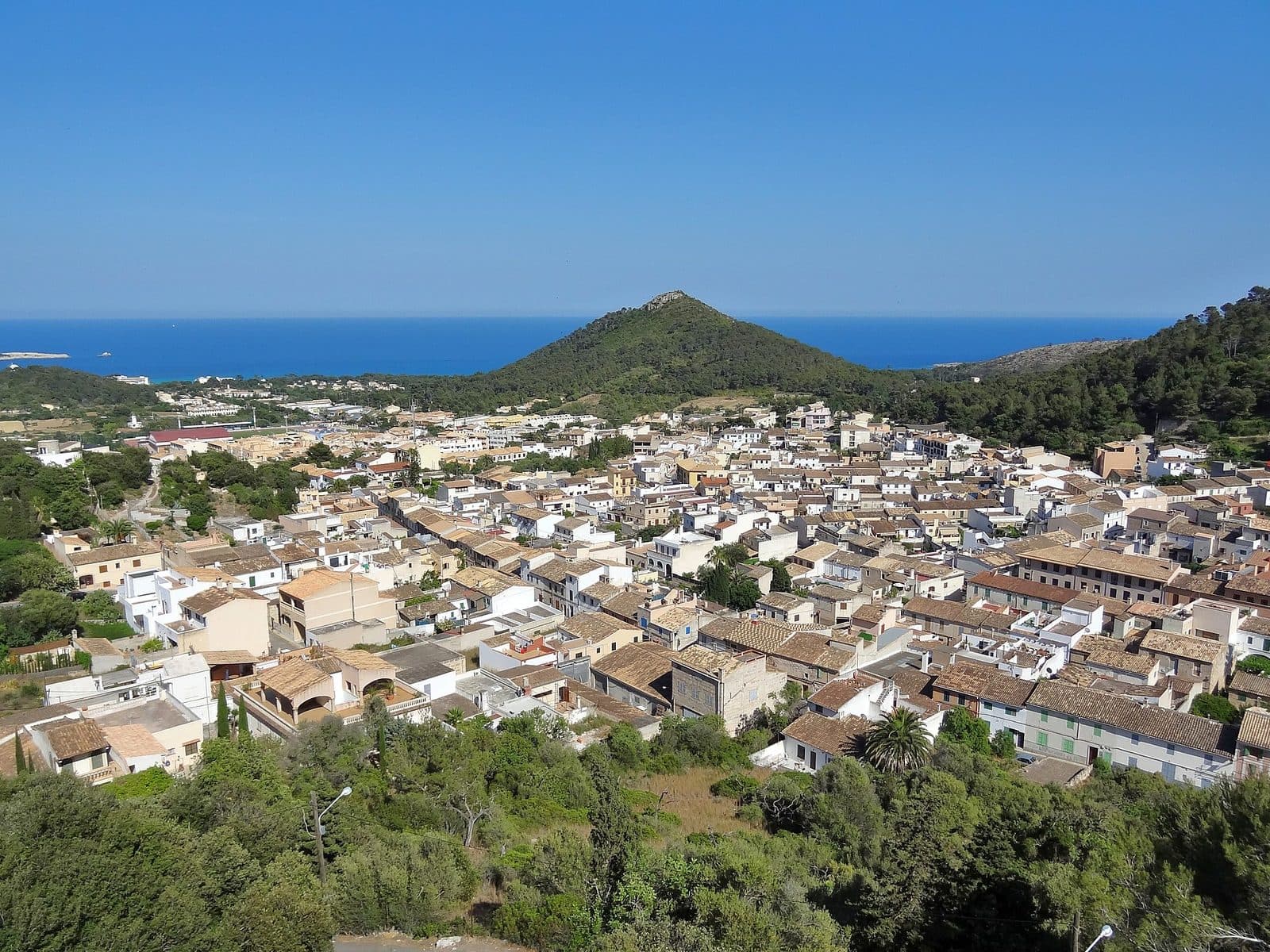
Font de Sa Cala is a small seaside resort and residential area on Mallorca’s northeast coast, south of Cala Ratjada. Its defining feature is a sheltered sandy cove between low, green coastal slopes. Hotels and holiday accommodation shape the resort alongside homes, pine trees, and quiet side streets. Anyone seeking a manageable base by the sea and happy to travel to neighbouring towns for more extensive activities will find it a suitable choice.
The beach is not merely an attraction beside the resort but its true focal point. The water in the cove is considered calm and remains shallow near the shore, making Font de Sa Cala particularly popular with families. An underwater freshwater spring means that the sea here can be cooler and less salty in places than at other nearby beaches. The place name itself refers to the springs that characterise this stretch of coast.
Despite its tourist infrastructure, Font de Sa Cala remains considerably smaller and more restrained than Cala Ratjada. Restaurants, bars, cafés, supermarkets, and water sports facilities cover the needs of a typical holiday; Cala Ratjada is nearby for a wider selection of shops and leisure activities. This also makes the resort appealing to people who want to live by the sea without having either a dense town centre or a lively nightlife scene on their doorstep.
Font de Sa Cala is particularly worthwhile for beach holidays, peaceful days with children, short coastal walks, and excursions around the municipality of Capdepera. Its appeal lies in the cove, direct access to the coastal landscape, and proximity to notable destinations such as Capdepera Castle, Cala Ratjada, Cala Agulla, and the Caves of Artà.
Things to See in Font de Sa Cala
Font de Sa Cala Beach
The light sandy beach is the natural centre of the resort. It lies sheltered between low sections of coastline lined with pine trees and other vegetation. The water in the cove is usually calm and initially shallow, making the beach well suited to families with younger children and relaxed swimming. Toilets, showers, a beach bar, and water sports equipment hire are documented facilities at the beach, and a lifeguard service is also mentioned.
The beach has more facilities than many small rocky coves in the northeast. For that very reason, it can become busier during the summer high season than the resort’s small size might suggest. Limited parking plays an important role in this. Anyone coming solely for the beach will generally fare better early or late in the day than during the main swimming hours.
A special feature lies beneath the water’s surface: a freshwater spring emerges into the sea. As a result, the water can feel cooler locally and have a lower salt content. This is not a staged visitor attraction but a natural characteristic that continues to shape both the name and the perception of the cove.
Cala de n’Aladern
N’Aladern is a small neighbouring cove that can be reached along a quiet coastal path. Sturdy footwear is more suitable for a coastal path than simple beach sandals, particularly when the ground is dry and loose. The cove makes a good destination for a short walk and an addition to a beach day. Its small size does, however, require consideration, as there is less space than at the main beach. Its appeal lies in its quieter coastal setting, not in an extensive range of leisure facilities.
The Springs of Font de Sa Cala
The place name derives from two freshwater springs. One gave the location its name, while the other emerges into the sea. The springs explain why this stretch of coast developed its own identity and why the water in the bathing cove can feel different from that at neighbouring beaches.
Visitors experience this feature best while swimming and through the landscape itself. In this respect, Font de Sa Cala is a place whose most important sights are not buildings: the cove, spring water, pine trees, and rocky coastal edges form the true ensemble.
Coastal Landscape near N’Aguait and Es Carregador
N’Aguait and Es Carregador are among the coastal settlements in the municipality of Capdepera. These coastal settlements are not museum-like attractions, but they help place Font de Sa Cala in its geographical context: the resort does not stand in isolation but forms a peaceful part of the chain of coastal settlements south of Cala Ratjada, offering several starting points for leisurely exploration by the sea.
Food and Drink
Dining around the Bathing Cove
Dining life is strongly oriented towards the beach and holiday trade. Cafés, restaurants, bars, and a beach bar make it possible to spend a beach day without travelling to another town. Distances within the settlement are manageable, and many guests choose where to eat based more on location and their plans for the day than on a distinct restaurant strip. This layout is particularly practical for families and travellers who want an uncomplicated meal after swimming.
Restaurants and Bars in the Resort
The local selection reflects the character of a small holiday resort: rather than one landmark culinary venue, there are various places for meals, coffee, and drinks. This provides enough variety for several days of a holiday without making Font de Sa Cala a culinary destination in its own right. For an evening with a wider choice, nearby Cala Ratjada is the obvious extension. A geographical distinction is useful when planning: anyone staying by the beach can conveniently reach the establishments concentrated there.
Self-Catering and Municipal Markets
Supermarkets in the resort cover typical self-catering needs during a stay. A trip is therefore not required every time guests need drinks, breakfast items, or beach provisions. This is also an important practical advantage over secluded coves without their own amenities.
Font de Sa Cala does not have its own weekly market. Anyone looking for regional food, fruit and vegetables directly from producers, as well as clothing, bags, shoes, and other market goods, can visit the market in Capdepera on Wednesday or the market in Cala Ratjada on Saturday. In Cala Ratjada, the stalls are located on Plaza de los Pinos and in adjacent streets. A market visit there combines well with a stroll around the harbour or further shopping.
Dining as Part of an Excursion
The location between Cala Ratjada, Capdepera, and Canyamel makes it practical to combine restaurant visits with excursions. A morning at Capdepera Castle, a change of beach to Cala Agulla, or a trip to the Caves of Artà can each be paired with a meal outside Font de Sa Cala. This allows the peaceful residential and seaside resort to remain the base without limiting the entire day to what is available locally.
Travellers visiting specifically for Mallorcan culinary traditions will find more local history and a wider selection in the established neighbouring towns than directly beside the bathing cove. In culinary terms, Font de Sa Cala is more compelling for its short distances and convenient proximity to the beach than for any single historic establishment.
Eating, drinking and staying in Font de Sa Cala
The best-rated businesses from our directory, ordered by Google rating — not by advertising.
Activities and Excursions
Swimming, Snorkelling, and Water Sports
The sheltered cove is the most obvious setting for a peaceful day in the water. The usually gentle and initially shallow water makes access easier for families and is suitable for relaxed swimming. At the rocky edges, a mask and snorkel offer a different impression of the coast than the sandy seabed. As everywhere along the coast, visitors should pay attention to the wind, waves, and any current notices displayed at the beach.
Font de Sa Cala is equipped for various water sports. Documented facilities include a diving school, a windsurfing centre, and equipment hire. The resort is therefore not geared exclusively towards passive sunbathing. Beginners should arrange activities through local providers rather than exploring unfamiliar rocky sections of coast on their own.
Coastal Path to Cala de n’Aladern
The path to the small Cala de n’Aladern is the most direct walking option from the resort. It is less of a demanding day hike than a peaceful coastal walk with a clear destination. Along the way, the sea, rocks, and vegetation take centre stage.
Sun protection, water, and shoes with good grip are advisable even for a short route. Coastal paths can be uneven, and shade is not guaranteed on every section. With children, the pace should be adapted to the terrain and heat. After rain or in strong winds, the path requires more caution than a walk along a promenade.
Capdepera Castle
The medieval Capdepera Castle is the most important historical excursion near Font de Sa Cala. As a historic destination, it offers a very different impression of the municipality from the modern coastal settlements. A visit can be conveniently combined with the weekly market in Capdepera. Anyone using Font de Sa Cala as a holiday base will find here the historical counterpoint to everyday life at the beach.
Cala Ratjada and Far de Capdepera
Cala Ratjada is around 3 km away and serves as the larger coastal centre for Font de Sa Cala. Its harbour, shops, restaurants, and additional leisure options create a livelier atmosphere. Buses operate between the two resorts, and a tourist road train is also available. Cala Ratjada is therefore the most important nearby destination for holidaymakers without their own car.
Far de Capdepera is a nearby excursion destination. The lighthouse and its surrounding coastal setting make a suitable destination for a trip with expansive views across the sea. Font de Sa Cala is well placed for combining the beach, harbour town, and exposed coastal headland in one day.
Cala Agulla and Cala Mesquida
Cala Agulla and Cala Mesquida are among the municipality’s most notable beaches. Both offer a different scale and landscape from the compact cove at Font de Sa Cala. Cala Agulla can also be reached as part of a boat trip, while Cala Mesquida is particularly appealing for anyone deliberately seeking a change of beach.
The comparison helps when choosing a base: Font de Sa Cala is suitable for short distances and a sheltered cove, while the larger beaches offer more space and a more open coastal setting. Anyone planning several beach days therefore does not need to limit themselves to the same beach.
Canyamel and the Caves of Artà
Canyamel, with another beach, lies close to Font de Sa Cala. Nearby are the Caves of Artà, whose stalactite and stalagmite formations are among the well-known excursion destinations on the east coast. Boat trips in this direction are also offered from Font de Sa Cala, allowing visitors to explore the coast by more than just road.
The caves are particularly interesting on days when a beach-only visit is not the main focus. For families, this creates a varied combination of a boat trip, coastal scenery, and an underground natural attraction.
Cycling and Organised Walks
Signposted and organised walking and cycling excursions are available in the surrounding area. The terrain combines coastal roads, wooded sections, and destinations within the municipality. Tours can extend as far as Capdepera Castle and are suitable for travellers who do not want to make every excursion by car.
For inexperienced cyclists, the topography is more important than the region’s small size might suggest. Font de Sa Cala is not located on a completely level seafront promenade; gradients and summer heat affect the ride. Organised excursions are therefore a practical way to match route choice with fitness level.
Beaches in Font de Sa Cala
One beach with its own page belongs to Font de Sa Cala.
Travel and Getting Around
By Car from the Airport
From Palma Airport, the road route follows the Ma-15, then the Ma-4030 and Ma-4040 to Font de Sa Cala. The journey covers 81 road kilometres and takes around 72 minutes. In practical terms, the resort can be reached after landing without crossing central Palma, but it is considerably farther from the airport than the seaside resorts around the Bay of Palma.
The Ma-15 forms the long main section through eastern Mallorca. A car is particularly convenient for families and travellers with substantial luggage because accommodation, the beach, and excursion destinations then remain independently accessible.
By Car from Palma
From central Palma, the journey covers 84 road kilometres via the Ma-15, Ma-4030, and Ma-4040. It takes around 79 minutes. Font de Sa Cala is therefore not a typical commuter suburb of Palma but an independent residential and holiday location in the northeast. The route is straightforward for occasional appointments in the city, but daily commuting requires a considerable amount of time.
The clear road route makes day trips to the capital possible. Anyone wishing to explore Palma should nevertheless plan a full day rather than treating the city visit as a brief interruption to a beach day. During the summer high season and at busy times of day, allowing extra time is sensible.
Bus and Tourist Road Train
Font de Sa Cala is served by buses and is therefore not entirely dependent on cars. The connection to nearby Cala Ratjada is especially important, as more shops, restaurants, the harbour, and additional excursion options are concentrated there. The specific stops and routes are shown separately on this page.
A tourist road train also operates between Font de Sa Cala and Cala Ratjada. It is particularly attractive to holidaymakers and families and should not be confused with a regular railway connection. For a permanently car-free lifestyle, the bus remains the more important foundation; the road train is a practical and entertaining addition.
Parking and Getting around the Resort
Parking at the beach is limited. During the high season, finding a space can be difficult even though Font de Sa Cala appears small and peaceful at first glance. Arriving early is therefore advisable if the beach is the main destination of a day trip. Anyone staying in the resort should check whether private parking is included when selecting accommodation. Within the settlement, the beach, restaurants, and smaller shops can generally be reached on foot.
Bus lines to Font de Sa Cala at a glance
| Line | Route | Departures/day | First | Last |
|---|---|---|---|---|
| 423 | Font de sa Cala - Cala Rajada | 56 | 08:03 | 21:48 |
From the official GTFS feeds (TIB/SFM), no real-time data. The figures cover all stops in the town; weekend and holiday services differ — check with the operator before travelling.
Getting there by bus
Na Taconera 2 (14006) · 0.5 km as the crow flies
- 423Font de sa Cala - Cala Rajada · Daily
Na Taconera 1 (14005) · 0.6 km as the crow flies
- 423Font de sa Cala - Cala Rajada · Daily
N'Aguait 2 (14037) · 0.8 km as the crow flies
- 423Font de sa Cala - Cala Rajada · Daily
N'Aguait 1 (14010) · 0.9 km as the crow flies
- 423Font de sa Cala - Cala Rajada · Daily
Timetable data: official GTFS feeds (TIB/EMT), no real-time — check with the operator before travelling.
Living in Font de Sa Cala
Everyday Life between Residential Area and Holiday Resort
Font de Sa Cala is officially described not only as a holiday destination but also as a small residential area. This dual character is clearly visible in daily life: hotels, restaurants, water sports, holiday accommodation, homes, and green spaces shape the setting. Anyone living here resides in a settlement oriented towards the cove and coast.
This can appeal to people who value tranquillity, access to the sea, and a manageable environment more highly than urban density. At the same time, the resort is not a fully developed small-town centre. Cala Ratjada and Capdepera remain important points of reference for shopping, errands, and leisure activities beyond the immediate needs of a seaside resort.
Local Amenities
Supermarkets, restaurants, cafés, and bars make it possible to handle basic shopping and meals within the resort. This is a tangible advantage for everyday self-catering: bread, drinks, or beach supplies do not automatically require a car journey. Souvenir shops and water sports businesses do, however, show that part of the offering is clearly aimed at visitors. Nearby Cala Ratjada is the broader alternative for regular larger shopping trips, while the weekly markets in Cala Ratjada and Capdepera also expand the selection of food and everyday goods.
Living without a Car
Living without a private car is fundamentally possible thanks to bus services, but it requires more planning than in a larger town. Many journeys to the beach, smaller shops, and restaurants can be made on foot. Cala Ratjada is accessible by bus as the nearest centre, and the tourist road train provides another connection. For frequently changing working hours, large shopping trips, or regular journeys to destinations outside the municipality, however, a car offers considerably more flexibility.
Commuting to Palma
The journey to central Palma covers 84 road kilometres and takes around 79 minutes via the Ma-15, Ma-4030, and Ma-4040. For daily commuters, this is a long distance that takes up a substantial block of time each working day. Font de Sa Cala is therefore better suited to working arrangements involving local employment, changing work locations, or less frequent in-person appointments in Palma.
The capital remains accessible by a continuous road route for occasional appointments. Anyone who must travel to Palma several times a week should not confuse the proximity of Cala Ratjada with proximity to the capital: distances within the municipality are short, but the northeast is a distinct region in relation to the island’s capital.
Summer
In summer, life is strongly concentrated around the beach, hotels, restaurants, water sports, and excursion options. The small settlement then feels livelier, and limited parking can become a bottleneck.
Practical Information for Your Visit
The Right Time to Visit the Beach
During the summer high season, arriving early is worthwhile. The beach is compact, and parking is limited. In the morning, it is usually easier to combine the cove with a walk to N’Aladern or lunch afterwards. Anyone arriving during the main swimming hours should not assume they will find a parking space directly beside the beach.
How Long to Stay and What to Expect
Font de Sa Cala is not a destination for a lengthy town walk. The beach, spring landscape, and small neighbouring cove are the main attractions. Anyone who does not want to swim can explore the resort relatively quickly and then combine the visit with Capdepera or Cala Ratjada. Font de Sa Cala is particularly worthwhile for a full day when swimming, water sports, or a longer break by the sea are included. Anyone wishing to combine sightseeing and the beach can visit Capdepera Castle first and end the day at the cove.
Useful Combinations
Capdepera offers the strongest cultural contrast with its medieval castle. Cala Ratjada is suitable for its harbour, shops, restaurants, and the lighthouse at Cap de Capdepera. To the south, Canyamel and the Caves of Artà can be incorporated into an excursion. Cala Agulla and Cala Mesquida are useful options for comparing several different beaches.
For market visitors, Capdepera on Wednesday and Cala Ratjada on Saturday are suitable choices. Font de Sa Cala itself has no weekly market. Anyone travelling on either of these days should expect greater demand for parking in the market towns and start as early as possible.
Equipment for the Beach and Coastal Path
Standard beach equipment is sufficient for the main beach; facilities such as toilets, showers, a beach bar, and equipment hire make a longer stay easier. Shoes with good grip, drinking water, and sun protection are advisable for the path to N’Aladern. Simple beach shoes are less suitable on uneven ground.
The water affected by the underwater spring can feel cooler than expected. For small children, the individual water temperature should therefore be considered alongside the shallow entry. At rocky edges, snorkellers should take care when entering and leaving the water and remain aware of possible waves.
Upcoming dates
Latest news from Capdepera
- 27 Mallorca towns lack Alcover and La Balanguera
- Marratxí gets green light for 60 public homes
- Mallorca storm kills woman amid 173 incidents
- Mallorca storm triggers 100 incidents as trees fall