
Es Camp de Mar, Mallorca – Travel Guide for Holidays and Everyday Life
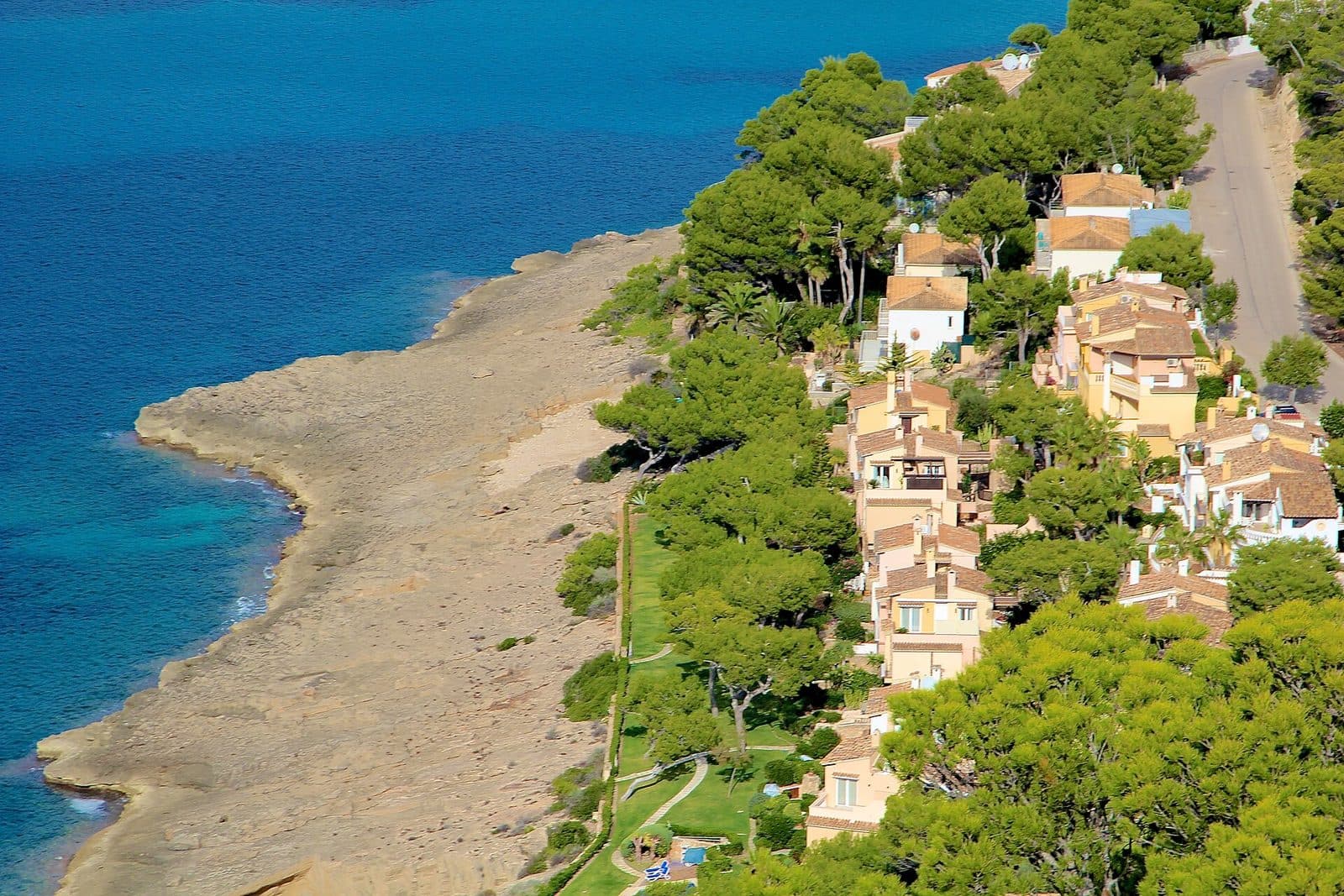
.jpg)
Places to stay in Es Camp de Mar
AdTo load the accommodation map by our partner Stay22, we need your consent for marketing cookies. Your consent applies to all marketing content on mallorca.com.
Es Camp de Mar is a small beach resort and residential area on Mallorca’s southwest coast, between Peguera and Port d’Andratx. At its heart is a sheltered bay with pale sand, clear water, and the offshore rocky islet of S’Illeta. A wooden footbridge connects the beach to the island restaurant—an unusual sight that makes the resort unmistakable.
The resort was not built around a historic village center but was deliberately developed as a holiday destination. This still explains its character today: instead of a parish church, town hall square, and winding old-town streets, the landscape is defined by hotels, apartment complexes, restaurants, villas, and the golf course. Es Camp de Mar feels more compact and peaceful than the larger holiday resorts farther east. For visitors, it is particularly worthwhile for its beach, S’Illeta, the golf course, and the coastal scenery around Cap Andritxol. Those expecting historic lanes, museums, or extensive shopping streets will be better served by Andratx, Port d’Andratx, or Palma. As a base for exploring the southwest, however, Es Camp de Mar is conveniently located: its bathing bay, coastal walks, harbor towns, and Sa Dragonera can easily be combined.
Es Camp de Mar also has a distinct profile as a place to live. Residential areas extend along the bay, across the hillsides, and around the golf course. Many newcomers are from Germany and the United Kingdom, alongside families and couples of other nationalities. It becomes considerably quieter in winter. Anyone wishing to live here year-round should therefore consider not only the summer beach atmosphere but also mobility, journeys to Andratx, and connections to Palma.
History of Es Camp de Mar
The Coast at Cap Andritxol
Long before Es Camp de Mar became a holiday resort, the rugged southwest coast was a vulnerable edge of the island. Bays, rocky promontories, and difficult-to-monitor stretches of coastline offered shelter to ships; raids by North African pirates shaped the region for centuries. Fortified observation posts and watchtowers were built along the coasts of Andratx and Calvià for protection. Torre des Cap Andritxol is the most important surviving reminder of this period in the immediate vicinity of the resort.
The historical focus of the area was not directly on today’s beach, as Es Camp de Mar had neither an old village square nor an established parish community. Instead, the coast belonged to the surroundings of larger country estates, including Biniorella. This origin remains evident in the way the modern settlement consists of separate residential and holiday areas rather than spreading outward in a ring around a church and market square.
Gran Hotel
The beginning of tourism can be traced to a specific building: the colonial-style Gran Hotel opened in 1932 and initiated the development of Camp de Mar as a holiday resort. Tourist use of the bay therefore began well before the major construction boom that fundamentally transformed many of Mallorca’s coastal resorts only in the second half of the century. The original hotel was replaced in the eighties, but it remains the decisive starting point in the resort’s history.
After the Second World War, the secluded coast also attracted several prominent residents. Former British intelligence officer Thomas Harris acquired a house on this stretch of coastline in 1949. Such early private retreats preceded the later, more extensive residential development.
Development as a Holiday and Residential Resort
Es Camp de Mar acquired its present appearance primarily from the eighties onward. The resort grew near the Biniorella estate; the developments of Salinar and Cap Andritxol were added later. More houses, apartment complexes, and hotels followed in the nineties. A sparsely used coastal landscape was thus transformed into a settlement clearly geared toward beach holidays, second homes, and upscale living.
This comparatively recent origin explains why historic individual buildings are rare. The area’s history is revealed not through a walk around an old town, but through the landscape: the defensive tower represents the former insecurity of the coast, the Gran Hotel marks the beginning of tourism, and the residential areas on the hillsides and around the golf course reflect the development of recent decades.
Sights in Es Camp de Mar
Platja de Camp de Mar
Platja de Camp de Mar forms the visual and functional center of the resort. The pale sandy beach lies between rocky headlands in a sheltered bay. Hotels, restaurants, and smaller shops stand immediately behind it, meaning the holiday resort is almost entirely oriented toward the water. The compact layout is particularly convenient for families: the beach, restaurants, and accommodation are close together, without requiring long walks through a large resort.
The clear and often calm-looking water makes the bay suitable for swimming and simple water sports. At the same time, the beach should not be mistaken for a secluded natural cove: it is part of a developed holiday resort, and its appeal comes precisely from the combination of sand, rocky coastline, buildings, and the small island just offshore.
S’Illeta
S’Illeta is the landmark of Es Camp de Mar. The natural rocky islet lies directly in front of the beach and is reached via a narrow wooden footbridge. The island is home to a restaurant whose terrace appears to sit in the middle of the bay. From the shore, the bridge creates a striking sightline; from the island, the view opens back toward the beach, hotels, and wooded hillsides.
The location is known for more than its setting. S’Illeta and the bay have also appeared as backdrops in film and television productions, including “The Night Manager,” “White Lines,” “The Hustle,” and “A Long Way Down.” Even without visiting the restaurant, the view of the island is worthwhile because the bay’s distinctive topography is most clearly visible here.
Torre des Cap Andritxol
Torre des Cap Andritxol stands on high ground on the headland between Es Camp de Mar and the coast toward Peguera. The historic defensive tower was part of a system of observation and defense posts intended to warn the islanders of pirate attacks. Unlike the modern holiday developments, it recalls a time when this coast was perceived not as a recreational area but as a vulnerable outer frontier.
The tower is also a hiking destination. The route leads from the developed resort into rockier terrain and rewards walkers with coastal views across the sea and surrounding bays. The attraction lies less in an elaborate interior visit than in the combination of historic architecture, elevated position, and landscape. Sturdy footwear is more appropriate here than beach gear alone.
Sant Joaquim and Santa Aina Chapel
Es Camp de Mar has no parish church, but it does have a small chapel dedicated to Sant Joaquim and Santa Aina. It demonstrates that the young holiday resort never developed the same ecclesiastical center as the old villages of the municipality of Andratx. Open-air Masses are celebrated here in summer.
For visitors, the chapel is less a monumental work of art than a quiet indication of seasonal community life. It stands in clear contrast to Mallorca’s large historic churches: small, locally focused, and designed for the needs of a modern coastal settlement.
Cap Andritxol
The rocky headland frames the bay and gives Es Camp de Mar its sheltered setting. From the beach, it forms the natural boundary of the horizon; from elevated viewpoints, the perspective changes to include both the bay and further stretches of the southwest coast.
At Cap Andritxol, the transition between holiday resort and Mediterranean coastal landscape is particularly clear. Its proximity to the tower makes the headland a suitable destination for visitors who want to add exercise and views to a beach day. It also reveals why this difficult-to-monitor coast once had to be watched.
Sights in Es Camp de Mar
Food and Drink
The Restaurant on S’Illeta
No dining venue shapes Es Camp de Mar as strongly as the restaurant on S’Illeta. It stands on the small rock in front of the beach and can be reached only via the wooden footbridge. Its significance therefore rests not only on the food but also on the journey itself: from the sand, across the water, and onto a terrace overlooking the bay. The restaurant has long been part of the resort’s visual identity and is far more than an ordinary beachfront establishment.
The setting makes S’Illeta particularly appealing during a beach day, but realistic expectations are advisable. The experience is open, maritime, and closely connected to activity around the bay; this is not the atmosphere of an old Mallorcan cellar restaurant. Those wishing to discover traditional village architecture and a more locally rooted everyday scene should combine their stay with Andratx or one of the older places in the southwest.
Dining Around the Bay
Restaurants are among the defining businesses of Es Camp de Mar. The selection is concentrated around the beach, the hotels, and the immediately adjoining streets. This makes it easy to combine a beach day with a meal without having to leave the resort. National and international dishes are served, reflecting both the international mix of visitors and the resort’s origins as a holiday destination.
Its culinary identity differs from that of old market towns in the island’s interior. There is no historically developed center with traditional cellar restaurants, but rather a coastal dining scene in which views, terraces, and proximity to the sea play a major role. This is precisely where its enduring appeal lies: many guests come not to explore a village’s cuisine but to enjoy a peaceful day beside the bay, with everything close at hand.
Hotels and Seasonal Rhythm
Part of the dining selection belongs to the hotel and holiday sector. In summer, this creates a wider choice and considerably more activity around the beach. In winter, when Es Camp de Mar becomes much quieter, everyday life in its restaurants also changes. For year-round residents, this is an important difference from Andratx or Palma, whose centers are less dependent on the beach season.
Anyone visiting outside the main travel season should therefore understand restaurants as a seasonally influenced part of the resort and check current opening arrangements before visiting. Port d’Andratx, Peguera, and Andratx can be included for a wider selection. Es Camp de Mar itself remains above all a destination for dining near the beach and enjoying the distinctive setting of S’Illeta.
Eating, drinking and staying in Es Camp de Mar
The best-rated businesses from our directory, ordered by Google rating — not by advertising.
Activities and Excursions
Golf de Andratx
Golf de Andratx defines the inland part of Es Camp de Mar. The course has 18 holes and attracts both visitors and residents. Unlike beach tourism alone, golf is not limited to the height of summer but is a year-round activity. Residential areas around the course therefore have a different character from the first row beside the bay: greener, more secluded, and less directly influenced by beach activity.
For travelers, golf may be the main reason to stay in Es Camp de Mar. For residents, the course provides an enduring recreational focus that distinguishes the resort from many small coastal settlements. It is also part of the local spatial structure, with roads and residential complexes extending from the bay toward the course and surrounding hillsides.
Swimming and Water Sports
The sheltered bay is particularly suitable for a classic beach day. Swimming and other activities on the water take center stage; organized options in the region also include boat trips, snorkeling, and stand-up paddleboarding. Those seeking more demanding coastal activities can also find guided tours elsewhere on Mallorca featuring climbing, abseiling, cliff jumping, and cave exploration.
With such excursions, it is important to distinguish clearly between the calm bathing bay and technically demanding tours on other stretches of coast. Es Camp de Mar often serves as a starting point or pickup location, and not every advertised activity takes place directly on the local beach. For uncomplicated swimming, the compact bay itself remains the main destination.
Hike to Torre des Cap Andritxol
The hike to the defensive tower is the most obvious way to combine the beach with the surrounding landscape. It climbs onto the headland and provides a different view of the coast from the perspective at water level. The tower’s historic purpose becomes clear along the way: from above, the sea, bays, and coastal contours can be surveyed over a much greater distance.
The route is not a promenade. Rocky ground, sunshine, and the elevated position require more suitable equipment than a stroll between the hotel and beach. Anyone planning the climb should treat it as a separate excursion rather than setting off spontaneously in beach shoes.
Port d’Andratx and Andratx
Port d’Andratx is the nearest destination for switching from a peaceful beach resort to a livelier harbor. Boats, boutiques, and restaurants define the scene there, especially toward evening. The old main town of Andratx, by contrast, offers a more established urban structure. On Wednesdays, its weekly market fills the streets with stalls selling fruit, vegetables, cheese, olive oil, flowers, clothing, ceramics, jewelry, and other goods.
The Andratx market is also relevant to residents of Es Camp de Mar because the coastal resort has no comparable traditional market center. For visitors, the two places make a logical combination: a morning at the market and a stroll through Andratx, followed by the beach or a late meal in Es Camp de Mar. On other days, Andratx is worth visiting as a peaceful counterpoint to the tourist-oriented bay.
Sant Elm and Sa Dragonera
Sant Elm lies on the far southwest coast opposite Sa Dragonera. Boats leave from there for the protected island, which is car-free and can be explored along hiking trails. Wind, rocks, and Dragonera’s distinctive silhouette create a much more nature-focused impression than the developed bay of Es Camp de Mar.
The excursion is suitable for a full day out in the southwest. Es Camp de Mar serves as a peaceful base, while Sant Elm provides access to the island. Those who do not wish to make the crossing can already enjoy views of Dragonera and the open sea from the coastal village.
Cala Fornells
Cala Fornells near Peguera is a smaller bay framed by rocks and pine trees. It offers an appealing comparison with the broader and more developed Platja de Camp de Mar. While the beach, hotels, and island restaurant lie close together in Es Camp de Mar, Cala Fornells feels more intimate and more strongly shaped by its rocky surroundings.
Both bays can be combined on a drive through the southwest. Such a comparison shows how different Mallorca’s coastal resorts can feel despite their proximity: here, the carefully composed holiday bay with S’Illeta; there, smaller bathing spots among rocks and vegetation.
Beaches in Es Camp de Mar
4 beaches and coves with their own page belong to Es Camp de Mar.
Getting There and Getting Around
By Car from the Airport
From Palma Airport, the drive initially follows the Ma-20 and then the Ma-1 to Es Camp de Mar. The road distance is 40 kilometers, and the journey takes around 39 minutes. Most of the route runs along efficient roads around Palma and through the southwest coastal corridor; only at the end does it leave the main connection and descend into the holiday resort.
A car is practical for travelers with luggage or those planning excursions to Sant Elm, Sa Dragonera, Andratx, and smaller bays. However, a car is not necessary for getting around the compact beach area itself. The beach, S’Illeta, restaurants, and many accommodations are close together there.
By Car from Palma
From central Palma, the journey via the Ma-1 covers 29 road kilometers. It takes around 38 minutes. Es Camp de Mar can therefore be reached on a day trip from the capital without using up the entire day on travel. Conversely, commuting to Palma is generally possible for residents, although the daily distance is long enough to make it important to examine car or bus arrangements carefully before moving.
The Ma-1 is the key connection through the southwest. It runs toward Peguera and Andratx and also provides access to the municipality’s coastal communities. During busy summer periods and rush hour, extra time should be allowed in addition to the measured journey time.
Bus Travel and Getting Around Without a Car
Es Camp de Mar is served by public buses. A stay focused mainly on the beach, hotel, and restaurants is therefore possible without a rental car. The specific stops and routes are shown separately on this page; checking the current timetable before traveling is advisable, especially outside the summer season.
For everyday life involving frequent trips to Andratx, Palma, or scattered excursion destinations, a car is more flexible. This is especially true for hikes, golf equipment, and trips to smaller bays. Anyone living without a car should give greater weight to the home’s distance from the bus stop and service frequency at personally important times of day than to its distance from the beach.
Getting Around the Resort
Around Platja de Camp de Mar, the resort is easy to explore on foot. Walks to S’Illeta, the restaurants, and accommodation near the beach remain short. Residential locations on the hillsides or beside the golf course are different: slopes and dispersed development make everyday walks more demanding.
Beyond the developed streets, the route to Torre des Cap Andritxol becomes a countryside trail. A beach walk and a hike to the tower should therefore not be understood as the same type of route. Anyone planning both needs sturdy shoes and sun protection as well as beach gear.
Bus lines to Es Camp de Mar at a glance
| Line | Route | Departures/day | First | Last |
|---|---|---|---|---|
| 122 | Port d'Andratx - Santa Ponça | 176 | 06:32 | 23:40 |
| 102 | Peguera - Palma | 142 | 06:42 | 23:20 |
| A11 | Peguera - Aeroport | 129 | 00:35 | 23:55 |
| 101 | Port d'Andratx - Palma | 40 | 06:22 | 23:35 |
| 131 | Santa Ponça - Banyalbufar | 10 | 10:25 | 17:16 |
From the official GTFS feeds (TIB/SFM), no real-time data. The figures cover all stops in the town; weekend and holiday services differ — check with the operator before travelling.
Getting there by bus
Camp de Mar (5001) · 0.8 km as the crow flies
- 101Port d'Andratx - Palma · Daily
- 122Port d'Andratx - Santa Ponça · Daily
- 131Santa Ponça - Banyalbufar · Daily
- A11Peguera - Aeroport · Daily
Bulevard - Garrovers 1 (11138) · 1.2 km as the crow flies
- 101Port d'Andratx - Palma · Daily
- 102Peguera - Palma · Daily
- 122Port d'Andratx - Santa Ponça · Daily
- 131Santa Ponça - Banyalbufar · Daily
- A11Peguera - Aeroport · Daily
Bulevard - Garrovers 2 (11137) · 1.2 km as the crow flies
- 101Port d'Andratx - Palma · Daily
- 122Port d'Andratx - Santa Ponça · Daily
- 131Santa Ponça - Banyalbufar · Daily
- A11Peguera - Aeroport · Daily
Palmira 1 (11133) · 1.8 km as the crow flies
- 101Port d'Andratx - Palma · Daily
- 102Peguera - Palma · Daily
- 122Port d'Andratx - Santa Ponça · Daily
- 131Santa Ponça - Banyalbufar · Daily
- A11Peguera - Aeroport · Daily
Timetable data: official GTFS feeds (TIB/EMT), no real-time — check with the operator before travelling.
Living in Es Camp de Mar
Everyday Life Between the Beach and the Holiday Season
Everyday life follows the tourist calendar more closely than it does in an old Mallorcan village. In summer, beachgoers, hotel activity, restaurants, and water sports bring the bay to life. In winter, Es Camp de Mar becomes considerably quieter. This change can be attractive, particularly for people seeking peace and not dependent on daily city life; those expecting lively streets all year round, however, will experience the low season as a significant change.
Immediate local amenities are concentrated in the holiday area, with smaller shops, restaurants, and services around the hotels and beach. For the weekly market, a wider range of everyday destinations, and many errands, residents look toward Andratx, Peguera, or Palma. When choosing a home, it is therefore crucial to decide whether a seasonally quiet coastal lifestyle is desirable or whether regular trips to larger towns will be necessary.
Homes Beside the Bay, on the Hillsides, and Around the Golf Course
The residential areas can be broadly distinguished by their relationship to the beach and landscape. In the front row and near the bay, short walks to the sea come with greater proximity to summer activity. Apartments and houses on the hillsides offer a more secluded location and elevated views, but also involve slopes and longer walks. Around the golf course, the green, sport-oriented surroundings are more prominent.
There are also the developments of Salinar and Cap Andritxol. Es Camp de Mar is therefore not a single enclosed village district, but a sequence of different holiday and residential areas. Before moving, it is important to look beyond the name of the resort: the precise location determines whether the beach, bus stop, golf course, or main road can be reached conveniently in everyday life.
International Community
The resort appeals primarily to international families and couples. People from Germany and the United Kingdom are particularly well represented, while residents have also moved here from Nordic countries, the United States, and other nations. Its tourist origins and residential development over recent decades have created a social environment different from that of the municipality’s older communities.
This does not mean that the resort consists only of holiday accommodation. Permanently and temporarily occupied properties stand side by side, although seasonal use remains visible in the streets. Those seeking local everyday contacts and a denser year-round community can compare Es Camp de Mar with the main town of Andratx; those who value an international neighborhood, golf, and proximity to the sea will find a clearer profile here.
Commuting to Palma and Everyday Mobility
Central Palma can be reached via the Ma-1 after 29 road kilometers and around 38 minutes. Daily commuting is therefore generally possible, but it requires deliberate planning. Homes close to the access road make the regular journey easier, while houses high on a hillside or deep within a residential complex can add local driving time.
The resort can be reached by bus without a car, but its suitability for an individual routine depends on working hours and connections. For people who mainly work from home, play golf locally, or travel to Palma only occasionally, the coastal location is less of an issue. Anyone who needs to reach schools, medical facilities, or workplaces outside the resort every day should test the specific routes individually before deciding where to live.
Practical Information for Your Visit
The Best Time to Visit
For a classic beach day, Es Camp de Mar is particularly worthwhile during the warm season, when swimming, restaurants, and tourist activities define the resort. Those mainly interested in seeing the bay, S’Illeta, and the coastal landscape will find it considerably quieter outside the high season.
Wednesday is a good choice if a visit to Es Camp de Mar is to be combined with the weekly market in Andratx. The market does not take place in the beach resort itself. In the morning, the streets of Andratx belong to the stalls and shoppers; afterward, the excursion can continue beside the bay.
How Long to Stay
A compact visit is enough to see the beach, wooden footbridge, and S’Illeta. Anyone wishing to swim, eat, and hike to Torre des Cap Andritxol should instead treat Es Camp de Mar as a full-day destination. The resort has no extensive historic center to explore street by street. Its appeal lies in the bay and the transitions between beach, rocks, tower, and golf course.
A visit should therefore not be planned as a conventional sightseeing circuit. A combination of time beside the water and one targeted additional activity is more suitable: a hike to the tower, golf, a boat trip, or an onward journey to Andratx or Port d’Andratx.
Preparing for the Beach and Tower
Normal beach gear is sufficient for Platja de Camp de Mar. The route to Torre des Cap Andritxol, by contrast, requires sturdy shoes, drinking water, and protection from the sun. Anyone wishing to do both on the same day should not rely on beach sandals alone.
Without a car, the return journey should be planned using the current bus timetable. This is particularly important during the quieter season, when holiday activity and demand are lower.
Good Combinations
Es Camp de Mar combines particularly well with Port d’Andratx, the Wednesday market in Andratx, or Cala Fornells. For a nature-focused day trip, continue to Sant Elm and take a boat to Sa Dragonera. Palma can also be reached via the Ma-1, although combining both on the same day is more practical for travelers who only want a brief look at the bay.
Visitors should not expect an old town, a major museum, extensive nightlife, or kilometers of shopping streets. Es Camp de Mar is a compact coastal resort with a clear focus: swimming, eating beside the sea, playing golf, and exploring the southwest from here.
Local businesses and services
The best-covered sectors in our directory for Es Camp de Mar — each with address, contact details and opening hours.
Run a business here? Add it to the directory for free and be found on this page. Add your business
Upcoming dates
Latest news from Andratx
- 27 Mallorca towns lack Alcover and La Balanguera
- Mallorca electric cars and fire demo fill Palma
- Balearics rental searches: 26% come from abroad
- Palma road closures: motorbike ride diverts buses