
Sant Llorenç des Cardassar, Mallorca – Travel and Living Guide
.jpg)
Places to stay in Sant Llorenç des Cardassar
AdTo load the accommodation map by our partner Stay22, we need your consent for marketing cookies. Your consent applies to all marketing content on mallorca.com.
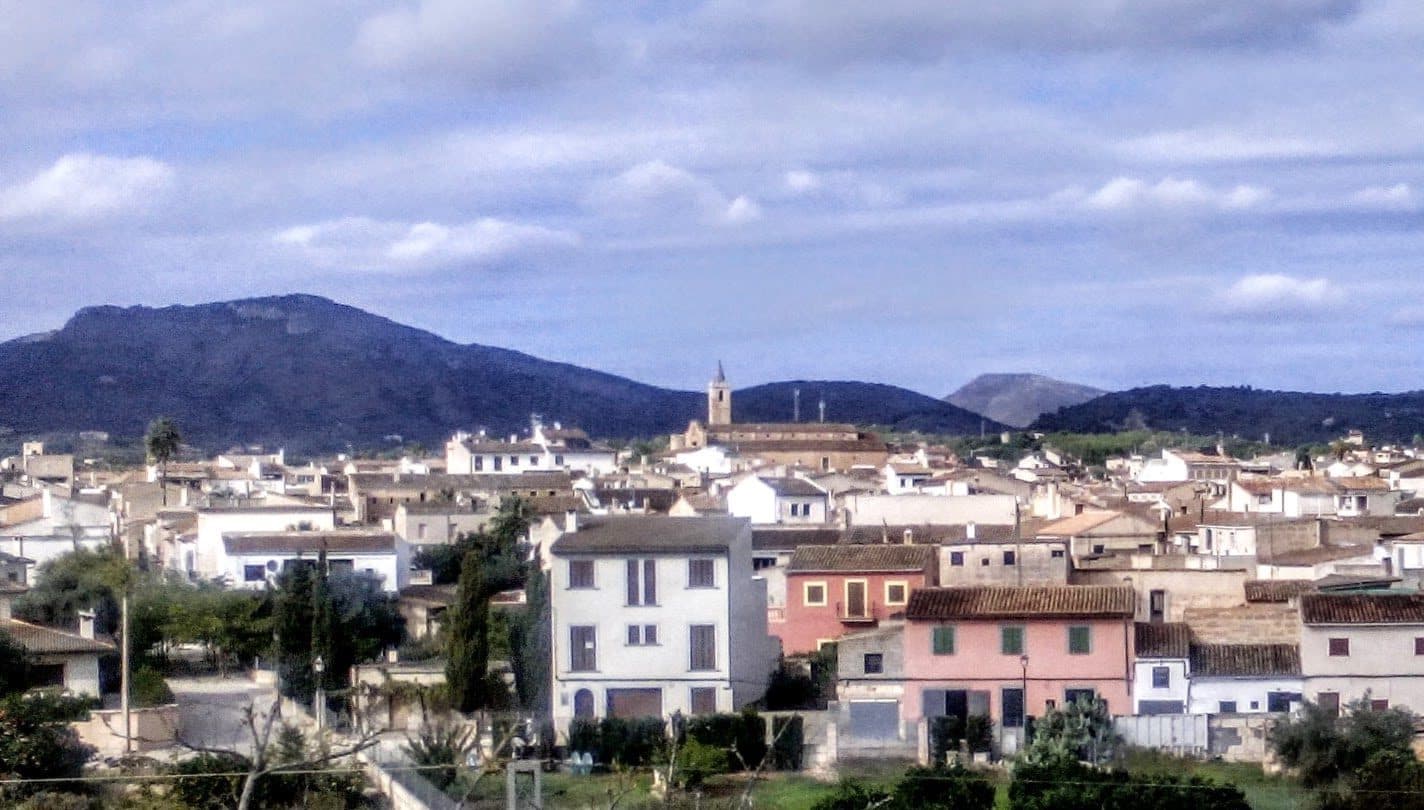
Sant Llorenç des Cardassar lies in eastern Mallorca between the larger town of Manacor, Artà and the resorts of the east coast. The main town of the same name is not a setting designed for visitors, but an established rural centre with a church, small squares, everyday shops and surrounding countryside of fields, fincas and old paths. It is precisely this contrast with the nearby coast that makes the town interesting.
Sant Llorenç is especially worthwhile as a peaceful stop combining culture, the market and the beach. The historic centre can be explored without a strict sightseeing schedule; afterwards, Cala Millor, Sa Coma, s’Illot or the Punta de n’Amer peninsula make suitable next destinations. Those who prefer observing local history and contemporary Mallorcan life to working through a long list of monumental sights will find more here than in some better-known excursion destinations.
For people who live in eastern Mallorca or would like to move there, Sant Llorenç des Cardassar has a distinct appeal of its own. Grocery shops, restaurants, bars, sports facilities and personal services shape daily life, while the more tourism-oriented coastal resorts belong to the same municipality. This means the main town remains inhabited and functional outside the beach season without being completely disconnected from the holiday centres.
History of Sant Llorenç des Cardassar
Prehistoric settlement
The history of the present-day municipality begins long before the medieval village. Archaeological sites provide evidence of settlement since prehistoric times; numerous locations from the Pre-Talaiotic and Talaiotic periods have been catalogued. These include Calicant, Son Negre, Son Puça, Ses Talaies and the caves of Ca n’Amer. The sites are distributed across the countryside and show that early settlement was not concentrated solely in the present-day town centre.
This early period is particularly tangible at the Poblat Talaiòtic de s’Illot on the coast. Although the settlement remains are not in the centre of Sant Llorenç, they are part of the municipality’s historic landscape. Visitors who combine the town and the coast can therefore discover two very different layers of the same area: the rural main town that developed later and an archaeological site from Mallorca’s prehistory.
From rural settlement to independent municipality
Sant Llorenç developed in a landscape whose economy was long shaped by agriculture and scattered country estates. Fields with fig, olive and citrus trees, along with traditional fincas, still characterise the surrounding countryside. The church and the streets around it became the centre of the village, while wells, paths and mills tell of the supplies and work of earlier generations.
Political independence came comparatively late. A royal decree recognised the town in 1816. The establishment of its own municipal structure then took time; the first town hall was set up in 1892. This development explains why Sant Llorenç, despite its modest size, serves as the main town of a more extensive municipality that also includes Son Carrió and parts of the tourism-oriented coast with Cala Millor, Sa Coma and s’Illot.
The flood disaster of 2018
The severe storm disaster of October 2018 is part of the town’s more recent history. Exceptionally heavy rain fell within a short period, water surged through the town and surrounding area, and people lost their lives. The event is not a distant historical chapter but part of present-day local memory. The disaster also changed how people view the town’s location in its valley and the power of its usually inconspicuous watercourses, even though little of this is necessarily apparent during a walk around the town.
Sights in Sant Llorenç des Cardassar
Església de Sant Llorenç
The parish church forms the architectural and spatial centre of the historic core. Its Baroque-influenced design stands out clearly from the lower residential and commercial buildings in the surrounding streets. Even if the interior is not accessible, it is worth looking at the façade, the building’s overall form and how it fits into the village streetscape.
The square by the church is also a good starting point for a walk. From here, short routes lead into Carrer Major and to the town’s central areas. The church should therefore not be viewed as an isolated monument: it explains how Sant Llorenç developed around a religious and social focal point.
Pou Vell
Pou Vell, the “old well,” is one of the quieter witnesses to the town’s history. It represents a time when the water supply directly determined village life and the agricultural use of the surrounding countryside. Its significance lies less in monumental architecture than in its connection to everyday life.
Especially when compared with the parish church, the well illustrates how varied cultural heritage can be. The church represents faith and community, while Pou Vell represents the practical foundation of life. Together, they provide a better impression of the historic town than a walk focused solely on façades.
Carrer Major and the old centre
Carrer Major connects central squares, the church, shops and restaurants. It is not a museum-like, preserved old-town lane but part of contemporary local life. This makes a walk more interesting, though it requires different expectations from those associated with highly polished historic centres: the main attraction is the interplay of older façades, simple homes, shops and public spaces.
This function becomes especially apparent on market mornings, when stalls and pedestrians bring the centre to life. On quieter days, doors, windows, natural-stone details and the scale of the town are easier to appreciate. A walk becomes more rewarding when visitors look not only for individual buildings but also notice the transitions between the centre, newer residential streets and open countryside.
Windmills and rural surroundings
In the surrounding area, windmills and traditional estates recall the municipality’s agricultural character. They are generally not grouped together like a self-contained open-air museum but form part of a landscape that remains in use. They are therefore better discovered on a drive or a longer walk around the outskirts than on a short circuit confined to the centre.
Their value lies in the landscape: fields, old paths, walls and fincas reveal the economic background against which Sant Llorenç developed. Those arriving from the coast experience a rapid transition from hotels to a distinctly more rural side of Mallorca.
Poblat Talaiòtic de s’Illot
The Talaiotic settlement of s’Illot lies in the municipality’s coastal area and provides an archaeological counterpart to the historic main town. Its stone structures point to settlement long before today’s village and holiday landscape. The site is especially suitable for combining with Sant Llorenç because the two stops make different historical periods visible.
When visiting, it is helpful not to regard the site merely as a collection of low walls. It belongs to a larger network of prehistoric sites within the municipality. This makes it clear that eastern Mallorca was inhabited and used from an early period and that the area’s history extends far beyond the church, town hall and modern coastal development.
Castell de sa Punta de n’Amer
Castell de sa Punta de n’Amer stands on the peninsula between Cala Millor and Sa Coma. The defensive structure and the surrounding coastal landscape form an attractive excursion destination outside the main town. Here, the focus is less on village architecture and more on the broad views, open terrain and location between two heavily visited coastal resorts.
Punta de n’Amer works well as the second part of a day trip: first the church, market or town centre of Sant Llorenç, followed by walking and the sea. This change also reveals the municipality’s unusual range—from an agricultural inland town to the tourist-oriented east coast.
The weekly market
Carrer Major and Plaça de l’Església
The weekly market spreads through the centre around Carrer Major, the church area and the adjoining squares. Fruit and vegetables are partly concentrated near Plaça Nova, while other stalls extend through the central streets. As a result, there is no separate market zone; trading connects directly with cafés, shops and ordinary local life.
The range includes fresh fruit and vegetables, cheese, Sobrasada, olives, honey, plants and other products from Mallorca. Clothing, shoes, leather goods, household items and handicrafts are also available. The market is therefore not aimed solely at souvenir shopping but continues to fulfil a practical role for people from the town and surrounding area.
Character in summer and winter
Compared with large island markets geared towards tour groups, the Sant Llorenç market feels more manageable and more strongly focused on local shopping. During the summer season, more visitors arrive from Cala Millor, Sa Coma and other coastal resorts; the central streets then become more international and lively. Nevertheless, the market remains closely connected to the village through its products and location.
In winter, there are fewer stalls and visitors from outside the area. This is precisely when its everyday character becomes particularly clear. The market remains a good opportunity to buy regional food, have a coffee in the centre and experience Sant Llorenç at a time when coastal tourism plays a significantly smaller role.
Food and drink
Mallorcan produce from the countryside
The cuisine around Sant Llorenç is closely connected to the agricultural hinterland. At the market and in grocery shops, visitors encounter fruit, vegetables, olives, honey, cheese and Mallorcan cured meats such as Sobrasada. These products explain the local food culture better than searching for a single supposed “national dish” of the village.
Figs, olives and citrus fruits are also part of the area’s traditional cultivated landscape. Not everything served in a restaurant necessarily comes from within the municipality; nevertheless, the connection to seasonal produce remains visible in local shopping. Anyone interested in the culinary side should therefore pay as much attention to the market, grocery shops and bars as to a full restaurant menu.
Bars as part of everyday local life
Bars in Sant Llorenç are not merely places for an evening out. Around the centre, they serve as meeting places for coffee, breakfast, a drink or a light meal. The terraces are especially busy on market mornings, while on ordinary weekdays they reflect the town’s rhythm: quick errands, conversations and breaks rather than a staged holiday atmosphere.
This everyday function distinguishes the main town from the municipality’s more seasonal coastal areas. Restaurants and bars are more deeply integrated into residents’ daily routines and feel less like an exclusively tourist-oriented offering even outside the high season.
Between village cuisine and coastal restaurants
Within the same municipality, the culinary choice ranges from simple bars and restaurants in the inland town to the many establishments in Cala Millor, Sa Coma and s’Illot. For visitors, this creates a useful combination: a quiet meal or coffee break in Sant Llorenç followed later by an evening on the coast. Those who live here can choose between convenient everyday dining nearby and the much more tourist-oriented coastal selection, depending on the occasion. Sant Llorenç is therefore well suited to a meal combined with the market, a walk through town or a drive through eastern Mallorca.
Eating, drinking and staying in Sant Llorenç des Cardassar
The best-rated businesses from our directory, ordered by Google rating — not by advertising.
Restaurants
- Frankys Pizzas4.8· 706 reviews
- Restaurant Es Pati4.8· 549 reviews
- Restaurant l'Estació4.7· 473 reviews
- L'Hontanar-Cuina mediterrània4.7· 341 reviews
- Crepes & Cia Pizza4.7· 280 reviews
- Bar Olímpic4.7· 15 reviews
- Can Pedro Grill4.6· 1203 reviews
- Restaurante pizzeria gril Leo's4.6· 587 reviews
- Restaurant Son Barbot4.5· 89 reviews
- Restaurant 5'S4.5· 24 reviews
- Restaurant Sa Cova4.4· 447 reviews
- Le Mans4.4· 369 reviews
Cafés and bakeries
Bars
- BAR MISSISSIPPI CALAMILLOR4.9· 64 reviews
- Aperol Corner4.9· 56 reviews
- Sa Verga4.7· 34 reviews
- Can Jeroni4.5· 269 reviews
- Bar de la 3a Edat4.5· 11 reviews
- Bar Cafeteria Son Colom4.4· 476 reviews
- Manhattan Bar4.3· 79 reviews
- Rose And Crown Cala Millor4.2· 516 reviews
- Bar VB4.2· 147 reviews
- Bar i cafeteria El Raconet4.2· 84 reviews
Hotels and fincas
- Hotel Can Pocoví5.0· 105 reviews
- Son Penya Adults Only Petit Hotel & Spa4.9· 274 reviews
- Landhotel Cas Cabo Nou4.9· 114 reviews
- Agroturisme s'Arboçar4.9· 73 reviews
- Hotel Son Trobat4.8· 627 reviews
- Es Lligats4.8· 72 reviews
- Ca Na Nina4.8· 51 reviews
- Finca Hotel Ses Cases Noves4.7· 96 reviews
- Finca S' Hort de sa Begura4.7· 44 reviews
- Hipotels Flamenco4.5· 1001 reviews
- Hotel Can Solaies4.5· 105 reviews
- allsun Hotel Orient Beach4.3· 1149 reviews
Activities and excursions
Routes through the agricultural landscape
The surrounding area is suitable for walks and cycle rides through a landscape of fields, fincas, dry-stone walls and isolated mills. Its appeal lies not in alpine differences in elevation but in the transitions between the village, open countryside and the foothills of the Llevant. It is an excellent place to understand the rural structure of eastern Mallorca.
When following routes along minor roads and paths, remember that country estates may be private. Gates, walls and driveways are not invitations to enter. Those who remain on public routes can nevertheless experience a clear contrast with the coastal promenades. For more athletic outings, Sant Llorenç can also serve as a stop between Manacor, Artà, Son Carrió and the coastal resorts.
Cala Millor, Sa Coma and s’Illot
The nearby coastal resorts offer extensive tourist infrastructure, beaches and restaurants. Cala Millor is the livelier choice, Sa Coma combines a beach with proximity to Punta de n’Amer, and s’Illot can be paired with the Talaiotic settlement. A visit to Sant Llorenç therefore does not need to be planned purely as a village excursion.
The combination works particularly well for travellers staying by the sea who want to discover the hinterland. Conversely, residents of the main town can reach the coast without having to live amid the immediate holiday bustle. In summer, the difference between the quiet inland town and the crowded beach areas is most noticeable; in winter, the pace of the two areas becomes more similar.
Punta de n’Amer
The Punta de n’Amer peninsula lies between Cala Millor and Sa Coma. The historic defensive structure stands in the surrounding landscape. Combining walking, the sea and the historic fortification, the peninsula is the most suitable addition to a relatively short tour of Sant Llorenç.
Manacor, Artà and the Caves of Drach
As a larger town, Manacor is interesting for a more urban day trip. Artà is a neighbouring town and can easily be combined with Sant Llorenç via the roads of the Llevant. Both show different sides of eastern Mallorca and make more sense as complements than as competitors to the smaller municipal centre.
The Caves of Drach are another option for a longer excursion. Those who prefer archaeological history can instead combine Sant Llorenç with the settlement of s’Illot; those seeking scenery can visit Punta de n’Amer. This allows the day to be planned around a theme without merely ticking off as many destinations as possible in quick succession.
Festivals and events
Sant Antoni
Sant Antoni is celebrated in Sant Llorenç in January, as it is in several towns in eastern Mallorca. The traditional scene includes large bonfires in the streets, communal singing and dancing, and hearty Mallorcan food. The festival has a strong community focus and differs significantly from summer events aimed at holidaymakers.
For visitors, Sant Antoni is an opportunity to experience the town at its liveliest during the low season. Streets and squares are used differently from ordinary winter days, with religious tradition, music and socialising intertwined. As the specific programme is determined from year to year, the municipality’s current announcement is the authoritative source for individual dates and road closures.
Patron saint festival of Sant Llorenç
The festival calendar of Sant Llorenç des Cardassar includes a patron saint festival.
Summer festivals in Sa Coma
The municipality’s coastal resorts also maintain their own festival calendars. Sa Coma’s summer celebrations combine live music, food, family activities, sports, markets and evening events. The audience is more international than at the winter festivals in the main town because of the holiday season, though local groups and businesses also take part.
The main town and the coast thus have different festival profiles: Sant Llorenç is more strongly associated with village and religious traditions, while Sa Coma offers a broad programme of summer leisure activities. Those who spend longer in the municipality can experience not only individual festivals but also the seasonal transition between the inland area and the holiday coast.
Upcoming dates
Getting there and getting around
By car
Sant Llorenç lies on the road connecting Manacor and Artà and is easy to reach from either direction. From Palma, the journey first crosses the island towards the east; the road distance is given as around 54 kilometres. Under normal conditions, the drive from the airport takes just under an hour, although traffic and the destination within the municipality affect the actual journey time. A car is especially practical when combining the main town, archaeological site, Punta de n’Amer and the beach in one day.
By bus
Public transport connects eastern Mallorca, but it requires more planning than a direct car journey. For excursions to the coast, it is also important to check whether the selected service stops in the main town or another part of the extensive municipality.
On foot in town and by bicycle
The town centre is compact enough to connect the main stops on foot. Distances around the church, Carrer Major and the central squares are short, though normal car traffic also affects some routes. On market mornings, stalls, delivery vehicles and additional pedestrians add to the activity.
Sant Llorenç can easily be incorporated into bicycle tours through the Llevant. Faster traffic should be expected on the main roads, while minor routes may offer more attractive scenery. When travelling to the coast and back, bear in mind that the municipality extends far beyond the main town.
Bus lines to Sant Llorenç des Cardassar at a glance
| Line | Route | Departures/day | First | Last |
|---|---|---|---|---|
| 417 | Porreres - Manacor - Son Carrió | 22 | 08:15 | 21:00 |
From the official GTFS feeds (TIB/SFM), no real-time data. The figures cover all stops in the town; weekend and holiday services differ — check with the operator before travelling.
Getting there by bus
Son Carrió (51029) · 2.7 km as the crow flies
- 417Porreres - Manacor - Son Carrió · Daily
Timetable data: official GTFS feeds (TIB/EMT), no real-time — check with the operator before travelling.
Living in Sant Llorenç des Cardassar
Daily life and local amenities
Sant Llorenç is not merely a holiday destination but the year-round main town of an independent municipality. Supermarkets and grocery shops cover regular shopping needs; restaurants, bars, sports and fitness facilities, hairdressers and beauty services are also available. The market adds fresh produce and everyday goods to the selection. Daily needs can therefore be organised within the town, making the location more suitable for people seeking a generally peaceful environment.
Living in the centre and on the outskirts
Homes in the historic centre are closer to the church, market, bars and shops. Everyday distances are short here, although events, church bells, delivery traffic and market activity are also more noticeable. Development is denser, and older houses may have different layouts and access arrangements from modern apartments or homes.
On the outskirts, the transition to the agricultural landscape is more apparent. There, peace and open surroundings often come with longer journeys to shops and meeting places. Fincas outside the built-up town are even more dependent on a car. Choosing between the centre, outskirts and a country house is therefore less a matter of taste than a decision about which everyday journeys should be possible on foot.
Winter and the summer season
The main town remains inhabited in winter and does not turn into an empty holiday district. Shopping, the market, community life and local restaurants follow the routines of residents. In summer, Sant Llorenç benefits from its proximity to beaches and a wider range of leisure activities without experiencing the same visitor pressure as Cala Millor or Sa Coma. For residents, this creates a clear seasonal division: quieter, more local life in the inland town and tourist variety on the coast.
Without a car and for commuters
Those who live centrally can do their shopping, visit restaurants and complete many everyday journeys in town on foot. Living without a car becomes more difficult when coastal resorts, scattered fincas or several destinations need to be reached regularly in one day. Bus services can cover these journeys but require a home near a suitable stop and a daily routine that fits the timetable.
For commuters to Manacor, the location is considerably more convenient than for daily journeys to Palma. The island capital lies on the other side of the island, so the commute remains a fixed time factor despite the straightforward road connection. Anyone who regularly needs to travel to Palma should consider not only the driving distance but also rush-hour traffic, the search for parking and the connection between their home and the main road.
Long-established residents and newcomers
Sant Llorenç has an established local community, evident in the market, festivals, bars, clubs and everyday use of the centre. At the same time, proximity to the coast, rural residential settings and easy access to Manacor attract people from other parts of Mallorca and abroad. Nevertheless, the main town is less internationally oriented than the holiday areas within the same municipality.
Living here therefore means encountering neither an isolated village world nor an anonymous coastal resort. Catalan and Spanish shape interactions with public authorities and neighbours; linguistic diversity is greater in tourist areas. For newcomers, becoming part of the community is more likely to happen through recurring everyday contact and local activities than through an exclusively international environment.
Practical information for your visit
Time needed for a walk
Half a day is comfortably sufficient for the church, Pou Vell, Carrer Major and a coffee break. A full day becomes worthwhile only when the market, a meal, the Talaiotic settlement of s’Illot, Punta de n’Amer or a beach visit is added. Sant Llorenç is not a place where visitors need to work through a long list of paid attractions.
Those who want to photograph architecture or experience the town in a peaceful atmosphere should visit outside the busiest market period. Those looking for people, trade and local life should choose a market morning.
Suitable combinations
For history, combine the visit with Poblat Talaiòtic de s’Illot. For scenery and walking, Punta de n’Amer is the stronger addition. A classic beach day can follow in Cala Millor or Sa Coma, while Artà and Manacor are suitable for a second town visit.
Sant Llorenç reveals itself through its church, well, market, streetscape and relationship with the rural surroundings. Those seeking precisely this will experience a meaningful part of eastern Mallorca without having to devote an entire day of their holiday to the town centre.
Local businesses and services
The best-covered sectors in our directory for Sant Llorenç des Cardassar — each with address, contact details and opening hours.
- Restaurant / Gastronomy26 listings
- Hotel / Accommodation18 listings
- Supermarket17 listings
- Sports & Fitness16 listings
- Bar, Nightclub & Disco16 listings
- Hairdresser / Beauty16 listings
Run a business here? Add it to the directory for free and be found on this page. Add your business
Latest news from Sant Llorenç des Cardassar
- 27 Mallorca towns lack Alcover and La Balanguera
- s’Illot sexual abuse: two-year jail term suspended
- Prosecutor seeks six years in Mallorca sexual abuse case
- Six years sought over sexual abuse in Mallorca’s s’Illot