
Son Serra de Marina, Mallorca: A Quiet Place by the Sea

Places to stay in Son Serra de Marina
AdTo load the accommodation map by our partner Stay22, we need your consent for marketing cookies. Your consent applies to all marketing content on mallorca.com.
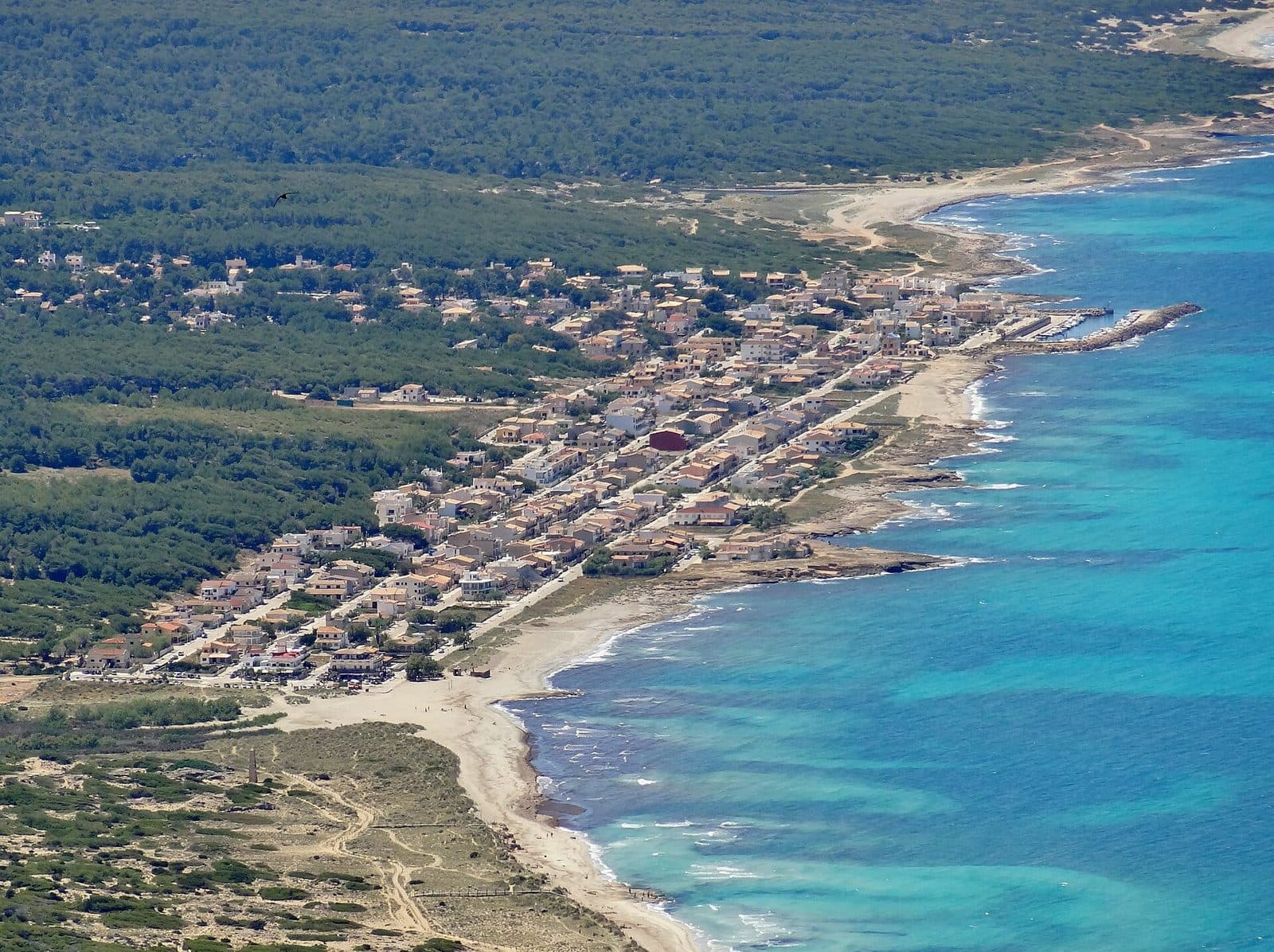
Son Serra de Marina lies where the Bay of Alcúdia opens onto the exposed, wind-shaped coast of northern Mallorca. It is not a conventional holiday resort but a low-rise settlement with a grid-like street plan, holiday homes, permanent residences, several places to eat and a small harbour. There are no large hotels; the beach and coastal landscape set the pace.
For visitors, Son Serra is especially worthwhile because of its natural-looking shoreline. Sand, pebbles, rocks and dunes merge into one another, while the mountains of Llevant and Puig de Ferrutx rise behind the water. Surfers and kitesurfers arrive when the wind picks up; on calmer days, swimming, beach walks and long views across the bay take centre stage.
Anyone considering living here should not judge the village by the infrastructure of a major coastal centre. Its appeal lies in its immediate proximity to the sea, modest scale and distance from organised mass tourism. At the same time, the journey to Palma requires realistic day-to-day planning. Son Serra de Marina is therefore especially suitable for people who value nature and tranquillity more highly than shopping streets, nightlife or a dense service network. The location is excellent for a day at the beach, an active stay or as a starting point for Son Real and the coast towards Artà; for regular journeys around the island, a car remains the most practical means of transport.
History of Son Serra de Marina
Possessió de Son Serra
The coastal village takes its name from the old Son Serra estate. The historic possessió does not stand directly beside today’s beachfront development but inland, near the road between Can Picafort and the turn-off to the coast. The property brought together farmland, pastures, woodland and buildings as a large rural enterprise whose land extended towards the sea.
The ensemble visible today was built around 1844. In addition to the main house and farm buildings, the estate included a school and a small church with a striking tower. This church tower remains a widely visible landmark on the Ma-12. The estate also explains why the name Son Serra appears both inland and on the coast: the later settlement adopted the name of the property on whose former land it was built.
Development of the Coastal Settlement
Today’s village is much younger than the old estates in the surrounding area. Intensive urban development began in the early mid-twentieth century, and the strikingly regular street grid that still exists today emerged within a short period. Son Serra de Marina initially became particularly popular with people from Mallorca looking for a quiet place to stay on the coast. Its development therefore differs from that of holiday centres that grew mainly around large hotel complexes.
The absence of large hotels continues to shape the village today. Instead, there are houses, apartments and holiday accommodation, including buildings with traditional Mallorcan features as well as modern residential designs. The village therefore feels more like an organically developed summer and residential settlement than a self-contained, purpose-planned resort.
From Rural Estate to Beachside Village
Fields, pastures and pine-covered areas lie between the possessió and the coastal settlement. This transition still makes the village’s development easy to understand: large agricultural areas dominate the inland landscape, while a compact, grid-like street plan opens towards the coast. The harbour, beach and water sports became the main focal points of modern Son Serra de Marina.
The surrounding area also preserves older layers of the island’s history. This is particularly evident at the neighbouring public estate of Son Real, with its historic farm buildings and prehistoric sites. Son Serra itself has no monumental old centre; instead, its history is told through the estate that gave it its name, the planned settlement established since the mid-20th century and the close relationship between island residents and the coast.
Things to See in Son Serra de Marina
Platja de Son Serra de Marina
The beach is the true centre of the village. Platja de Son Serra de Marina consists of coarse sand, pebbles and rocky sections. Because no tall hotel buildings rise directly behind the shore, the view remains open and the coast feels less enclosed than in many larger resorts around the Bay of Alcúdia.
The sea here is more exposed to wind and waves than in more sheltered parts of the bay. This makes the beach attractive to surfers but requires swimmers to pay close attention to current conditions. Dunes and rural land begin behind the shore, while the undeveloped coastal landscape continues eastwards. The main attraction is not a single sight but the contrast between the village’s straight street grid and the natural contours of the beach, dunes and sea.
Harbour of Son Serra de Marina
The small harbour forms a sheltered counterpoint to the open beach. From the waterfront, it is easy to see how abruptly the compact settlement gives way to a coast largely shaped by nature. The harbour is a useful starting or turning point for a walk around the village: paths follow the water from here, while the straight residential streets open up inland. Anyone wishing to experience Son Serra as more than a place to swim will gain the clearest impression of the settlement’s character among the harbour, low-rise houses and beach.
Dune Landscape and Coastal Views
A dune system lies behind parts of the beach, with rural land beyond it. The landscape should not be regarded merely as open ground beside the swimming area, as it is a sensitive transition between the sea and the hinterland. Existing access points and paths are therefore the right choice rather than walking across vegetated dune areas.
In clear weather, views extend across the bay and towards the hills of Llevant. Puig de Ferrutx gives the eastern coastline an especially distinctive profile. No purpose-built mirador is needed to enjoy the view: a panorama opens directly from the beach and the streets near the shore, changing considerably with the wind and light.
Possessió de Son Serra and Church
The estate that gave the village its name, together with its church, is historically one of the most important architectural ensembles in the surrounding area. The possessió was built around 1844 and includes a main house as well as farm and ancillary buildings. The tall church tower is already visible from the Ma-12 and marks the rural origin of the name Son Serra.
The ensemble lies outside the compact coastal settlement. It is therefore not an attraction that automatically forms part of a tourist circuit with scheduled interior visits. As a view and historical landmark, however, it explains more about the village’s origins than any modern building by the beach.
Street Grid of the Coastal Settlement
The right-angled street network is not a monument, but it is a readable record of the village’s development since the early mid-twentieth century. Unlike old Mallorcan villages, there are no winding lanes clustered around a medieval church. The streets run straight towards the sea or parallel to the coast, making orientation easy.
Modern holiday and residential buildings stand among older, simply designed houses; there are no tall hotel complexes. Those looking for architecture in the traditional sense may find Son Serra understated. Anyone interested in understanding the development of Mallorcan coastal settlements, however, will find an instructive alternative to the major hotel resorts here.
Sights in Son Serra de Marina
Food and Drink
Can Miraet
Can Miraet is located near the old Possessió de Son Serra and therefore belongs more to the rural approach road than to the dining area directly beside the beach. The restaurant is particularly suitable when a visit to the coast is combined with a look at old Son Serra. Its setting among the road, fields and historic buildings creates a different impression from the places to eat by the sea.
The restaurant’s value in a local guide lies not in a short-lived ranking but in this connection between food and local history. Anyone wishing to eat there should check current opening times and reservation arrangements, as a restaurant outside the compact village centre cannot automatically be treated as a spontaneous stop at every time of day or season.
Places to Eat in the Village
Restaurants and hospitality businesses are among the village’s most prominent sectors, alongside holiday rentals. After swimming, surfing or walking, visitors can stop for something to eat without the entire village feeling like a restaurant district. The choice is, however, smaller than in Can Picafort or other larger resorts.
Mallorcan Cuisine in a Small Coastal Village
In a village of this size, regional cuisine is represented more through individual dishes than through a large dining quarter. Pa amb oli, bread with olive oil and savoury toppings, represents simple everyday Mallorcan cooking. Ensaimadas form part of the island’s traditional baking culture. The specialities currently offered by any particular restaurant, however, depend on its menu.
The seaside location should not create the expectation that Son Serra is a historic fishing harbour with numerous old fish restaurants. Its present-day character is shaped more strongly by the beach, holiday homes and a handful of dining venues. Anyone seeking the widest possible choice or specific groceries for cooking should plan a detour to a larger centre in the region.
Dining Between the Seasons and Everyday Life
From a culinary perspective, Son Serra is therefore best suited to straightforward meals near the coast, not to a trip planned entirely around a large restaurant scene. The limited choice suits the village but requires slightly more advance planning than in a busy year-round urban centre.
Eating, drinking and staying in Son Serra de Marina
The best-rated businesses from our directory, ordered by Google rating — not by advertising.
Restaurants
- Restobar MOS4.9· 508 reviews
- Blue Tamarindo4.8· 531 reviews
- Sis Pins4.7· 1318 reviews
- Bonamar4.7· 268 reviews
- Restaurante Tamarinde4.6· 206 reviews
- Restaurante Lago4.5· 645 reviews
- Rancho Grande Park4.4· 3359 reviews
- El Sol Sunshine Bar & Beach Apartments4.4· 2781 reviews
- Can Miraet4.3· 690 reviews
- Bar Es mollet de Son Serra de Marina4.2· 369 reviews
Cafés and bakeries
Activities and Excursions
Swimming and Beach Walks
Platja de Son Serra de Marina is both a place to swim and a starting point for walks along the coast. The ground alternates between sand, pebbles and rocky sections; sturdy footwear is more comfortable than simple beach shoes for longer routes. Swimming takes centre stage on calm days, while wind and stronger waves noticeably change the character of the beach.
Because the shore is exposed to the bay, swimmers should give local conditions greater weight than a pre-arranged daily schedule. Families will find plenty of nature and room to move around, but not the fully organised environment of a hotel beach. Sun protection, water and everything needed for a longer stay at the beach should therefore form part of their own preparations.
Surfing, Kitesurfing and Windsurfing
Son Serra de Marina is particularly well known among surfers, kitesurfers and windsurfers. Wind and waves that can sometimes be uncomfortable for swimmers create interesting conditions for these sports. The beach is not, however, an exclusive water-sports area; consideration between athletes, swimmers and walkers remains essential.
Conditions change with wind direction and sea state. Visitors unfamiliar with the area should not be guided solely by the sight of experienced athletes but should assess their own ability and the current conditions realistically. Anyone needing equipment or instruction should check what is available before visiting rather than assuming there will be a large, permanently staffed water-sports centre.
Coastal Route Towards Sa Canova
East of Son Serra, the coast continues towards Sa Canova. Its appeal lies in the largely undeveloped sequence of beach, dunes and rocky sections. The route is less a landscaped promenade than a nature-focused coastal path. Suitable footwear, drinking water and careful treatment of the dunes are therefore especially important.
The route provides views of the mountains of Llevant and Puig de Ferrutx. It is particularly suitable outside the hottest part of the day and when conditions permit time on the exposed coast. In strong winds or rough seas, the scenery is impressive, but the route is less comfortable.
Public Estate of Son Real
West of Son Serra lies the public estate of Son Real, one of the most important excursion destinations along this part of the coast. The grounds include historic buildings, agricultural areas, dunes, natural beaches and prehistoric sites. Marked routes provide access to the landscape without requiring urban infrastructure.
Archaeological destinations include the talayot of Es Figueral and the necropolis at Punta dels Fenicis. Native farm animals such as sheep, black pigs and donkeys are also kept on the estate. Son Real thus combines nature observation, agriculture and history in a way that meaningfully complements the modern coastal village without repeating its beach-focused character.
Museum and Manor House of Son Real
The buildings of the Finca Son Real date from different periods; some go back to the Middle Ages, while others were built at the beginning of the 20th century. A museum helps visitors understand the landscape and its archaeological significance. This is especially valuable for visitors from Son Serra because the coastal settlement itself has only a few historic buildings.
An excursion to Son Real should therefore not be reduced to a quick photo stop. The combination of manor house, museum and walking routes reveals the long historical background of this coastal area, while Son Serra illustrates its more recent settlement since the mid-twentieth century.
S’Albufera Natural Park and Llevant
Son Serra is conveniently located between several natural areas in northern and northeastern Mallorca. S’Albufera is particularly well known for birdwatching. To the east begins the landscape of Llevant, with its mountains and natural stretches of coastline. The village is therefore suitable as a peaceful base for people who prefer to spend their days hiking, observing nature and enjoying water sports rather than sightseeing in towns.
A car is practical for reaching more distant starting points. Son Serra itself provides direct access to the sea; S’Albufera and the natural park on the Llevant peninsula add wetlands, mountain scenery and longer routes to the stay.
Beaches in Son Serra de Marina
3 beaches and coves with their own page belong to Son Serra de Marina.
Festivals and Events
Festes de Son Serra de Marina
The annual village festivities bring a noticeably different atmosphere to the otherwise quiet settlement in summer. The programme is aimed at residents and visitors and combines family activities, music, sport, culture and traditions by the sea. Unlike a historic patron saint festival in an old village centre, many activities are spread across streets, open spaces and beach areas.
For 2026, the festival has been announced for 25 July to 3 August. The programme begins with a Correfoc and includes beach sports, yoga, children’s workshops and open-air cinema. Individual events may change from year to year; the combination of a neighbourhood festival and summer life on the coast remains characteristic.
Sport and Culture by the Sea
The beach setting is not merely a backdrop but part of the festival programme. Sports activities and outdoor events suit the character of the village because Son Serra has neither a large historic square nor an extensive entertainment district. During the festival, areas normally used mainly for swimming or walking become community meeting places.
Visitors arriving at this time experience a livelier Son Serra than usual. For residents and visitors alike, the Festes are also an opportunity to celebrate together. Anyone seeking the greatest possible tranquillity should choose another date; those wishing to experience the village as a social community will gain the best insight during the festival week.
Getting There and Getting Around
By Car from Palma Airport
From Palma Airport, the road route follows the Ma-30, Ma-13 and Ma-3400 to Son Serra de Marina. The journey covers 67 road kilometres and takes around 71 minutes. The fast section along the Ma-13 is followed by a slower drive through the north of the island to the coast.
For travel planning, this means Son Serra is not reached immediately after landing but remains accessible without complicated mountain roads. Anyone transporting luggage, beach equipment or groceries will benefit considerably from having a car. The final sections pass through rural areas; once inside the village, its straight layout makes orientation easy.
By Car from Palma
The centre of Palma is 64 road kilometres away. The drive via the Ma-13, Ma-3400 and Ma-3440 takes around 75 minutes. This is easily manageable for an occasional day trip, but as a daily commute, the route requires considerable time and a conscious decision to travel that distance.
The Ma-13 provides the fast main section between Palma and the north of the island. After that, the motorway and major connections give way to regional roads. Anyone who needs to travel to Palma regularly should therefore consider not only the distance but especially the journey time of around 75 minutes in each direction when deciding whether to live here.
Access via the Ma-12
On the north coast, the Ma-12 is an important link between Can Picafort and the Artà area. The access road to Son Serra de Marina branches off from it. The church tower beside the old Son Serra estate serves as a prominent landmark. The coastal settlement itself lies away from the through road, so little regional traffic needs to pass through the entire residential grid.
The location away from the main route contributes to the tranquillity but also means that almost every onward journey first leads back to a regional connection. The village is nevertheless conveniently positioned for excursions to Son Real, Can Picafort, Santa Margalida or towards Artà.
Buses and Everyday Life Without a Car
Son Serra de Marina is connected to the public bus network. Routes and current departure times are displayed separately on this page. In practical terms, the bus is best suited to planned journeys: a small coastal settlement cannot be expected to offer the frequency of an urban network, and spontaneous connections may take more time.
It is possible to stay without a private vehicle when a holiday focuses on the beach, walks and a small number of organised excursions. For regular journeys to Palma, a car is considerably more practical for everyday life.
Parking and Getting Around the Village
The low-rise development and right-angled street grid make it easy to navigate by car. Parking is available near the beach. Arriving early helps avoid unnecessary searching in the streets close to the shore.
Within the settlement, the harbour, beach and places to eat can be combined on foot. Reaching the old possessió, Son Real and other destinations along the coast, however, requires a vehicle or a suitably planned walk. There is no conventional village centre where all everyday needs are located close together.
Bus lines to Son Serra de Marina at a glance
| Line | Route | Departures/day | First | Last |
|---|---|---|---|---|
| 316 | Son Serra - Inca | 68 | 06:25 | 22:55 |
From the official GTFS feeds (TIB/SFM), no real-time data. The figures cover all stops in the town; weekend and holiday services differ — check with the operator before travelling.
Getting there by bus
Talaiot de sa Nineta 1 (55042) · 1.6 km as the crow flies
- 316Son Serra - Inca · Daily
Talaiot de sa Nineta 2 (55041) · 1.6 km as the crow flies
- 316Son Serra - Inca · Daily
Son Serra centre (55044) · 2.5 km as the crow flies
- 316Son Serra - Inca · Daily
Timetable data: official GTFS feeds (TIB/EMT), no real-time — check with the operator before travelling.
Living in Son Serra de Marina
Homes Between the Sea and the Street Grid
Residential locations differ mainly in their proximity to the water and their position within the regular street grid. Homes near the shore experience the beach, wind and summer visitors directly. Farther inland, the surroundings become more residential and the walk to the sea grows longer without changing the settlement’s essential character. There are no rows of high-rise buildings or large hotel complexes.
The building stock includes traditional Mallorcan houses as well as modern holiday accommodation. Holiday rentals are strongly represented in the village. Before deciding to live here, it is therefore important to consider not only the individual property but also how neighbouring buildings are used.
Summer and Winter
In summer, beach visitors, water-sports enthusiasts, holiday residents and the village festivities shape daily life. Even so, the absence of large hotels keeps Son Serra more manageable than the major resorts around the bay.
Everyday Amenities
Son Serra is small, and its economy is shaped mainly by holiday rentals and hospitality. For everyday needs, the village should therefore not be treated like a fully equipped regional centre. Anyone planning a longer stay should specifically check which smaller shops or services currently operate throughout the year. Can Picafort is a lively coastal resort with tourist facilities, restaurants, bars and shops.
Commuting and Working
The journey to central Palma covers 64 road kilometres and takes around 75 minutes via the Ma-13, Ma-3400 and Ma-3440. Daily commuting is therefore possible in principle but takes up a considerable part of the day. Son Serra is better suited to people who work in the north of the island, have flexible hours, need to attend in person only occasionally or can work partly from home.
A car remains useful even for closer workplaces because the settlement lies away from the main transport routes. Anyone dependent on the bus should check starting times, connections and return journeys before moving rather than afterwards. The quality of the location comes from its quiet position on the edge of the region; the same position limits spontaneous mobility.
Neighbourhood and Village Character
Development began in the early mid-twentieth century as a coastal settlement particularly appreciated by Mallorca residents seeking peaceful stays. Today, the village is used by both residents and visitors. Son Serra therefore has neither the purely rural character of an old inland village nor the anonymous structure of a large hotel zone.
Anyone expecting social contacts centred on a historic market square, a dense network of clubs or a year-round shopping street will find fewer opportunities here. The village is well suited to people who value independence, access to nature and a small neighbourhood.
Practical Information for Your Visit
Choosing the Right Time
Water-sports enthusiasts plan more closely around wind and waves. Anyone wishing to swim should check the actual conditions on the exposed shore and avoid sticking to a pre-arranged schedule when the sea is rough. During the Festes in late July and early August, Son Serra is particularly lively.
How Much Time to Allow
A compact visit is sufficient for the harbour, street grid and a walk along the beach. Anyone also wishing to follow the coast towards Sa Canova, enjoy a leisurely meal or visit the Finca Son Real should treat Son Serra as a full day-trip destination. The historic possessió lies inland and can conveniently be included on the outward or return journey.
A conventional route from monument to monument would be the wrong expectation. Son Serra is best understood through its landscape, beach and the transitions between the residential settlement, harbour, dunes and rural hinterland.
Preparing for the Beach and Coastal Route
The changing ground of sand, pebbles and rocks makes sturdy footwear advisable whenever more than a short beach visit is planned. Sun protection and drinking water should not depend on comprehensive infrastructure being available directly beside the chosen section of beach. Vegetated dunes should be entered only via existing access points rather than crossed as shortcuts.
Families should bear in mind that the natural setting offers fewer organised conveniences. The open sea can bring waves. This is part of the village’s appeal, but it also makes personal preparation necessary.
Useful Combinations
Son Real is the strongest complementary destination in terms of content: coastal walking, a museum, a historic manor house and prehistoric sites come together there. Santa Margalida offers a more traditional village centre, while Can Picafort is suitable for a wider selection of shops and places to eat. To the east, the landscape leads towards Sa Canova and onward into the Artà area.
Visitors should not expect large hotels, a long shopping street, intense nightlife or an abundance of monumental sights. Son Serra de Marina is most rewarding when the sea, wind, low-rise development and lightly organised coastal landscape are understood as its main attractions.
Local businesses and services
The best-covered sectors in our directory for Son Serra de Marina — each with address, contact details and opening hours.
Run a business here? Add it to the directory for free and be found on this page. Add your business
Latest news from Santa Margalida
- Mallorca burglary: Llubí suspect held over 40,000 euros
- Phone in sand leads to Can Picafort beach robbery arrests
- 27 Mallorca towns lack Alcover and La Balanguera
- Mallorca: Prohens joins Beata procession in Santa Margalida