
Urbanització Sant Pere – peaceful coastal living in northeast Mallorca

Places to stay in Urbanització Sant Pere
AdTo load the accommodation map by our partner Stay22, we need your consent for marketing cookies. Your consent applies to all marketing content on mallorca.com.
Urbanització Sant Pere is a holiday development within Colònia de Sant Pere on the eastern side of the Bay of Alcúdia. Anyone reading the name on a map should therefore not expect a separate historic village centre: the development belongs to a small coastal town in the municipality of Artà, where daily life unfolds among residential streets, the sea, the harbour and the nearby foothills of the Serres de Llevant. Its scale is manageable, the buildings remain low-rise, and large hotel complexes do not dominate the scene.
For visitors, Urbanització Sant Pere is worthwhile less for a long list of classic monuments than for its location. The waterfront promenade of Colònia de Sant Pere, the sheltered town beach, the small harbour and views across the Badia d’Alcúdia are all close together. A stay can easily combine swimming, a walk by the water or an excursion into the landscape of the Llevant peninsula. Even in summer, this stretch of coast is considered noticeably quieter than the large holiday resorts on the opposite side of the bay.
For residents, the appeal lies in a different quality: Urbanització Sant Pere is part of a small-scale residential and holiday landscape where houses and apartments are more important than large accommodation establishments. The sea is not merely a backdrop for holidays but part of the daily journey through the town. At the same time, its position on the northeastern edge of Mallorca’s road network remains noticeable; regular appointments in Palma require considerably more time than from a home in the centre of the island.
This guide deliberately treats Urbanització Sant Pere as part of Colònia de Sant Pere because the harbour, promenade, church and beach belong to the development’s shared immediate surroundings and explain its character better than an artificial boundary between individual residential streets.
History of Urbanització Sant Pere
The founding of Colònia de Sant Pere
The historical starting point for today’s settlement landscape is Colònia de Sant Pere. The town was founded in 1880 as an agricultural colony on the eastern coast of the Bay of Alcúdia. The term “Colònia” itself therefore refers not to an old town that evolved over centuries but to a planned new settlement. Agriculture and the seaside location shaped its early setting. The small harbour accommodates fishing boats and yachts.
These origins can still be read indirectly in the townscape: Colònia de Sant Pere has neither a densely built medieval centre nor a monumental urban silhouette. Instead, low-rise houses shape the town, while Urbanització Sant Pere is geared towards holiday and residential use.
From coastal town to holiday development
Alongside Colònia de Sant Pere, further developments emerged on the eastern side of the Badia d’Alcúdia as Mallorca’s coasts were increasingly opened up for holiday homes in the second half of the 20th century. Betlem, Montferrutx and s’Estanyol are documented in the surrounding area as coastal developments of this kind. Urbanització Sant Pere belongs to the same geographical setting of homes, second residences and small-scale tourism without taking on the dimensions of the bay’s major holiday centres.
The decisive factor in its development was not the construction of large hotels but the use of individual houses and apartments. Today’s holidaymakers also frequently stay in rented or privately owned accommodation. Tourism is therefore distributed throughout the residential area rather than concentrated in an enclosed hotel zone. This explains why Urbanització Sant Pere can be both a holiday address and an everyday place to live.
The connection with the sea
Colònia de Sant Pere continues to be shaped by its small harbour and the parish church dedicated to Saint Peter. Peter is regarded as the patron saint of fishermen, and the town’s name directly reflects this maritime connection. Besides fishing boats, the harbour mainly accommodates leisure craft and yachts. A coastal place with agricultural origins thus became a peaceful residential and holiday town whose identity is neither exclusively rural nor exclusively tourist-oriented.
Today’s Urbanització Sant Pere is the result of this development. Its significance lies not in a single historic building but in the continuation of a low-rise coastal town that has opened itself to tourism without creating an enclosed landscape of high-rises or resorts.
Sights in Urbanització Sant Pere
Urbanització Sant Pere itself does not have a separate monument district. What is worth seeing instead is the shared coastal area of Colònia de Sant Pere, accessible from the development on foot or by short journeys. The harbour, promenade, beach and silhouette of the Llevant mountains form a walking route where the landscape matters more than a succession of ticketed attractions.
Harbour of Colònia de Sant Pere
The small harbour is the coastal town’s most vivid focal point. With fishing boats, sailing boats and yachts, it illustrates the transition from a working harbour to a modern leisure and water-sports location. Unlike large marinas, the harbour remains closely connected to the residential development; just a few steps lead from the boats to the promenade and adjoining streets.
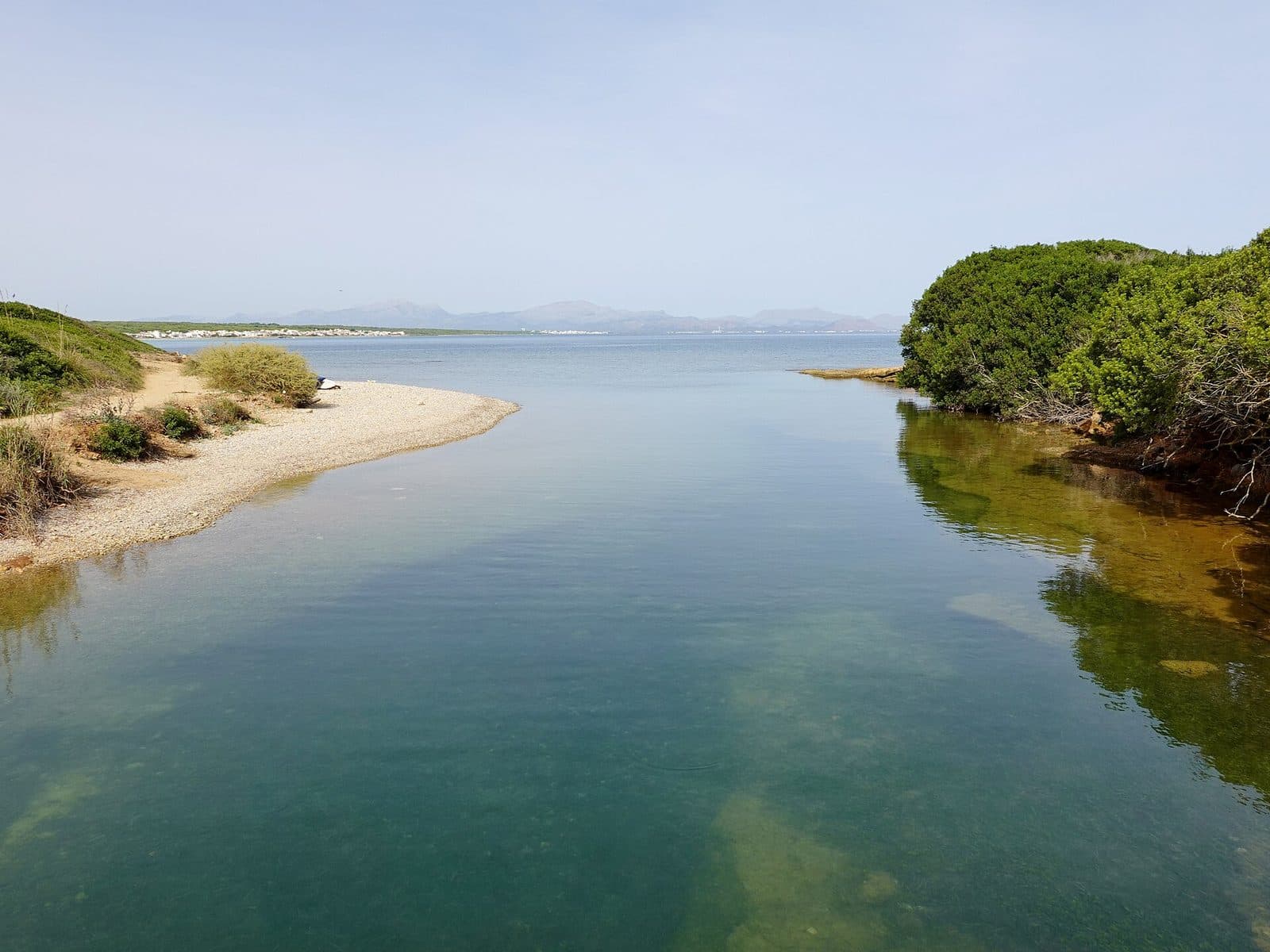
The view from the waterfront beyond the harbour walls and across the Bay of Alcúdia is particularly appealing. The geographical position is immediately apparent here: Colònia de Sant Pere and Urbanització Sant Pere lie on the quieter eastern side of the broad bay, while the more developed stretches of coast are visible in the distance. The harbour is therefore less an isolated attraction than a useful point of orientation for the entire town.
Club Nàutic Colònia de Sant Pere
The yacht club represents the harbour’s present-day maritime use. Sailing and leisure boating are more visible than large-scale commercial fishing, yet the complex does not feel like a separate luxury marina. It belongs to the everyday scene along the waterfront and helps explain why restaurants and bars have opened nearby.
For visitors without a boat, the atmosphere is the main attraction: masts, small harbour basins, sheltered water and open views across the bay create a clear maritime focal point. The yacht club should be regarded as an operating harbour facility, not as a museum or staged attraction.
Waterfront promenade of Colònia de Sant Pere
North of the harbour, the promenade runs along the water. Benches beneath tamarisk trees, restaurants and bars make it the town’s principal strolling route. Because the buildings remain low-rise, the sea visually retains the leading role. The route is equally suitable for a short walk or a longer break overlooking the bay.
The west-facing bay is particularly impressive in the evening. Sunsets over the Badia d’Alcúdia are among the defining experiences of this coastline. At that time, the promenade is not a spectacular boulevard but a peaceful meeting place for residents, holidaymakers and restaurant guests. Anyone wishing to understand where the public life of the coastal town takes place should begin here when visiting from Urbanització Sant Pere.
Town beach of Colònia de Sant Pere
Below the promenade lies the compact town beach, sheltered on one side by a breakwater. Its strength is its immediate proximity to the development: swimming, a walk around the harbour and refreshments can be combined without driving between widely separated destinations. This makes the beach especially practical for a spontaneous stay by the water.
It should not be confused with the long sandy beaches of the bay’s major resorts. This is a small local swimming spot rather than an extensive beach landscape with large-scale holiday facilities. Its integration into the residential town is precisely what makes it appealing to families and people who want to make the sea a regular part of daily life.
Parish church of Colònia de Sant Pere
The parish church is dedicated to Saint Peter, the patron saint of fishermen. It also explains the town’s name and its traditional relationship with the sea. Compared with the grand churches of Mallorca’s old towns, it appears understated; its value lies primarily in its role as the community’s religious focal point.
On a walking tour, the church provides a meaningful counterpoint to the harbour. While the coast displays today’s leisure use, the patronage recalls an older maritime way of life. An extensive programme of sacred art or a museum-style visit is not the reason to come here—the church belongs to a living town.
Cap de Ferrutx and the Serres de Llevant
East of the developed coastal strip, Cap de Ferrutx and the mountains of the Llevant peninsula shape the horizon. The rock formations create a distinct scenic boundary to the bay and give Urbanització Sant Pere a sheltered location that feels almost enclosed between sea and mountains. This backdrop remains visible even from the streets and promenade.
The cape is important above all as a landscape landmark. It shows how quickly the developed coast gives way to rougher terrain. Those arriving for nature and hiking will find here the visual transition to the Parc Natural de la Península de Llevant; even those merely walking through the town gain a good impression of the northeast’s distinctive geology.
Sights in Urbanització Sant Pere
Food and drink
The dining scene in Urbanització Sant Pere cannot meaningfully be separated from Colònia de Sant Pere. Restaurants and bars are concentrated along the waterfront promenade and around the harbour, where residents and visitors meet. The seaside setting shapes the experience more strongly than any single shopping or nightlife street: meals come with views of the harbour basin, promenade or bay.
Restaurants on the harbour promenade
The establishments along the promenade form the most visible dining hub. They serve holidaymakers, boat crews and local residents without creating a large entertainment district. The setting remains small-scale and suits the low-rise character of Colònia de Sant Pere. A restaurant visit can therefore be combined particularly well with a walk or time at the beach.
Choosing the setting matters more than a long list of individual establishments: in the front row, views across the Badia d’Alcúdia take centre stage, while tables in the side streets feel more closely connected to the residential town. The current selection may change seasonally and is listed separately on the page.
Bars by the water
The bars along the waterfront serve several purposes. During the day, they offer a place to rest between the beach and harbour; in the evening, they become meeting points for a peaceful end to the day overlooking the bay. Nightlife remains considerably more subdued than in Mallorca’s large holiday resorts. Urbanització Sant Pere is better suited to a long conversation by the water than a tour of clubs and discos.
This limited separation between residential areas and hospitality venues is particularly important to the town’s character. The promenade is not an exclusively tourist-oriented stage set but part of everyday local life. Demand rises during high season, but even then the setting remains smaller than in the bay’s heavily visited beach centres.
Dining as part of a day on the coast
A visit is most coherent when food and drink are not treated as an isolated item on the itinerary. A walk begins at the harbour, follows the promenade, continues to the town beach and ends at a table by the water. This is the best way to experience Colònia de Sant Pere at its natural pace.
Anyone looking for a large selection of historic cellers, old town bakeries or an extensive shopping district will not find the right type of place here. Its strength lies in its manageable coastal dining scene and the connection between the residential town, harbour and sea. For residents, this means short walks to local establishments; for visitors, it provides an uncomplicated ending to a day at the beach or on the trails.
Activities and excursions
Urbanització Sant Pere’s most important recreational resource lies directly on its doorstep: the Bay of Alcúdia. Behind the development, the foothills of the Serres de Llevant begin at the same time. Peaceful days by the water can therefore be combined with hikes and excursions in northeast Mallorca without the town itself needing an organised entertainment programme.
Swimming at the town beach
The beach below the promenade is suitable for an uncomplicated swim. The breakwater shelters part of the shore and visually separates the swimming area from the harbour. Because restaurants, bars and residential streets are nearby, no long approach is required. This also makes the beach practical for short stays and for families wishing to return to their accommodation in between activities.
The location is less suitable for a pure beach holiday with endless expanses of sand. Its advantage is precisely its small scale: swimming in the morning, walking along the harbour later and then stopping somewhere in town. Visitors should pay attention to ongoing harbour operations and to the locally designated swimming areas.
Snorkelling and windsurfing
The coast of Colònia de Sant Pere is used for swimming, snorkelling and windsurfing. Snorkelling is suitable on calm days along appropriate sections of the shore; windsurfing depends more heavily on the wind and sea conditions. A general assessment of conditions therefore cannot replace checking the weather and local guidance.
From the promenade, the bay appears broad and open, while the town beach is comparatively sheltered. This contrast is precisely what makes the location interesting: it offers easy access to the water without presenting itself as a major water-sports centre.
Hiking in the Península de Llevant
The hinterland is shaped by the Serres de Llevant. Hiking trails lead through the coastal landscape and into the peninsula’s more mountainous terrain. The Parc Natural de la Península de Llevant is the area’s most important natural destination and presents a rougher side of Mallorca, with mountain ridges, open landscapes and views towards the coast.
Urbanització Sant Pere is a peaceful starting point for hikes because the sea and promenade are close by after the walk. However, the trails in the natural park should not be equated with a stroll through the development. Sun protection, water, sturdy footwear and a route suited to personal fitness levels are all part of the preparation. Current access and weather information is essential for more demanding routes.
Cala Torta
Cala Torta is regarded as an attraction in northeast Mallorca and is a destination in its own right. The cala should not be viewed as a casual extension of a walk along the promenade. The excursion requires separate planning, particularly regarding access, weather and equipment. Urbanització Sant Pere remains the peaceful residential or holiday base to which visitors return after a day at the beach.
Son Real
On the other side of the broader coastal area of the Badia d’Alcúdia lies Finca Pública Son Real with its archaeologically important necropolis. The destination combines nature, coastal scenery and history, making it particularly suitable for visitors who want more than a simple day at the beach.
Son Real is an excursion rather than a sight within the development. Its contrast is nevertheless revealing: here, a modern low-rise holiday development by the harbour; there, a historic cultural landscape with archaeological traces. A vehicle is the most practical option for travelling between them.
Artà and Capdepera
Urbanització Sant Pere belongs to the municipality of Artà. With its Castell, Capdepera offers a striking historic destination in the northeast and provides a strong counterpoint to the coastal development, which has no medieval centre of its own.
For a varied day, begin with a walk or swim in Colònia de Sant Pere and then visit one of the two towns. In this way, Urbanització Sant Pere is not experienced in isolation but understood as part of the Llevant region: coast and holiday homes on one side, Artà and Capdepera together with the mountain landscape on the other.
Beaches in Urbanització Sant Pere
One beach with its own page belongs to Urbanització Sant Pere.
Getting there and getting around
Urbanització Sant Pere lies on the eastern side of the Bay of Alcúdia and is reached from Palma through the island’s interior. The final sections do not follow a continuous coastal motorway but regional roads towards Colònia de Sant Pere. For journey planning, the road connection via Manacor and the northeast is therefore more important than the location on the bay itself.
Travelling from Palma Airport
The road distance from Palma Airport is 72 kilometres. The journey takes around 65 minutes and follows the Ma-15, then the Ma-3322 and Ma-3331. The Ma-3331 forms the final approach to Colònia de Sant Pere; on entering the town, views open up from the higher roads towards the bay and coast.
In practical terms, this location means that Urbanització Sant Pere is easy to reach by hire car but is not among the holiday resorts close to the airport. Shopping or other stops should ideally be incorporated into the route instead of travelling far back into the island’s interior after arrival. Additional time is advisable during busy travel periods, although the specific basis for planning remains the measured journey time of around 65 minutes.
Travelling from Palma
The road distance from central Palma is 75 kilometres. The journey takes around 72 minutes, also via the Ma-15, Ma-3322 and Ma-3331. The route is manageable for a day trip but requires clear planning: the outward and return journeys take up a considerable part of the day if the visit consists only of a short walk along the promenade.
The connection is more demanding for regular commuting. Urbanització Sant Pere offers peace and proximity to the coast but does not lie within the capital’s immediate commuter area. Anyone who frequently needs to be in Palma for work should regard the 75 road kilometres and around 72 minutes in each direction as a fixed part of daily life.
Getting around locally
Within Colònia de Sant Pere, the harbour, promenade, town beach and adjoining residential streets are easy to combine. Walking is usually more sensible in this central area than repeatedly moving and parking the car. Urbanització Sant Pere nevertheless remains part of a more extensive coastal strip that includes further residential developments and natural destinations; a car is considerably more practical for these.
Bus services can be accessed from several nearby stops in the Colònia de Sant Pere and Montferrutx area. They provide an alternative to the car but require the day to be organised more closely around the timetable. A private vehicle offers significantly more flexibility for spontaneous detours to remote coves, hiking access points or several neighbouring towns.
Bus lines to Urbanització Sant Pere at a glance
| Line | Route | Departures/day | First | Last |
|---|---|---|---|---|
| 421 | Colònia de Sant Pere - Artà | 48 | 07:30 | 19:55 |
From the official GTFS feeds (TIB/SFM), no real-time data. The figures cover all stops in the town; weekend and holiday services differ — check with the operator before travelling.
Getting there by bus
Colònia de Sant Pere (6003) · 1.2 km as the crow flies
- 421Colònia de Sant Pere - Artà · Daily
Montferrutx 2 (6009) · 1.4 km as the crow flies
- 421Colònia de Sant Pere - Artà · Daily
Montferrutx 1 (6004) · 1.4 km as the crow flies
- 421Colònia de Sant Pere - Artà · Daily
Timetable data: official GTFS feeds (TIB/EMT), no real-time — check with the operator before travelling.
Living in Urbanització Sant Pere
As a place to live, Urbanització Sant Pere is particularly attractive to people who value proximity to the coast and a small-town scale more highly than fast access to Palma. Daily life does not take place within an enclosed resort. The development belongs to Colònia de Sant Pere, where residential streets, harbour, beach and dining venues merge without any hard boundary.
Homes between the sea and mountain slopes
The development consists predominantly of low-rise houses and apartments. High-rises, large hotel blocks and densely arranged holiday complexes are absent from the townscape. Depending on the location, daily life may be oriented more towards the sea, the promenade or the quieter residential streets. The mountains of the Península de Llevant remain a visible backdrop and frame the settlement landscape to the east.
A potential sea view is not the only factor that determines residential quality. Equally important are the route to the waterfront, the orientation of the house, access to the Ma-3331 and the distance to everyday destinations in Colònia de Sant Pere. Anyone intending to live here permanently should therefore look beyond a holiday photograph of the coast and examine the specific street and its connection with the town centre.
Residents and holidaymakers
Colònia de Sant Pere is shaped both by permanent residents and by holidaymakers and owners of second homes. Because much of the holiday accommodation consists of houses and apartments, tourist and ordinary residential use often exist directly alongside one another. This distinguishes the area from places where hotel zones are clearly separated from residential districts.
Additional guests bring more life to the promenade, beach and harbour in summer. Nevertheless, the number of large accommodation establishments remains low, and even the peak season does not create the atmosphere of a mass-tourism centre. The greater distance from Palma and from the central towns in the island’s interior is clearly noticeable in everyday life.
Daily life without a car
Within the central area of Colònia de Sant Pere, many journeys can be made on foot. The harbour, promenade, beach and dining venues are close together, and several bus stops are located within the development. This is a clear advantage for people whose daily lives take place mainly within the coastal town.
Living entirely without a car nevertheless requires planning. Excursions to the natural park, visits to remote beaches and flexible journeys to other towns in the northeast are easier to organise with a car. Anyone travelling regularly to Palma must also allow for 75 road kilometres and around 72 minutes each way. The bus can cover individual journeys but does not offer the same spontaneous mobility as a private vehicle.
Working and commuting
Urbanització Sant Pere can be a peaceful base for occasional appointments in Artà, Manacor or Palma. For daily attendance in Palma, however, the coastal location becomes the decisive factor. The route via Ma-3331, Ma-3322 and Ma-15 is straightforward, but the roughly 72 minutes to the centre make it a genuine commute rather than a short urban journey.
Working from home and location-independent employment generally suit the area better than a daily workplace in the capital. This is not a question of holiday atmosphere but of time management: those who rarely need to drive benefit more from the sea, tranquillity and low-rise setting; those who commute to Palma every working day spend a large part of the day on the road.
Season and winter
The promenade, beach, harbour and dining venues shape public life, while the town remains more tranquil than the bay’s major holiday centres. Urbanització Sant Pere is a small residential and holiday development on the edge of the northeast. The location is especially suitable for permanent residents who deliberately seek peace and access to nature. Anyone who needs a wide range of urban amenities, frequent public transport or short journeys to Palma every day should weigh the location realistically against those expectations.
Practical information for your visit
The best time of day
Late afternoon is particularly appealing for a walk. The harbour, promenade and town beach can then be combined before the sunset view across the bay becomes the focal point. Anyone wishing to swim or set out on a longer hike should begin earlier and keep the activity separate from the evening visit to the promenade.
Length of a walking tour
The actual walking tour of the town is compact. The harbour, yacht club, promenade, beach and church are not widely separated individual destinations but form a connected sequence. The appropriate amount of time therefore depends less on the walking distance than on the breaks taken along the way. Without time at the beach, a relaxed walk is sufficient; with swimming, a meal or the sunset, it can easily become a half-day excursion.
Visiting by car
A car is the most flexible option for getting there, especially if the itinerary also includes Artà, a natural beach or the Parc Natural de la Península de Llevant. Within the coastal town, the vehicle should ideally remain parked: the central impressions are best discovered on foot, and repeated short drives between the harbour, promenade and beach offer little advantage.
Useful combinations
Urbanització Sant Pere works well as a peaceful counterpoint to a cultural or nature-oriented destination. Artà complements the day as a neighbouring town, Capdepera adds a striking Castell, and the natural park offers a distinctly wilder landscape. Son Real also provides an engaging contrast to the modern holiday development with its coastal nature and necropolis.
Visitors should not expect an extensive sightseeing programme, large shopping streets, monumental museums or pronounced nightlife. A visit is worthwhile precisely when the harbour atmosphere, swimming, a meal by the water and views across the bay are enough to provide a satisfying experience.
Upcoming dates
Latest news from Artà
- 27 Mallorca towns lack Alcover and La Balanguera
- Mallorca electric cars and fire demo fill Palma
- Manacor historic shops: new videos tell their stories
- Mallorca raises 180,000 plants for forests and dunes