
Importing a luxury car to Mallorca: ITV, Homologación & Classic Plates
You love your Porsche 911 GT3 RS, your Ferrari Roma or your Bentley Continental – and you want to drive it on Mallorca, not at some point in the future, but from day one with Spanish number plates and fully road-legal. The route to get there is manageable, but it has more pitfalls than a hairpin bend on the Cap Formentor. Whether it's an EU vehicle with a missing COC certificate, an American sports car without EU type approval, or a well-maintained classic with historic plates – every vehicle category follows its own logic. This guide walks you through the entire process: from the COC document through the ITV special inspection and Homologación all the way to the historic vehicle plate, including the costs, deadlines and authorities you need to know about on Mallorca.
Taking your car to Spain: costs
Explanation
Passenger car with ordinary EU type approval. A private passenger car must not be a vehicle with living accommodation. Ask for an individual assessment for other vehicles or individual approvals. Motorhomes and campers have their own Anexo IV table and tax-base reduction (Art. 66.5). Mainland Spain is not covered; the Balearic 16% rate is a regional provision. Commercial vehicles and vehicles treated as new for tax purposes are also excluded.
Explanation
Only first definitive registration of an imported used car in the Balearics is supported. Mainland Spain and other cases need separate assessment.
Explanation
Enter the whole number from V.7 of registration certificate Part I. Without evidence, this tax item cannot be calculated.
Explanation
Enter the full document date (YYYY-MM-DD). Tariff changes and anniversaries can change the tax.
- Priced items: One-off total
- €702.10
- Impuesto de matriculación (registration tax)
- €602.33
- Deadline / devengo (tax accrual)
- 31 Jul 2026 / 15 Jul 2026
Are you moving your residence to Spain?: No; Could another tax relief apply?: No other relief; When do you apply for Spanish registration?: 15 Jul 2026.
Legal status: 1 January 2026
This calculation is provided for guidance only and is not a substitute for tax or legal advice in specific cases.
The Certificate of Conformity – in Spanish Certificado de Conformidad – is the most important document when importing a European vehicle into Spain. It confirms that your car holds EU type approval and meets European safety and environmental standards. Only with this document can it be registered in Spain.
When is a COC available?
For new vehicles, the COC is generally supplied as standard from the factory and contains all vehicle-specific data such as type, power output, dimensions and CO₂ emissions. The Spanish registration authorities transfer these values directly into the national documents.
Please note: The COC was only introduced on 1 October 2005. Vehicles with a manufacturing date prior to this generally do not have a COC. For these, it must be checked on an individual basis whether the existing type approval is sufficient.
What to do if the COC is missing?
Before applying for a new COC, it's worth checking the glove compartment, the sun visor or old vehicle documents – the original often turns up there. If it is genuinely missing, contact the manufacturer or the official importer. Most major brands will issue a duplicate for a fee.
| Situation | Solution |
|---|---|
| New vehicle from an EU country, COC available | Proceed directly to re-registration (Matriculación) |
| Used vehicle, COC missing, manufactured from 2005 onwards | Apply for COC from the manufacturer |
| Vehicle manufactured before 01.10.2005 | Individual assessment of the existing type approval |
| Vehicle from the USA, Japan or other non-EU countries | Homologación (individual approval) required |
| Historic vehicle / classic car | Special route: Historic plates (matrícula histórica) |
Homologación: The Special Route for US Sports Cars and Exotic Imports
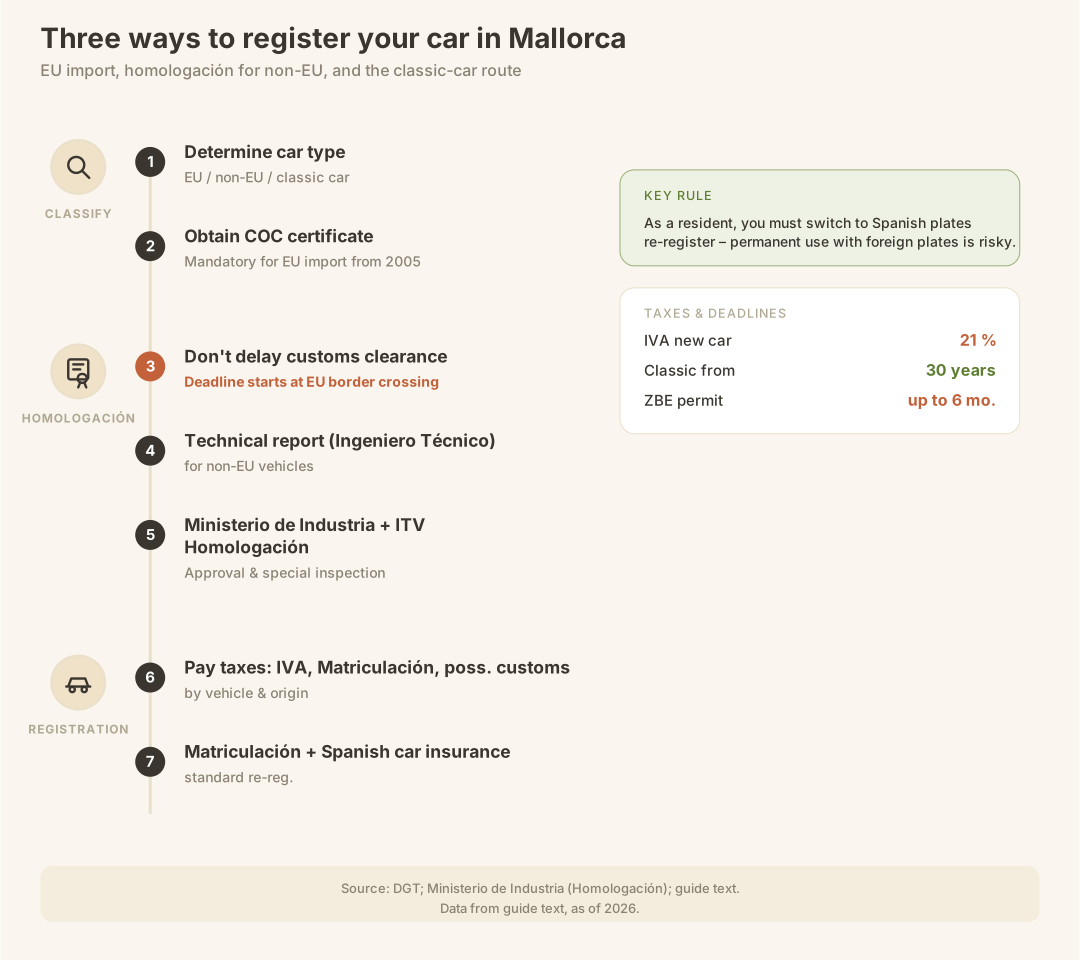
Anyone wishing to bring an American muscle car, a Japanese GT-R in a variant not approved for Europe, or any other vehicle without EU type approval to Mallorca cannot avoid the so-called Homologación is not over. This involves an individual vehicle type approval demonstrating that the vehicle complies with Spanish and European regulations – or has been modified accordingly.
This process is, by general consensus among professionals and those who have gone through it, both time-consuming and costly. A concrete real-world example of things going wrong: a US-spec Lotus Exige (2007 model year) was brought to Mallorca on a German temporary registration plate. After six months, the Spanish authorities informed the owner that registration without a COC was not possible – the vehicle was impounded because it was at that point being kept in the EU illegally.
Warning: If you bring a non-EU vehicle to Mallorca on a temporary registration plate or on a transporter, the customs deadline for release into free circulation starts running from a clearly defined point in time. Do not ignore this deadline – exceeding it can result in severe penalties.
Typical steps in the Homologación process:
- Release the vehicle into free circulation for customs purposes (import VAT and, where applicable, customs duty)
- Technical assessment by an approved Spanish engineer (Ingeniero Técnico Industrial)
- Proof of compliance with ECE standards or technical modification (e.g. headlights, exhaust system, restraint systems)
- Submission to the relevant ministry of industry (Ministerio de Industria) for approval
- Special ITV inspection (ITV de Homologación)
- Followed by the standard Matriculación
The costs of a full Homologación can vary considerably depending on the vehicle and the modifications required. In any case, obtain quotes in advance from specialist gestorías and technical offices on Mallorca.
The ITV on Mallorca: What you need to know as a vehicle owner
The Inspección Técnica de Vehículos (ITV) is the Spanish equivalent of the German TÜV. The inspection covers roadworthiness (brakes, steering, suspension, lighting, tyres) as well as environmental standards (emissions, noise). On passing, you receive a windscreen sticker and an inspection report.
Regular inspection intervals:
| Vehicle age | ITV interval |
|---|---|
| Up to 4 years from first registration | No requirement |
| 4–10 years | Every 2 years |
| 10 years and over | Annually |
| Historic vehicles (matrícula histórica) | Own regulations (see below) |
There are several ITV stations on Mallorca. Appointments can be booked via the portal itv.mallorca.es Anyone who does not wish to drive their vehicle in themselves – for example because they do not live on the island permanently – can engage a local service provider for the so-called ITV-Run.
Note: For vehicles that have undergone a Homologación, an extended inspection (ITV de Homologación) is carried out at the first ITV in Spain. This goes beyond the standard ITV and verifies compliance with the technical requirements set out in the Homologación.
Conversions must be re-registered: Anyone who makes technical modifications to their vehicle after initial registration – such as a sports exhaust system, altered suspension, or different wheels – must as a rule have these approved by the competent industrial ministry (Ministerio de Industria) before the next ITV takes place. Unauthorised modifications can result in the vehicle being deregistered.
The special ITV inspection for luxury vehicles and exotics
For vehicles that fall outside the scope of the standard programme, the Spanish system provides for the so-called ITV especial or extended inspection. This applies in particular to:
- Vehicles with extensively modified technology fitted after manufacture
- Imported vehicles following completed Homologación
- High-performance vehicles with non-standard exhaust systems
During this inspection, the ITV stations on Mallorca place particular emphasis on the vehicle's compliance with the technical data entered in the registration documents. Any discrepancy – for example an exhaust system that differs from the one recorded in the vehicle's logbook – will reliably result in a fail.
Practical recommendation: Ask your gestoría to provide a complete overview of the technical data entered in the Spanish vehicle registration document (ficha técnica) before the special ITV inspection, and compare it with the vehicle's actual condition.
Low-emission zone Palma: what foreign number plates need to be aware of
The Zona de Bajas Emisiones (ZBE) in Palma de Mallorca has introduced a regulation that directly affects vehicle owners with foreign number plates as well. Vehicles with non-Spanish plates are not automatically classified as compliant with emissions standards, because emission classifications are recorded differently across Europe. The Spanish traffic authority DGT uses its own classification system that cannot be applied directly to foreign vehicles.
Affected owners – including residents who have not yet re-registered their vehicle – must have their vehicle entered in a special register. This authorisation is generally granted for up to six months. The application can be submitted online via the municipal portal of the Palma council or in person.
Please note: Anyone residing on Mallorca who continues to drive on foreign plates on a permanent basis enters a legal grey area after a certain period. The DGT has stepped up its checks. Under Spanish law, re-registration to Spanish number plates is generally mandatory for residents.
Classic car plates on Mallorca: the matrícula histórica
For many classic vehicle enthusiasts, the historic number plate (matrícula histórica or vehículo de interés histórico, VIH) is the ultimate goal. It not only confers special privileges but in practice often means lower ongoing costs.
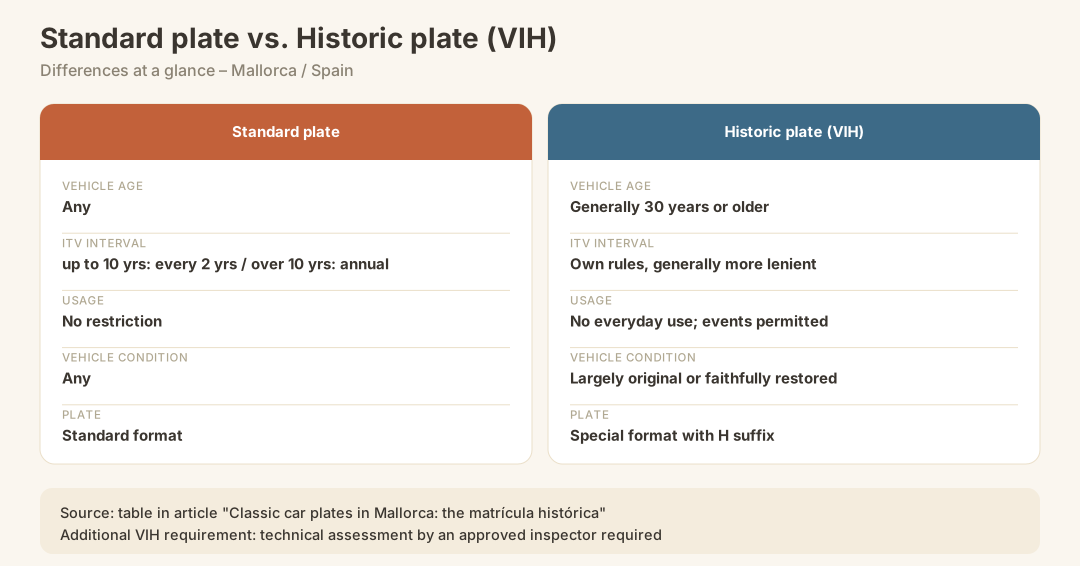
Requirements for the matrícula histórica:
- The vehicle must generally be at least 30 years old
- It must not be used as an everyday vehicle (restricted use)
- The original condition must be largely preserved or faithfully restored
- A technical assessment by an approved expert is required
| Aspect | Standard number plate | Historic number plate (VIH) |
|---|---|---|
| Age of vehicle | Any | Generally from 30 years |
| ITV interval | Up to 10 yrs: every 2 yrs / from 10 yrs: annually | Separate, generally more generous regulations |
| Usage restrictions | None | No everyday use; attendance at events permitted |
| Vehicle condition | Any | Largely original or restored to original condition |
| Number plate design | Standard format | Special format with H suffix |
Important when purchasing a vehicle that already holds historic registration: Anyone buying a vehicle with Spanish historic number plates on Mallorca and wishing to transfer it to the Spanish mainland remains within the Spanish registration system. There are no customs issues, as the vehicle is already registered within Spain. The new owner must have the vehicle re-registered in their name.
Vehicle registration on Mallorca: the island's particular features
Registering vehicles on Mallorca follows the same national rules as on the mainland, but with one particular feature: for the re-registration of vehicles already registered in another EU country, Mallorca – based on current information – uses the ITV station in Manacor as the responsible point of contact. It is worth clarifying this in advance with your gestoría for your specific case.
Important: According to resolutions passed in autumn 2024, the Mallorca Island Council plans to limit the daily number of vehicles arriving on the island by ferry. This primarily affects vehicles that are not liable for tax on Mallorca or the neighbouring islands. For people who live permanently on Mallorca and register their vehicle there, this essentially changes nothing – the discussion primarily concerns tourists and car rental fleets.
Taxes when importing a car: IVTM and Matriculación
Various taxes and fees apply when importing and registering a vehicle for the first time in Spain, which you should be aware of:
| Tax / fee | Description | Due date |
|---|---|---|
| IVTM (Impuesto sobre Vehículos de Tracción Mecánica) | Annual vehicle tax levied by the municipality | Annually, due date varies by municipality |
| IVA (VAT) | 21 % when purchasing a new vehicle from another EU country | Upon first registration |
| Impuesto de Matriculación | Registration tax based on CO₂ emissions | Upon first registration |
| Import VAT / customs duty | When importing from non-EU countries (USA, Japan, etc.) | When released for free circulation |
Note: For vehicles from non-EU countries, customs duty may apply in addition to import VAT. The exact rates depend on the vehicle type and country of origin. Have this calculated in advance by a customs specialist or your Gestoría. For further tax considerations as a resident, see our guide on Taxes as a Resident (IRPF).
Most Common Mistakes When Importing a Luxury Car to Mallorca
These are the mistakes specialists on the island encounter time and again – and ones you can avoid:
Not organising the COC document in time: Without a COC, re-registration is impossible. Apply for the certificate from the manufacturer before transporting the vehicle.
Misunderstanding a short-term number plate as a permanent solution: A German short-term number plate does not permit permanent use in Spain. Residents who continue to drive on foreign plates long-term risk fines and vehicle confiscation.
Importing a non-EU vehicle without customs clearance: As soon as a US vehicle crosses the EU border, deadlines start running. Delaying customs clearance risks heavy penalties and, in the worst case, confiscation.
Failing to register technical modifications: Sports exhausts, lowered suspension, or other modifications must be approved and entered into the ficha técnica, otherwise the vehicle will fail the ITV.
Ignoring the ZBE Palma: Driving into the environmental zone on foreign plates without being registered risks fines. Enforcement is being stepped up.
Bringing in a Gestoría too late: The entire process – from the tax declaration to ITV registration – runs through forms and official deadlines in Spain that a local expert will know inside out. Find out more in the guide Gestoría Spain.
Misjudging classic car status: Not every old vehicle meets the requirements for a matrícula histórica. Have the condition assessed by an approved expert before purchase.
What Comes Next? Insurance, Driving Licence, and Everyday Life
Once your vehicle carries a Spanish number plate, you will need Spanish motor insurance. Many German policies automatically lapse once the vehicle is permanently registered in Spain. Notify your insurer early and obtain comparison quotes from providers operating in Mallorca.
Bear in mind: as a resident, you are required to exchange your German driving licence for a Spanish one within a specified period. You can find everything you need to know in the guide Exchanging Your Driving Licence.
Want to know more about the entire ITV system in Mallorca? The guide ITV Mallorca provides a complete overview of appointments, locations and current regulations.
Checklist: importing a luxury car in Mallorca
- COC certificate available or requested from the manufacturer
- Vehicle type clarified (EU / non-EU / classic car)
- For non-EU: customs clearance and homologación process initiated
- Technical report for homologación commissioned
- Gestoría with experience in vehicle imports in Mallorca found
- Tax obligations calculated (IVA, matriculación, customs duties if applicable)
- ITV special inspection scheduled (in Manacor if required)
- Spanish motor insurance taken out
- For classic cars: assessment by an approved expert
- ZBE registration in Palma checked (for foreign number plates during the transition period)
- Driving licence transfer kept in mind
Conclusion
Importing a luxury car in Mallorca is no dark art – but it is a process that demands precise preparation. With the right COC document, an experienced gestoría and a clear understanding of the three routes (EU import, homologación for non-EU vehicles, classic car special route), every sports car, every exotic model and every classic can be driven legally on the island. Anyone who knows the pitfalls – missing documents, ignored deadlines, unauthorised modifications – and steers clear of them will soon be driving on Spanish number plates along the most beautiful roads in the Balearic Islands.
Official sources
- DGT (Dirección General de Tráfico) – vehicle registration, number plates, driving licence: https://www.dgt.es
- ATIB (Agència Tributaria de les Illes Balears) – taxes in the Balearic Islands (IVTM, ITP): https://www.atib.es
- ITV Mallorca – appointment booking: https://itv.mallorca.es
- Ministerio de Industria, Comercio y Turismo – homologación and technical approvals: https://www.mincotur.gob.es
- Ajuntament de Palma – ZBE (Zona de Bajas Emisiones): https://www.palma.cat
- BOE – Real Decreto Legislativo 6/2015 (Ley de Tráfico y Seguridad Vial): https://www.boe.es/buscar/act.php?id=BOE-A-2015-11722
- Consell de Mallorca – Traffic Policy and Vehicle Restrictions: https://www.conselldemallorca.net