
Cala d'Or, Mallorca – Local Guide for Holidays and Daily Life
.jpg)
Places to stay in Cala d'Or
AdTo load the accommodation map by our partner Stay22, we need your consent for marketing cookies. Your consent applies to all marketing content on mallorca.com.
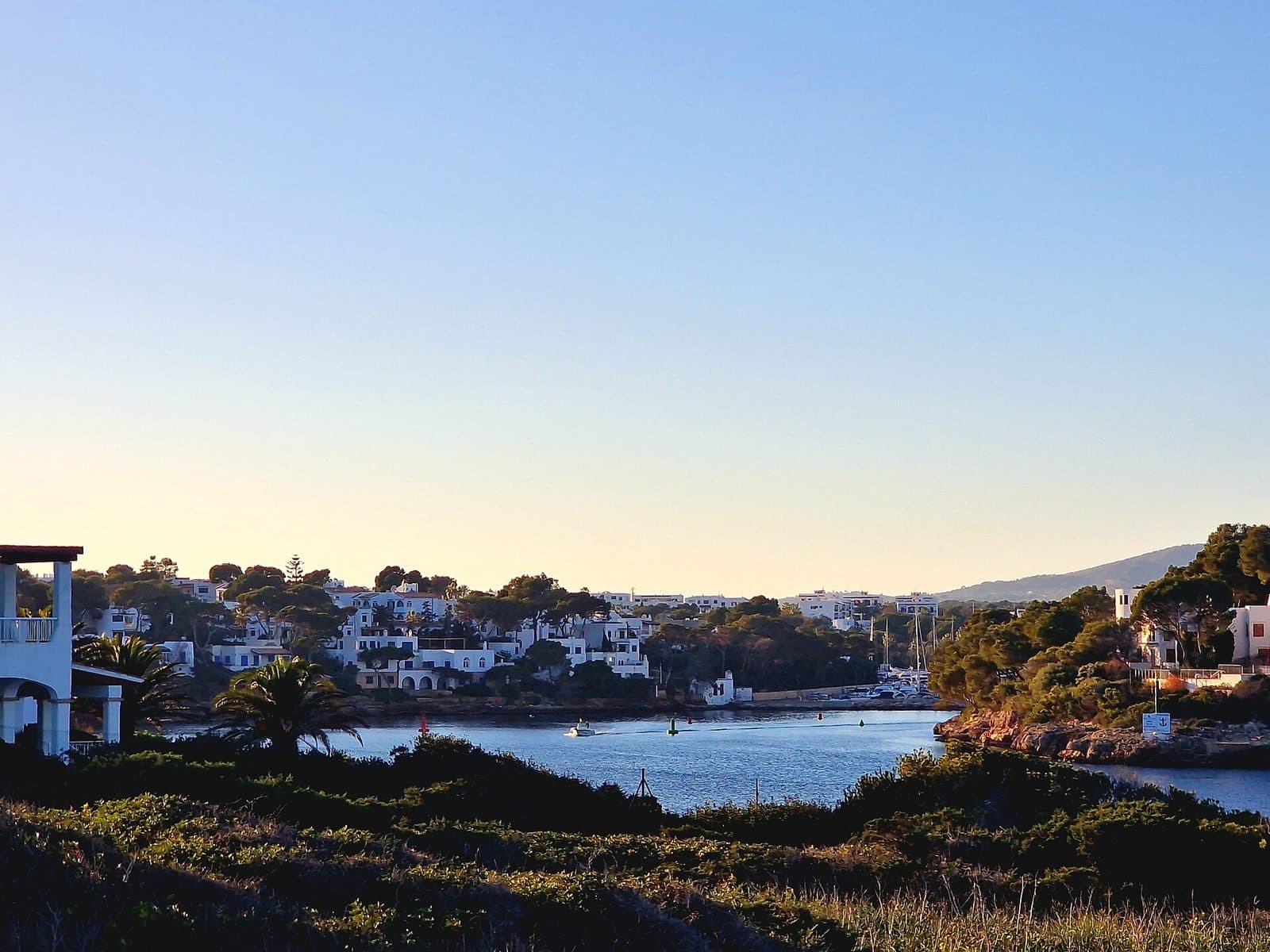
Cala d'Or is a purpose-designed holiday resort on Mallorca's southeast coast. Its distinctive appearance is defined by low, whitewashed houses, cubic forms and narrow sea coves between rocky stretches of coastline. Anyone who sees the town merely as a collection of hotels overlooks its carefully composed architecture and unusual layout: Cala d'Or does not have one long beach, but several small bathing coves, a commercial centre and a sheltered marina.
Cala d'Or is particularly suitable for visitors who value swimming, restaurants, short distances and boating more than a medieval old town or a large cultural programme. Cala Gran, Cala Esmeralda and Cala Serena each give their respective parts of town a distinct connection to the sea. Es Fortí provides a historical counterpoint, while the marina reveals another side of the town in the evening, one more strongly shaped by water sports.
Cala d'Or also functions differently as a place to live from many villages in the island's interior. Restaurants, accommodation, holiday rentals and nightlife shape the town, but supermarkets, grocery shops and the year-round weekly market are equally part of everyday local life. The settlement is spread across several coves and residential areas; its practicality for daily life therefore depends greatly on whether a home is close to the centre, by a cove, at the harbour or in a quieter outlying area.
Cala d'Or is worthwhile for families and beachgoers, people interested in sailing or diving, and travellers seeking a well-connected base in the southeast. Those expecting an old Mallorcan village structure, major monuments or a continuous beachfront promenade should view the town by different standards: its identity lies in its planned white architecture, separate coves and the contrast between holiday activity and everyday residential life.
History of Cala d'Or
Josep Costa Ferrer and the Planned Holiday Settlement
The architect Josep Costa Ferrer planned the town in the 1930s as a summer settlement. This makes Cala d'Or one of Mallorca's coastal resorts whose original concept was already focused on seaside recreation before large-scale international tourism transformed the island.
Costa Ferrer came from Ibiza. The influence of his home island remains visible today in the low buildings, flat roofs, whitewashed façades and clear cubic forms. This design was more than a decorative reference: it gave the newly established town a consistent architectural language and distinguished it from the natural-stone villages of Mallorca's interior. The term Ibiza style, which is commonly used today, therefore describes a genuine design decision connected with the town's foundation.
From Summer Resort to Coastal Tourism Centre
As tourism expanded, the planned summer settlement developed into a much larger holiday resort. Hotels, apartment complexes and holiday homes were grouped around the individual coves, while additional settlement areas visually merged into one another. As a result, Cala d'Or today has no clearly perceptible boundary between an old village centre and later extensions. Instead, the centre, bathing coves, marina and adjoining residential areas form several focal points within the same town.
Despite this growth, the original design language remains evident in many places. Low, light-coloured buildings define the townscape more strongly than large historic façades or continuous rows of houses. This relationship between planning history and present-day appearance makes Cala d'Or architecturally more interesting than the label holiday resort might initially suggest.
Es Fortí as an Older Layer of Coastal History
Es Fortí is one of the few structures that offers a view beyond the creation of the modern holiday resort. The former fortification points to the history of the coast. In today's townscape, it appears deliberately rugged and functional beside the white holiday homes and landscaped marina developments. Two very different eras therefore stand side by side in Cala d'Or: historic coastal defence and the planned leisure architecture of the 20th century.
Sights in Cala d'Or
Es Fortí
The former fortress of Es Fortí is Cala d'Or's most striking historic structure. Its massive walls and location above the sea differ markedly from the low, white architecture of the rest of the town. It is worth visiting for the interplay between the fortification and rocky coastline.
Es Fortí is also a good place from which to understand Cala d'Or's layout. The area around the site shows that the town does not lie on an open, straight coastline but consists of inlets, headlands and developed shores. The fortress should therefore not be viewed in isolation; it is best combined with a walk around the harbour.
The White Architecture of the Town Centre
The town centre is itself one of the most important sights. Flat roofs, cubic structures and whitewashed façades originate from Josep Costa Ferrer's design concept. Individual buildings matter less than the overall impression: the architecture repeats simple forms, creating a recognisable local identity even though Cala d'Or later grew considerably.
This character is best appreciated in the central streets and small squares. Shops, restaurants and bars shape the central streets, but the clean, low silhouette remains visible. Those wishing to photograph the architecture will generally find a quieter street scene in the morning; in the evening, the centre's dining and social functions come to the fore.
Marina Cala d'Or
Alongside the commercial centre, the marina forms the town's second major focal point. Yachts and smaller boats are moored in a deeply indented, sheltered harbour basin, with restaurants and paths distributed along its shores. The harbour is not merely transport infrastructure but a distinct area for walking and going out, with a noticeably more maritime character than the streets around Cala Gran.
On a first visit, it is advisable not to confuse the centre with the marina. Both areas belong to Cala d'Or, but they are not located in the same immediate place. The route between them in particular illustrates how widely the town is spread across different coves and settlement areas.
Cala Gran
Cala Gran is one of the town's best-known bathing coves and a central reference point for tourist-oriented Cala d'Or. The sandy beach lies between rocky, developed shores; the sea opens out only beyond the narrower entrance to the cove. This creates the image typical of Cala d'Or: a small, clearly defined bathing area rather than a beach stretching for kilometres.
The cove is particularly suitable for combining a stroll through town with a swimming stop. It is closer to the busy centre than some quieter sections of coast and accordingly feels livelier. Anyone wishing to discover Cala d'Or in a single day will quickly gain an impression here of how closely buildings and bathing coves are interwoven.
Cala Esmeralda
Cala Esmeralda is another narrow sandy cove within the continuous holiday resort. White buildings and vegetation frame the water, while the rocky sides give the cove a sheltered, almost enclosed character. It exemplifies the small-scale coastal landscape that distinguishes Cala d'Or from resorts with a broad beachfront.
The name also refers to a distinct area within the settlement. For visitors, this means that a walk through Cala d'Or does not simply follow a single promenade. Those wishing to see several coves pass through residential and holiday streets, repeatedly encountering brief openings onto the sea.
Cala Serena
Cala Serena lies in another part of the extensive settlement and presents a further variation of the local cove landscape. Here too, rocks border the small beach and direct the view towards the narrow opening onto the open sea. Together with Cala Gran and Cala Esmeralda, it demonstrates that Cala d'Or consists of several bathing spots, each with its own surroundings.
There is no need to visit every cove in succession when exploring the town. It is more practical to choose by location: Cala Gran combines well with the centre, Cala Serena and Cala Esmeralda with the more northerly residential and holiday areas, and Es Fortí with the marina. This provides a clearer overall picture than searching for a single main attraction.
The Weekly Market
The Sunday Market in the Centre
Cala d'Or's weekly market takes place in the centre on Sunday mornings and operates year-round. The stalls are spread across central streets and squares near the main shopping area. The market is therefore not a separate event site but part of a stroll through town: cafés, shops and market stalls merge into one another spatially.
The range combines food with goods tailored to a holiday resort. Culinary products include fruit and vegetables, cheese, olives, Sobrasada and pastries. Ceramics, jewellery, textiles and other handicrafts are also available. Clothing, swimwear, bags, accessories and souvenirs reflect the proximity of the beaches and the international clientele.
Between Everyday Shopping and Holiday Market
White buildings, palm trees, boutiques and the nearby bathing coves define the setting. This is precisely why the market suits Cala d'Or so well: it combines local food with beach essentials and summer clothing.
Locals, seasonal residents and holidaymakers mingle among the visitors. For residents, the market provides an additional opportunity to buy fresh produce and Mallorcan specialities; for guests, it offers easy access to typical foods without requiring an excursion into the island's interior. Those shopping for specific items should arrive nearer the start of the market. Later, the leisurely browsing atmosphere becomes more prominent.
Because the stalls are set up in central streets and squares, movement through the town centre changes on Sundays. A market visit combines well with Cala Gran or breakfast in the centre. A separate part of the day should then be set aside for the marina and Es Fortí, as they form another section of Cala d'Or.
Food and Drink
Restaurants in the Town Centre
Cala d'Or has a well-developed dining scene closely connected with its role as a holiday resort. Restaurants, bars and cafés in the centre are located among whitewashed buildings and shopping streets. The selection caters to an international audience, so the culinary scene is broader than in a small rural Mallorcan village. Its appeal lies less in a single historic traditional restaurant than in the opportunity to combine an evening stroll and a meal with the lively street scene.
A restaurant's location has a considerable influence on the experience. In the centre, strolling, outdoor terraces and easy access to bars and shops take priority. This area is convenient for guests staying near Cala Gran or wishing to walk through the central streets after dinner.
Dining at the Marina
The restaurants along the marina have a different character. Here, boats, the harbour basin and illuminated waterfront provide the setting. A meal at the harbour can easily be combined with a waterfront walk. The marina is therefore not merely an alternative to the centre but an evening destination in its own right.
Cala d'Or was planned as a holiday settlement, and its marina is a modern yacht and leisure harbour. The dining experience is based on a maritime atmosphere and a broad selection of restaurants.
Mallorcan Products at the Weekly Market
Those wishing to discover regional flavours will find tangible points of reference at the Sunday market. Sobrasada, cheese, olives and pastries represent products that are part of everyday Mallorcan life beyond restaurant cuisine. Fruit and vegetables from local producers also make the market interesting for self-catering visitors. For anyone staying in a holiday apartment or their own home, it makes regional shopping easier than relying exclusively on the tourist-oriented dining scene.
The market is also useful for gaining some culinary context before visiting a restaurant: Mallorcan cured meats, cheese and baked goods provide an impression of the island's ingredients and flavours. Nevertheless, Cala d'Or is not a classic destination for a culinary pilgrimage to historic cellars or centuries-old bakeries. Its strength lies in the broad choice between the centre and harbour and in the combination of international holiday dining with regional products.
Bars and Nightlife
Bars, nightclubs and discos are a visible part of the local business landscape. This does not mean that Cala d'Or is a coastal resort entirely focused on partying. Instead, nightlife is concentrated in specific commercial and entertainment areas, while residential streets and smaller coves can feel quieter. When choosing accommodation or a home, this spatial distinction matters more than any general label.
In the evening, the focus shifts from the beach to the central streets and marina. Families and restaurant guests shape the early evening hours, while bars and night venues become more prominent later. Those seeking peace and quiet should therefore consider not only the distance from the sea but also the proximity to restaurant streets and nightlife venues.
Eating, drinking and staying in Cala d'Or
The best-rated businesses from our directory, ordered by Google rating — not by advertising.
Restaurants
- Eras5.0· 30 reviews
- Family grill5.0· 25 reviews
- SAPOORITO5.0· 23 reviews
- Evi's4.9· 96 reviews
- Gnam4.9· 71 reviews
- ToKa Tapa Bar Chic4.9· 70 reviews
- Il Pizzettaro Mallorca cala d'or4.8· 1718 reviews
- Churchill’s4.8· 533 reviews
- La Casa De Las Flores4.8· 522 reviews
- La Maestranza4.8· 181 reviews
- Lucy's4.8· 58 reviews
- Atlantis4.7· 858 reviews
Cafés and bakeries
- BrezelBros4.9· 477 reviews
- Lima & Limon4.6· 90 reviews
- Cafetería Pinar4.6· 42 reviews
- Sweet Design Wedding and Custom Cakes Mallorca4.6· 27 reviews
- Cafeteria Lluna4.5· 58 reviews
- Cafetería Reboreda4.5· 49 reviews
- Panadería Pastelería Cala d'Or4.4· 281 reviews
- Xup Xup4.4· 106 reviews
- Ice Dreams4.4· 21 reviews
- Cafetería Plaza4.2· 211 reviews
- Bar Cafeteria Eroski Cala d'Or4.1· 92 reviews
- Forn i Pastisseria Terrasa - Cala d'Or3.8· 44 reviews
Bars
- Sapoori Cala d’Or | Cocktailbar, Cocktailkurse & Restaurant5.0· 184 reviews
- Island Brew Mallorca5.0· 13 reviews
- Doughtys4.9· 17 reviews
- Petita Grill House & Chiringuito4.8· 369 reviews
- Kalypsotuttifrutti4.7· 2229 reviews
- Mandala Bar Cala d'Or4.7· 46 reviews
- Mabu-Hay4.6· 422 reviews
- La Vermutería4.6· 176 reviews
- Bobo's Cafe Bar4.6· 76 reviews
- Rumours Bar4.5· 27 reviews
- Nicky H Entertainment4.4· 69 reviews
- Polinesian Bambu Tiki Bar4.3· 115 reviews
Hotels and fincas
- Mistral4.9· 235 reviews
- Finca Sa Tanca4.9· 152 reviews
- Casa Ceiba Maria4.8· 222 reviews
- Iroco Hostal4.8· 46 reviews
- Inturotel Cala Esmeralda4.6· 1124 reviews
- AluaSoul Mallorca Resort (Adults Only)4.5· 2748 reviews
- Robinson Club Cala Serena4.5· 1639 reviews
- MarSenses Ferrera Blanca Hotel Family4.5· 1381 reviews
- Hotel Cala d'Or4.5· 805 reviews
- Hotel Cala d'Or Playa4.5· 743 reviews
- Inturotel Sa Marina4.5· 586 reviews
- Ses Puntetes4.5· 257 reviews
Activities and Excursions
Swimming at Cala Gran, Cala Esmeralda and Cala Serena
Swimming is the most obvious activity in Cala d'Or, but it requires some orientation. The beaches lie in separate coves rather than along a continuous coastline. Cala Gran combines well with the centre, while Cala Esmeralda and Cala Serena provide access to other settlement areas. Anyone wishing to visit several coves should therefore plan routes through developed streets and not expect an uninterrupted waterfront promenade.
The rocky sides and narrow cove entrances create sheltered swimming settings but also limit the sandy areas. For families, the proximity of accommodation, restaurants and grocery shops is convenient. On particularly busy days, it is worth visiting the chosen cove early and saving the town stroll for the warmer hours.
Sailing and Boat Trips from the Marina
The marina makes Cala d'Or a suitable base for sailing and boat trips. The harbour basin lies sheltered behind the indented coastline and provides direct access to the sea. Even without setting sail, a walk between the moorings and harbour restaurants conveys the importance of water sports to the town.
Boat activities reveal the coast from a perspective that is difficult to access from land. The small coves and rocky sections can be seen from the water as one continuous landscape. For travellers who do not wish to spend their entire stay on the beach, the marina is therefore one of the most important starting points.
Diving and Water Sports
Alongside sailing, diving is one of Cala d'Or's established leisure activities. The combination of clear water, coves and rocky coastline shapes the opportunities for water sports. The suitability of any activity depends on experience, weather and sea conditions; offers and arrangements should be checked immediately before the planned date.
Even without an organised course, the individual coves provide different settings for a day at the beach. Their spatial separation is an advantage in this respect: visitors who prefer a lively, centrally located setting will choose differently from those seeking a smaller bathing spot in a quieter part of the settlement.
Parc natural de Mondragó
Parc natural de Mondragó is a nearby excursion destination. A visit gives travellers the opportunity to discover the nature park alongside Cala d'Or.
Cala d'Or serves as a convenient base because of its tourist infrastructure, while Mondragó showcases the region's natural side. Planning should take into account that a nature park requires different preparations in terms of sun protection, water and footwear than a short walk from accommodation to an urban cove.
Beaches in Cala d'Or
One beach with its own page belongs to Cala d'Or.
Festivals and Events
Festival of Santa Maria del Mar
The festival of Santa Maria del Mar is celebrated in Cala d'Or on 15 August. The traditional programme includes an afternoon Mass and a boat procession. The sea is not merely a backdrop but a central part of the festival. For a planned visit, the procession is particularly interesting because it places the harbour and the town's maritime identity in a religious and communal context.
The festival day differs significantly from normal holiday activity. Residents, boat owners and guests come together around the celebrations, and the marina takes on a ceremonial function. Anyone travelling specifically for the occasion should check the current programme, as locations and additional events are determined from year to year.
Jazz in Cala d'Or
Over many years, Cala d'Or's jazz festival developed into a recurring musical tradition. Performances took place in streets, squares, restaurants and areas of the town centre. The musical spectrum included Dixieland, traditional jazz and New-Orleans jazz, as well as rock ’n’ roll and Latin American-influenced music. The distribution across several venues was particularly well suited to Cala d'Or's decentralised structure.
The festival appealed equally to holidaymakers, Mallorcan residents and international residents. It shows that events in Cala d'Or do not necessarily require a large stage: the white squares, pedestrian areas and restaurant-lined streets can themselves become event spaces. As programmes and formats may change, travellers planning a trip in early summer should check which concerts have been announced for the relevant year.
Upcoming dates
Travel and Getting Around
By Car from Palma Airport
From Palma Airport, the road route follows the Ma-19, then the Ma-5120 and Ma-14 to Cala d'Or. The route covers 59 road kilometres, and the drive takes around 57 minutes. In practical terms, the town remains within a direct drive after landing but is not part of the immediate airport area. The final section passes through the southeast and follows regional roads to the coast.
For orientation within the town, it is important to choose a more precise destination than simply Cala d'Or. The centre, Cala Esmeralda, Cala Serena, the marina and Es Fortí are in different areas. Anyone travelling directly to accommodation, a particular cove or the harbour should select this specific destination before entering the town.
By Car from Palma
From the centre of Palma, the distance is 65 road kilometres via the Ma-19, Ma-5120 and Ma-14. The drive takes around 66 minutes. Cala d'Or is therefore accessible for a day trip from the capital but is not a short city-to-suburb connection for daily commuting. The actual journey time makes it clear that commuting to Palma should be weighed carefully against the desired residential location and proximity to the coast.
The Ma-19 covers the longer section towards the southeast, after which the route becomes more regional. On the return journey, it may be useful to enter the required district rather than simply Palma as the destination, as the measured time leads to the centre.
Buses and Getting Around the Town
Cala d'Or is served by several bus stops in different parts of the settlement. The distribution of stops near Cala Esmeralda, on Avinguda de Calonge and in the Cala Ferrera and Cala Serena area reflects the town's extensive layout. For travellers without a car, the key question is therefore not only whether a bus reaches Cala d'Or, but which stop is closest to their accommodation or planned beach.
Within an individual area, many everyday journeys can be made on foot. Anyone wishing to travel between the northern coves, the centre, the marina and Es Fortí, however, must allow for longer distances within the town. Cala d'Or therefore feels less like a compact old town and more like a sequence of interconnected coastal neighbourhoods.
Parking and Orientation on Market Day
As the Sunday market occupies central streets and squares, direct access to the shopping area is less straightforward that morning than on ordinary days. Visitors arriving by car should come early and not expect to park immediately beside the market stalls. For a subsequent visit to the marina or Es Fortí, it may be more practical to choose a new starting point rather than approaching every destination from a single location.
Bus lines to Cala d'Or at a glance
| Line | Route | Departures/day | First | Last |
|---|---|---|---|---|
| 515 | Cala d'Or - Campos | 151 | 05:40 | 23:20 |
| 428 | Cala d'Or - Portocristo | 75 | 09:34 | 22:04 |
| 514 | Cala d'Or - Felanitx - Porreres | 33 | 06:30 | 21:05 |
| 515e | Cala d'Or - Palma | 25 | 09:10 | 20:35 |
| 521 | Cala d'Or - Cala Mondragó | 22 | 08:20 | 21:05 |
From the official GTFS feeds (TIB/SFM), no real-time data. The figures cover all stops in the town; weekend and holiday services differ — check with the operator before travelling.
Getting there by bus
Cala Esmeralda (57017) · 0.5 km as the crow flies
- 428Cala d'Or - Portocristo · Daily
- 515Cala d'Or - Campos · Daily
- 515eCala d'Or - Palma · Mon-Fri
Av. Calonge 2 (57050) · 0.7 km as the crow flies
- 428Cala d'Or - Portocristo · Daily
- 514Cala d'Or - Felanitx - Porreres · Daily
- 515Cala d'Or - Campos · Daily
- 515eCala d'Or - Palma · Mon-Fri
Av. Calonge 1 (57049) · 0.7 km as the crow flies
- 428Cala d'Or - Portocristo · Daily
- 515Cala d'Or - Campos · Daily
- 515eCala d'Or - Palma · Mon-Fri
- 521Cala d'Or - Cala Mondragó · Daily
Cala Ferrera-Cala Serena (22020) · 1.2 km as the crow flies
- 428Cala d'Or - Portocristo · Daily
- 515Cala d'Or - Campos · Daily
- 515eCala d'Or - Palma · Mon-Fri
Timetable data: official GTFS feeds (TIB/EMT), no real-time — check with the operator before travelling.
Living in Cala d'Or
Everyday Shopping and Amenities
Supermarkets and grocery shops are among the town's strongly represented businesses. Together with restaurants, bars and the year-round Sunday market, they provide a solid basis for everyday shopping. For self-catering residents and visitors, the combination of regular food shops and the market is particularly convenient: everyday essentials are available locally, while regional products such as fruit, vegetables, cheese, olives, Sobrasada and pastries are added on Sundays.
However, access to amenities is not equally convenient everywhere. An apartment near the centre offers different walking distances from a house at the edge of a cove or accommodation close to the harbour. Anyone wishing to live permanently in Cala d'Or should therefore assess not only sea views and proximity to the beach but also walk the actual routes to food shops, bus stops and their preferred everyday area.
Living Between the Centre, Coves and Marina
Cala d'Or has several clearly distinguishable residential locations. In the centre, restaurants, shopping and evening activity are closer together. Around Cala Gran, the holiday atmosphere is particularly evident. Cala Esmeralda, Cala Serena and the adjoining settlement areas each provide their own access to the coves, while the marina is shaped by yachting activity and harbour restaurants.
The strong presence of hotels, holiday rentals and restaurants shows that permanent residents share the town with a substantial accommodation industry. This can mean short distances to restaurants and leisure facilities, but also a clear difference between busy commercial streets and quieter residential sections. When searching for a home, a viewing at different times of day is therefore more informative than simply judging it by its distance from the sea.
Cala d'Or in Winter
In winter, Cala d'Or remains a planned coastal resort in terms of its architecture and settlement structure. The year-round weekly market and strong grocery provision are therefore important anchors for residents.
Living Without a Car
Several bus stops and a local concentration of food shops, restaurants and other businesses make it possible to organise many journeys without a car within one's own neighbourhood. A location from which the centre, shops and a suitable bus stop can be reached on foot is particularly convenient. Those who frequently travel between Cala Serena, Cala Esmeralda, the marina and Es Fortí will experience the town's elongated layout more clearly.
Even the drive to the centre of Palma takes around 66 minutes.
Local Community and International Character
At the market and in the commercial streets, locals, international residents, seasonal workers and holidaymakers meet. This international character is part of Cala d'Or's identity and not a recent exception: the town was planned as a summer settlement in the 1930s and later expanded through tourism.
Cala d'Or can suit people seeking a cosmopolitan coastal resort with restaurants, leisure facilities and several bathing coves. Those expecting the social fabric of an old rural village will find a different reality here. Neighbourhood life and everyday routines tend to develop within individual residential areas rather than around a single historic main square.
Local businesses and services
The best-covered sectors in our directory for Cala d'Or — each with address, contact details and opening hours.
- Restaurant / Gastronomy98 listings
- Hotel / Accommodation50 listings
- Supermarket25 listings
- Bar, Nightclub & Disco23 listings
- Vacation Rental21 listings
- Fashion & Clothing18 listings
Run a business here? Add it to the directory for free and be found on this page. Add your business
Latest news from Santanyí
- €5.9m targets Mallorca water pipes in Migjorn
- 45 migrants found off Mallorca and on Formentera
- Mallorca police pool fills 88 posts, average wait five days
- 58 people in five migrant boats reach Balearics