
Cala Mesquida – Natural Cove and Coastal Village in Northeast Mallorca
.jpg)
Places to stay in Cala Mesquida
AdTo load the accommodation map by our partner Stay22, we need your consent for marketing cookies. Your consent applies to all marketing content on mallorca.com.
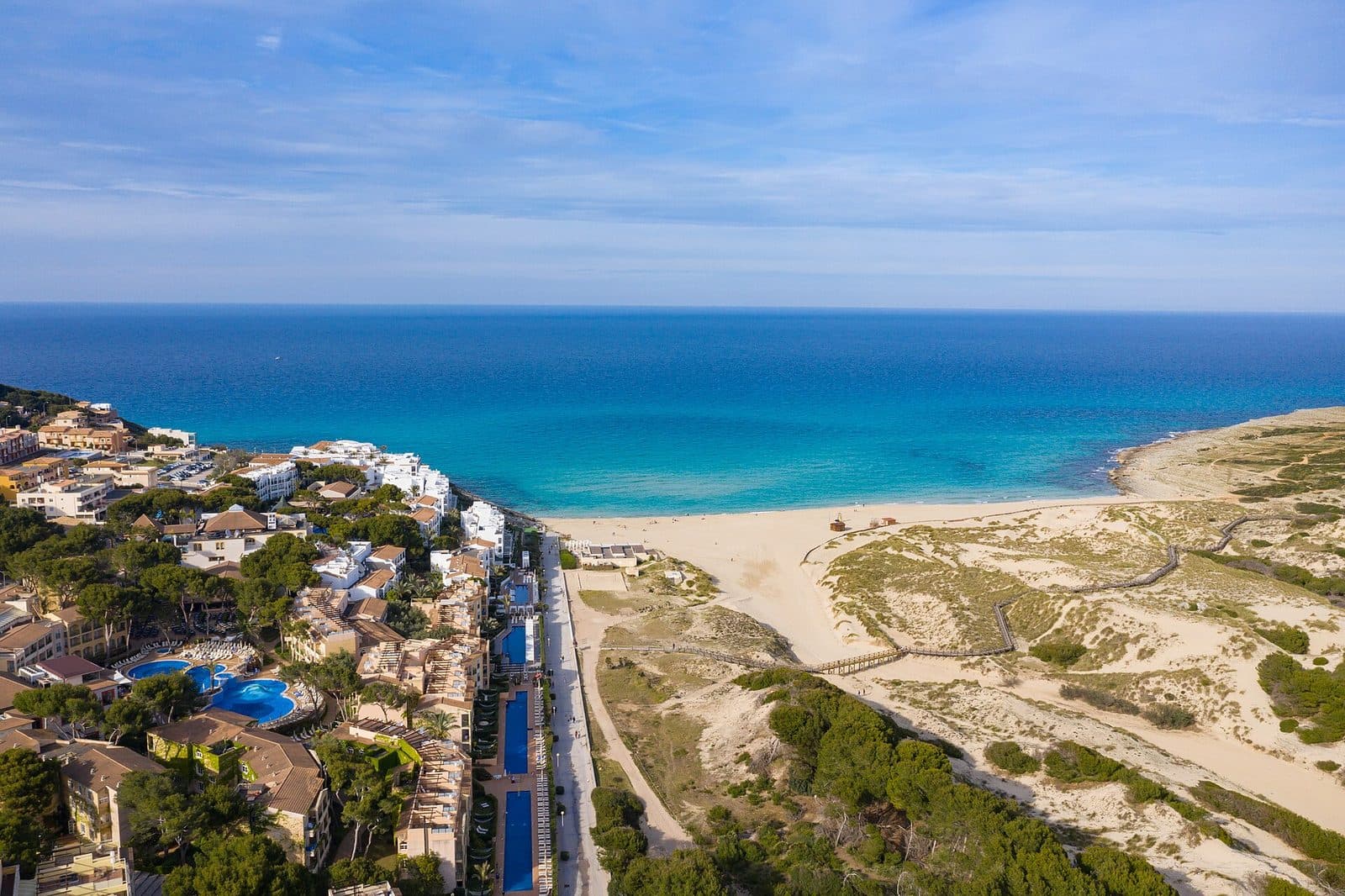
Cala Mesquida is a cove, beach and small coastal settlement in northeast Mallorca. The village belongs to the Llevant region and is oriented much more toward the sea than the island’s interior. Its defining image is shaped by pale sand, an extensive dune system, old pine trees and development concentrated on one side of the cove. On the other side, the coast remains largely unspoilt.
For visitors, Cala Mesquida is especially worthwhile as a scenic destination. The beach is not merely a bathing area in front of a holiday settlement, but part of a protected natural area that continues toward Cala Agulla. Boardwalks, dunes, coastal paths and open views across the sea make the cove interesting even outside classic beach days. Hikers and cyclists can continue to other coves in the northeast; those seeking culture and local history should ideally combine their stay with Capdepera.
As a place to live, Cala Mesquida follows a different logic from that of a traditional Mallorcan market town. The settlement is small and shaped by tourism. In return, it offers immediate proximity to nature, little through traffic and residential settings where the beach, sea and open landscape define everyday life. For permanent living, it is essential to plan realistically for the connection to Capdepera and the dependence on a car or bus.
Cala Mesquida is therefore particularly suitable for people seeking a peaceful base for beach days, coastal hikes and nature watching. This clear focus is precisely what makes the settlement’s character understandable: Cala Mesquida is not a miniature town by the sea, but a holiday and residential destination beside an exceptionally well-preserved cove.
History of Cala Mesquida
The name Cala Mesquida originally referred to the agricultural estates of Sa Mesquida de Dalt and Sa Mesquida de Baix. The name s’Arenal de sa Mesquida is also documented for the beach. Its origins therefore lie not in an old fishing harbour or fortified coastal village, but in the rural landscape and its patterns of ownership. The origin of the name therefore lies in the rural landscape and its patterns of ownership.
The earlier history of the surrounding area was centred more strongly on Capdepera. The fortified community inland offered protection at a time when the northeastern coast was exposed to attacks from the sea. Today, Cala Mesquida is described as a holiday and residential destination.
A small military relic at the eastern end of the beach recalls the 20th century. The bunker there was used by the military during the Spanish Civil War.
Nature conservation was crucial to the area’s more recent development. In 1991, the dune and coastal landscape was classified as a natural area of special interest, known in Mallorca as an ANEI. This protected the undeveloped side of the cove in particular from widespread tourist development. The present appearance of Cala Mesquida is therefore based on a visible contrast: hotels, holiday accommodation and homes stand mainly on one side, while the beach, dunes and pine trees on the other form the transition to the open coast.
The modern settlement is a holiday and residential destination, but not a completely built-up holiday complex. The protected natural area sets a clear boundary for development and continues to determine how Cala Mesquida is perceived and used. Anyone wishing to understand its local history should therefore look less for an old centre than for traces of different uses of the landscape: agricultural estates preserved in the name, a military remnant on the beach, tourist development and a dune system protected for decades.
Sights in Cala Mesquida
Cala Mesquida Beach
The broad sandy beach is the natural centre of the village. It slopes gently into the sea and opens toward the north and northeast, which means that the colour of the water, waves and wind can vary greatly within a short time. When the sea is calm, the cove is suitable for swimming and snorkelling; in stronger northerly winds, surf and currents can increase significantly. The bathing flag displayed at the time is therefore more important than the first impression from the shore.
The developed part of the settlement lies on one side of the beach, while the opposite edge remains largely unspoilt. As a result, there is no typical promenade scene. Instead of a continuous row of buildings, the view from the sand takes in dunes, pine trees and low hills. One section of the beach is also used by naturists. During the season, lifeguards, first-aid services, sanitary facilities and a limited selection of food and drink support beach operations.
Dune Landscape of Cala Mesquida
The dune system behind the beach is Cala Mesquida’s most important scenic attraction. It extends beyond the immediate cove toward Cala Agulla and is one of Mallorca’s large preserved dune areas. Sand, low-growing vegetation and pine trees form a sensitive transition zone between the sea and the interior. The landscape is a habitat for numerous birds; gulls and cormorants are particularly characteristic of the area.
The dunes are not an unrestricted adventure playground. Barriers and designated paths protect the vegetation and sand formations from damage caused by foot traffic. A visit is enhanced precisely by not walking across the landscape off-trail. From the designated passages, it is easy to see how wind and plants shape the sand and why this natural area is more than a decorative backdrop behind the beach.
Boardwalks Through the Dunes
Parts of the access routes and paths run along wooden boardwalks. They provide direct views into the dune landscape without requiring visitors to step onto the sensitive areas. Walking along the boardwalks is one of the most peaceful experiences in the village: behind the settlement, views of sand, vegetation and sea gradually open up while the buildings visually recede.
The boardwalks are both practical infrastructure and part of the landscape experience. They illustrate how access to nature can work in a protected coastal area. Anyone who crosses Cala Mesquida only from the car park to the nearest section of beach misses this change of perspective. Especially outside the hottest time of day, it is worth following the permitted paths for a while and viewing the cove from different heights and directions.
Bunker at the Eastern End of the Beach
At the eastern end of the beach stands a small bunker dating from the Spanish Civil War. The structure initially appears out of place in the open natural landscape and is easy to overlook. It was used by the military during the Spanish Civil War.
The bunker is best suited as a brief historical stop during a walk along the beach.
Natural Coast Toward Cala Agulla
The coastal area south and west of the cove is an attraction in itself. Instead of a developed seafront road, the landscape is defined by paths, pine trees, rocky sections and constantly changing sea views. The route toward Cala Agulla shows particularly well how Cala Mesquida merges into a larger natural area. The boundary between village and landscape is not sharp here, but gradually becomes noticeable with every step.
This section is suitable for visitors who find a simple beach day insufficient. Sturdy footwear is more practical than beach sandals, as the paths beyond the boardwalks cross natural terrain. Shade is not continuously available, and wind and sun are felt more strongly on the open coast than among the buildings of the settlement.
Sights in Cala Mesquida
Food and Drink
Beach Bar and Snack Bar
Cala Mesquida’s food and drink options are closely tied to beach activity. A beach bar or snack bar offers an easy place to take a break without leaving the cove. The focus is on serving a day at the beach, not on providing an independent culinary scene. This is convenient for visitors, but should not be confused with the choice available in a larger holiday resort or an established village centre.
The location directly beside the natural beach also means that eating and drinking should be planned with consideration for the surroundings. Packaging, bottles and food waste do not belong in the dunes or pine woods. Anyone setting out on a longer route toward Cala Agulla, Cala Torta or Cala Mitjana should pack water before leaving, as beyond the settlement the route passes through a natural area rather than along a serviced promenade.
Restaurants in the Settlement
The small urbanisation has several restaurants whose operations are strongly shaped by holiday tourism. They are located mainly on the developed side of the cove and cater to guests from hotels, holiday apartments and homes. This allows for short walks in the evening, but Cala Mesquida is not a destination for an extensive restaurant tour through different neighbourhoods. The selection remains appropriate to the village’s manageable size.
Capdepera and Cala Ratjada require a drive or a suitable bus connection.
Responsible Picnicking
The landscape invites visitors to enjoy a simple meal overlooking the cove, but the vulnerability of the dunes sets clear limits. Suitable places include the regular areas for visitors on the beach and other designated spots, not the closed-off dune areas. Open fires are inappropriate both in the dry pine forest and within the protected area. In windy conditions, lightweight packaging should also be stored securely before it can be scattered across the beach and vegetation.
From a culinary perspective, Cala Mesquida is therefore less a destination in its own right than a place where food accompanies a day in nature or at the beach. There are several restaurants as well as a beach bar or snack bar in the village. The local appeal lies precisely in this simplicity: short distances from accommodation to the beach, a break near the water and then a return to the landscape.
Eating, drinking and staying in Cala Mesquida
The best-rated businesses from our directory, ordered by Google rating — not by advertising.
Activities and Excursions
Swimming and Snorkelling
When the sea is calm, Cala Mesquida offers good conditions for swimming and snorkelling. The sandy entry is pleasant, and the water can be very clear. However, the open location distinguishes the cove from more sheltered beaches. Northerly winds can create waves and strengthen currents. Families should therefore not rely solely on the gently sloping shore, but should observe the flags and closely supervise children by the water.
Visibility and safety deteriorate when the sea is rough. A calm morning may therefore be more suitable than a windy afternoon. The village does not guarantee mirror-smooth water, but offers an open natural cove whose character is directly shaped by the weather.
Hike to Cala Agulla
The hiking route between Cala Mesquida and Cala Agulla is one of the classic activities in the northeast. The path leads through the protected coastal and dune landscape, along natural trails and through sections of pine woodland. Sea views, sandy areas and rocky ground alternate along the way. The walk makes the scenic connection between the two coves easier to understand than simply travelling there by car.
Sturdy shoes, water and sun protection are advisable for the route. Visitors should not expect a continuously shaded walking path. Anyone planning to walk both ways should consider their energy reserves as well as the wind and heat. The route is particularly appealing when a beach visit is not the sole focus and there is enough time for breaks and nature watching.
Cala Torta and Cala Mitjana
Cala Torta and Cala Mitjana are other unspoilt coves that make suitable hiking destinations from Cala Mesquida. Their appeal lies less in tourist infrastructure than in the open, more rugged coastal landscape. Routes to such coves should not be treated like a stroll along a promenade: the terrain, sun and lack of services along the way require simple but deliberate preparation.
Combining several coves reveals the scenic diversity of this northeastern stretch of coast. Cala Mesquida serves as an easily accessible starting point with a settlement and beach access; beyond it, the surroundings become considerably quieter. Especially outside the heat of high summer, these routes provide an activity in their own right as an alternative to swimming.
Cycling and Horse Riding
The surrounding area is also used by cyclists and horse riders. Cala Mesquida lies away from the major coastal centres and connects the sea, low hills and rural hinterland.
Horse-riding excursions and sporting tours should respect the rules of the protected natural area. Not every path is intended for every type of use. The landscape’s value depends precisely on dunes and vegetation not being ridden or walked across indiscriminately. The surrounding area can nevertheless be experienced intensively along designated routes.
Capdepera
Capdepera lies only a few kilometres from Cala Mesquida and is the most obvious cultural complement to the beach. The village developed in the shadow of its castle and has historical traces that extend far beyond the young coastal settlement. An excursion there creates a deliberate contrast: dunes, hotels and sea here, an established village centre with a medieval silhouette there.
The combination is especially suitable for days when wind or rough seas restrict swimming. Cala Mesquida itself does not offer a classic old-town walk. Anyone wishing to combine nature and history in one day will therefore find Capdepera a fitting counterpart without having to leave northeast Mallorca.
Cala Ratjada and Other Excursions
Cala Ratjada adds a harbour atmosphere to the stay. Boat excursions, including catamaran trips, also depart from there. Other organised tours from the region lead, for example, to the Drach Caves or other parts of Mallorca. Such excursions do not necessarily begin directly in Cala Mesquida, so transport to the relevant meeting point should be clarified in advance.
For a short stay, it usually makes more sense to remain in the northeast rather than spend a great deal of time crossing the entire island. Cala Mesquida, Capdepera, Cala Ratjada and the neighbouring natural coves can be combined into a varied itinerary in which the beach, hiking, history and harbour each provide their own emphasis.
Beaches in Cala Mesquida
6 beaches and coves with their own page belong to Cala Mesquida.
Getting There and Getting Around
By Car from the Airport
From Palma Airport, the road route follows the Ma-15, then the Ma-4030 and the Ma-4040 to Cala Mesquida. The journey covers 82 road kilometres and takes around 75 minutes. In practical terms, this means that the village is not near the airport. Most of the route crosses the island toward the northeast; only the final section reaches the coast near Capdepera.
During the main travel season, additional time should be allowed for collecting the vehicle, luggage and finding a parking space. The actual driving time nevertheless remains a useful planning estimate. Anyone arriving late or outside the main season should also check whether their accommodation, key handover and essential supplies will still be available at the destination.
By Car from Palma
From central Palma, the journey via Ma-15, Ma-4030 and Ma-4040 covers a total of 85 road kilometres. The drive takes around 82 minutes. Cala Mesquida is therefore accessible as a day trip, but the outward and return journeys take up a noticeable part of the day. Anyone wishing to hike and swim should start early rather than plan the cove as only a brief afternoon stop.
The distance is demanding for regular commuting to Palma. The road connection is straightforward, but Cala Mesquida is not within the capital’s immediate catchment area. Living here means weighing the peace of the northeast against longer journeys to central workplaces, public authorities and specialised services.
Bus and Getting Around Without a Car
Cala Mesquida is connected to the regional bus network. The settlement is therefore not accessible exclusively by car. For visitors without their own vehicle, it is nevertheless essential to plan the outward and return journeys together, because services to a small coastal village cannot be compared with the frequency of an urban network. The specific routes and departure times should be checked immediately before travelling.
Within the compact settlement, the beach, accommodation and restaurants can largely be reached on foot. For Capdepera, Cala Ratjada, larger shopping trips and other destinations on the island, however, visitors remain dependent on a bus, taxi or car.
Parking and Beach Access
There is a public car park near the beach. From there, access leads down to the cove via a footpath and steps; parts of the route run along wooden boardwalks. The car park is approximately 50 metres from the beach, but can fill up early during the high season. A free space directly beside the access should not be assumed on busy beach days.
The proximity of the car park makes Cala Mesquida generally easy to reach, but it also results in clear peaks in visitor numbers. Arriving early reduces the search for parking and provides a quieter first impression of the dunes. The marked paths should also be used when a shortcut across the sand appears tempting.
Bus lines to Cala Mesquida at a glance
| Line | Route | Departures/day | First | Last |
|---|---|---|---|---|
| 422 | Cala Mesquida - Cala Rajada | 27 | 08:45 | 21:45 |
From the official GTFS feeds (TIB/SFM), no real-time data. The figures cover all stops in the town; weekend and holiday services differ — check with the operator before travelling.
Getting there by bus
Cala Mesquida (14018) · 0.6 km as the crow flies
- 422Cala Mesquida - Cala Rajada · Daily
Timetable data: official GTFS feeds (TIB/EMT), no real-time — check with the operator before travelling.
Living in Cala Mesquida
Everyday Life Between a Holiday Resort and Natural Area
Cala Mesquida is officially described as a small holiday and residential destination. Four hotel areas, holiday accommodation, restaurants and immediate proximity to the beach shape its rhythm. In summer, the number of guests rises significantly, and public life centres on swimming, outdoor dining and short distances between accommodation and the cove. Anyone living here permanently resides beside a natural beach that is heavily used on a seasonal basis.
Local Amenities and Daily Journeys
Capdepera is 6 kilometres away. Cala Mesquida is a small holiday and residential destination. Anyone considering a move should examine transport between Cala Mesquida and the surrounding villages.
Living Without a Car
Many distances within Cala Mesquida are short. The beach, individual restaurants and accommodation are located within a compact settlement, so a car is not needed for every journey. As soon as daily life extends beyond the village, the situation becomes more demanding. The bus provides a connection to the region, but journeys must be adapted to the timetable.
This can work well for a holiday stay if the focus is on the beach and hiking. For permanent living, having a car or a reliably organised alternative is considerably more practical. Families and commuters in particular should not treat mobility as a secondary issue.
Commuting to Palma
The drive to central Palma covers 85 road kilometres via the Ma-4040, Ma-4030 and Ma-15 and takes around 82 minutes. An occasional journey is quite manageable; daily commuting, however, means a long distance in both directions. Cala Mesquida is therefore more suitable for working arrangements involving a regional workplace, alternating in-office days or a high proportion of working from home than for an easy daily commute to the capital.
The airport, at 82 road kilometres and around 75 minutes’ driving time, is also not in the immediate vicinity. For frequent flyers, this can be planned, but it is not spontaneous. The peaceful location in the northeast therefore has a clear trade-off: anyone living here consciously chooses distance from Palma and the island’s central transport hub.
Residential Areas and Village Character
The residential areas follow the topography of the cove. Near the beach and on the developed side, hotels, apartments and homes stand relatively close together. By contrast, the unspoilt side of the cove remains defined by dunes and the protected area and does not form a symmetrically developed opposite shore.
The shared point of reference is instead the landscape. This suits people who value privacy and nature more highly than urban convenience or a busy public life.
Practical Information for Your Visit
Best Time of Day
On busy beach days, it is worth arriving in the morning. The car park is easier to use then, the paths through the dunes feel quieter, and the sun is less intense for a walk. An early visit is also better for photographs, because the beach access and wooden boardwalks are not yet dominated by the main flow of beachgoers.
For a simple beach day, Cala Mesquida remains appealing into the afternoon, provided the wind and bathing flag are favourable. Anyone wishing to hike should avoid the hottest part of the day and not begin the longest route only after water and energy have already been depleted by time on the beach.
Time Required
Half a day is sufficient for the beach, wooden boardwalks and a short walk along the edge of the cove. Anyone also hiking to Cala Agulla or toward Cala Torta and Cala Mitjana should treat the visit as a full-day excursion. Capdepera can be added effectively if the time at the beach is deliberately kept shorter.
The most rewarding time is spent not among buildings, but on the beach, along the paths and at viewpoints throughout the coastal landscape.
Wind, Waves and Swimming Safety
The cove is open toward the north and northeast. Wind can therefore quickly create waves, even when the sea appears calm at another beach. The bathing flag and instructions from lifeguards should always take priority over personal judgement. A yellow or red flag requires particular caution or means that swimming should be avoided.
The gently sloping beach is pleasant for small children, but it is not automatically risk-free. Waves and currents can alter the conditions. Families should choose a place with a clear view of the water and supervise children directly.
Protecting the Dunes
The barriers in the dunes are not merely intended to direct visitors, but protect a sensitive habitat. The vegetation holds the sand in place and is vulnerable to trampling. Wooden boardwalks and marked paths provide ample opportunities to experience the landscape without damaging it.
Rules for dogs, bicycles and other activities are displayed locally. Regardless of these rules, rubbish, cigarette ends and food packaging should be taken back into the settlement. In windy conditions especially, lightweight objects can quickly be carried far into the protected area.
Recommended Combinations
Capdepera is the best addition when nature and history are to be combined in one day. Cala Ratjada is suitable for its harbour and boat excursions. Hikers, by contrast, are more likely to combine Cala Mesquida with Cala Agulla or the undeveloped coves of Cala Torta and Cala Mitjana.
Cala Mesquida works best when the landscape is the main destination and everything else is deliberately planned in the neighbouring villages.
Upcoming dates
Latest news from Capdepera
- Mallorca water scrutiny: PP and Vox block hearing
- Cala Rajada restaurant gets 15-year harbour lease
- 27 Mallorca towns lack Alcover and La Balanguera
- Marratxí gets green light for 60 public homes