
Checks before buying a resale property in Mallorca
Buying a resale property in Mallorca means checking more than its layout, location and purchase price. A house can look well maintained and still have damp damage. A pool may be there, but the paperwork may not establish whether its construction is legally compliant. And a flat put up for sale may also have tenants. What matters, therefore, is what you see during the viewing, what the Land Registry and cadastre record, and what permits and contracts can substantiate.
This guide takes you through the checks in a sensible order: from the property's actual condition to its energy performance certificate and certificate of occupancy, then any charges, community debts and tenancies. You will also learn why a property that looks empty will not necessarily be handed over vacant, and what to do if a house is not publicly advertised for sale. The aim is not a blanket recommendation to buy, but a well-founded decision about the specific property in front of you.

How can you tell whether a property is actually for sale?
A listing or an explicit statement from the owner may show that a property is being offered for sale. But a viewing alone does not establish who is authorised to sell it. So check the seller's details against the title deed and a current Land Registry extract, the nota simple.

If a house is not advertised, you can ask the owner whether they would consider selling. Finding out who owns it tells you nothing about their intention to sell, nor does it replace the later checks on the property's condition, legal rights and documentation. Do not skip those steps, especially if an opportunity comes up privately.
A note about our own services: mallorca.com, which publishes this guide, displays property listings that you can compare with listings from other sources. A listing is a starting point for your checks, not proof of a property's legal or structural condition.
What should you check when viewing a resale house?
Do not just walk through the living areas. The roof, façade, windows, terraces and plant rooms are as much a part of the property as the bathroom and kitchen. Ask about repairs and maintenance, and make a note of any areas you could not inspect.
| Area | What to check on site | Useful question to ask |
|---|---|---|
| Roof, façade and outdoor areas | Look for damage, cracks and signs of damp | What repairs have been carried out? |
| Interior | Check walls, ceilings, floors and windows for damp or mould | Are there any known past problems? |
| Building services | Check the heating, air conditioning, electrics and water connections | How old are the systems, and what maintenance has been done? |
| Pool and extensions | Record the structures that are present | Do they match the plans and permits? |
| Surrounding area | Listen for noise inside the property and from outside | When and how was the property last used? |
If there is damage to the structure, roof or building services, an independent technical inspection can help. It can establish the likely scope of renovation work more accurately than a viewing with the seller. For more detailed preparation, see the property viewing checklist.
What matters when assessing energy efficiency?
Ask for the energy performance certificate and consider it alongside the building’s actual condition. Ask specifically about the windows, insulation, heating and air conditioning. Also check whether the rooms can be heated or cooled adequately for everyday use.
An energy performance certificate is no substitute for a technical inspection: it will not tell you whether a system works reliably or whether there is damp behind a freshly painted wall. Equally, finding the temperature comfortable during a single viewing is not enough to assess the property’s energy efficiency. The guide to the energy performance certificate in Spain explains more about the document.
Which documents should you request before making a commitment?
Start by gathering a complete set of documents. Discrepancies in floor area, use or extensions often become apparent only when you compare the documents with what you saw during the viewing.
| Document | What it helps you check | Specific point to check |
|---|---|---|
| Title deed and current nota simple | Owner, property description and registered charges | Check the details against the seller and the property you viewed |
| Cadastral records | Recorded location, floor areas and structures | Note any discrepancies with the land register and the property’s actual condition |
| Cédula de habitabilidad | Proof that the property is habitable | Check that it is valid; its validity period is 10 years |
| Energy performance certificate | Record of energy efficiency | Request the certificate for the property being offered |
| Property tax receipts (IBI) | Payment history | Receipts for the last four years to be requested |
| Certificate from the owners’ association, if applicable | Status of community fee payments | Clarify any outstanding amounts |
The periods mentioned are checks for your set of documents. On their own, they do not establish that a house complies with building regulations or is free of debts. For more detail, see the guides to the land registry extract and encumbrances, the cadastral register and the Cédula de habitabilidad.
Important: Do not rely on someone saying that the Cédula ‘existed at some point’. Check the document and whether it is valid for the specific property. A missing certificate can cause problems, particularly when arranging utility connections.
Do the land registry, cadastral register and the building as it stands match?
Do not just compare the paperwork. Walk through the house again with the plans and property description: is there an additional terrace, a pool, a converted garage or extra rooms? Note every discrepancy and request the relevant building documents. A registration alone does not answer every question about whether the construction is legally permitted.
For older buildings, an additional building inspection may be relevant:
| Specific indicator | What this means for your checks |
|---|---|
| Building more than 50 years old | If applicable, request the Informe de Evaluación de Edificio (IEE) |
| Renovations, extra space or a pool | Compare the permits with what is visibly there and the parts of the property recorded in the documents |
| Mortgage still registered despite the loan having been repaid | Request proof of repayment and clarification of the outstanding removal from the register |
Rural properties, properties near the coast and listed buildings warrant particular attention: additional restrictions may apply to their use or alteration. If extensions have not been clarified, a promise that they can be ‘legalised later’ is no substitute for checking the specific case. The guides on illegal extensions when buying a house and coastal law in Mallorca are also relevant.
Which debts and third-party rights could affect the purchase?
The nota simple is the starting point for checking registered rights and charges. Among other things, you should check for mortgages, easements, and rights of residence or usufruct. Ask explicitly how any existing charge will be dealt with before or as part of the sale.
For a flat, you should also check the owners’ association: request a certificate showing the status of community payments and ask about any matters affecting the property. For ongoing obligations, the guide to the Comunidad de Propietarios is helpful.
Note: A mortgage being ‘paid off’ and being ‘removed from the register’ are not the same thing. If it is still on the property register, have the repayment and cancellation documents checked.
What if the house is sold while it is rented out?
A sale and an existing tenancy need to be considered together. Ask to see all tenancy and occupancy agreements, and establish who actually lives in or uses the property. What matters for your plans is whether you want to move in yourself, continue renting it out or take possession with vacant occupancy on an agreed date.
So do not rely solely on the property register extract. Ask who actually occupies the property and specify in the purchase contract the condition in which it is to be handed over and what occupancy arrangements, if any, will remain in place. A sales listing or change of ownership is not, in itself, a guarantee that a tenant will move out.
The same applies from a tenant’s perspective: if the house you rent is put up for sale, have your contract and any notices from the landlord checked rather than assuming from the listing that your tenancy will end. You can find more about the contractual framework in the guide to residential tenancy agreements in Mallorca.
What order should you follow before signing?
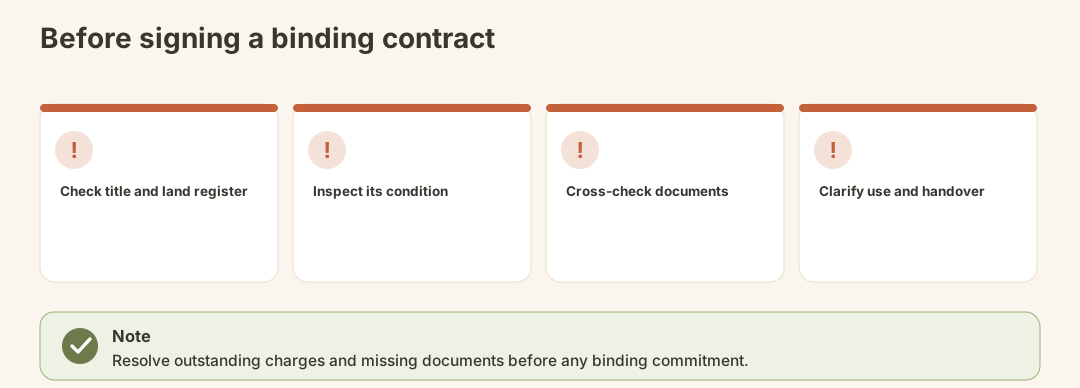
- Identify the property and the seller: Bring together the viewing, the title deed and a current nota simple.
- Document the condition of the property: Record defects, building systems, outdoor areas and inaccessible areas; arrange an independent inspection if needed.
- Cross-check the documents: Check the land registry, cadastre, Cédula, energy performance certificate, building documents, and tax and community records.
- Clarify how the property is used: Establish whether there are existing tenancy agreements or other rights of use, and who actually occupies the property.
- Resolve outstanding issues before committing: Make sure missing documents, charges against the property and the agreed handover are clearly addressed in the draft contract.
This order is particularly important because even privately signed contracts can be legally binding in Spain. So have a reservation agreement reviewed before assuming you can resolve outstanding questions later. The guide to using a lawyer when buying property in Spain explains how to make independent legal checks part of the purchase process.
The most common mistakes when buying a resale property
- Judging only by a well-maintained appearance: Fresh finishes tell you nothing about the roof, pipes or past damp problems.
- Accepting floor areas without checking them: What you see during a viewing must be checked against the land registry, cadastre and building documents.
- Assuming an old Cédula is sufficient: What matters is whether it is valid for the specific property.
- Assuming a paid-off mortgage has been removed from the register: The registry record must also be checked.
- Confusing “empty during the viewing” with “vacant on handover”: Agreements and actual use must be expressly included in the checks.
- Assuming you can automatically rent out the property: Any intended future use needs its own legal assessment.
Checklist for your purchase decision
Before approving the draft contract, you should be able to answer each of these questions:
- Has the seller been identified from the ownership documents?
- Is there an up-to-date nota simple available, and have any encumbrances been clarified?
- Do the land registry, cadastral records and visible condition of the building match?
- Can alterations, the pool and other structures be verified from the documents?
- Are a valid Cédula and an energy performance certificate available?
- Have the property's condition and foreseeable renovation needs been assessed thoroughly enough?
- Have tax receipts and, where applicable, community payments been checked?
- Are tenancy agreements, other rights of use and the agreed handover clearly described?
An unticked box is not automatically a reason to rule out the house. But it is a reason to resolve the issue before making a binding commitment.
What happens next?
If the checks are satisfactory, the next step is to agree the contract and arrange completion before a notary. The property's verified characteristics, any outstanding encumbrances and the agreed handover should be described consistently with the documents you have checked. The guide to the notary when buying a property explains this stage in more detail.
After handover, land registry and utility matters, as well as ongoing obligations, become particularly relevant. If you plan to let the property, check the requirements separately from the purchase: ownership alone does not give you permission to let it.
Conclusion
Is buying a house in Mallorca a good idea? There is no answer for the island as a whole: it depends on the particular property and how you plan to use it. With a resale property, what matters is whether its visible condition, documentation and actual use match. If defects, alterations or tenancies remain unresolved, you need answers before you sign – not merely the prospect of getting them later.
Not legal or tax advice.
Official sources
- Registro de la Propiedad – Registradores de España – land registry details and nota simple
- Sede Electrónica del Catastro – cadastral information
- Consell de Mallorca – information on Certificate of habitability
- Boletín Oficial del Estado – Spanish legal provisions